

THIS PAGE WILL BE UPDATED WITH THE LATEST NEWS
UPDATE: 07:30 PM CET
Tehran Strikes Widen as Hormuz Attacks Deepen and Oil Backstops Mobilize
The U.S.-Israel war against Iran entered its 12th day with renewed strikes and counterstrikes over the past 24 hours, as officials and residents described a grinding, high-tempo air campaign that has pushed beyond military sites into infrastructure that each side says supports the other’s war effort.
Reuters reported that Tuesday brought what the Pentagon and people on the ground described as the most intense airstrikes of the war so far, with Tehran residents describing widespread bombardment overnight and additional impacts on residential areas, while markets swung on signals that the fighting could either escalate or end abruptly.
Iran has continued to signal it retains the ability to strike back across the region. IRGC statements boast about a new wave of Iranian attacks described as the 37th round of “True Promise 4,” including missile barrages toward Israeli targets and strikes linked to U.S. facilities in the region.
The International Energy Agency agreed to make 400 million barrels of oil available, the largest volume of emergency oil reserves released in its history. https://t.co/wTizIfjHnX
— The Associated Press (@AP) March 11, 2026
War at sea
Maritime security deteriorated further in and around the Strait of Hormuz after three additional merchant vessels were hit by projectiles, including the Thai-flagged bulk carrier Mayuree Naree, which caught fire and suffered engine-room damage; three crew members were reported missing. Reuters reported the Revolutionary Guards claimed responsibility, and said the tally of attacked merchant ships since the war began has reached at least 14.
Reuters also reported that the Iranian regime has laid about a dozen naval mines in the strait, complicating any reopening of a corridor that normally carries around a fifth of global oil and LNG shipments. U.S. officials said American forces had destroyed 16 Iranian mine-laying vessels, but the U.S. has not committed to providing escorts through the waterway.
Beyond shipping, the conflict is increasingly touching financial infrastructure. Reuters reported that offices of a bank in Tehran were hit overnight, after which an Iranian military command spokesperson warned of retaliatory strikes on banks that do business with the United States or Israel and urged people across the region to stay at least 1,000 meters away from banks.
Romania allows 'defensive' US refuelling, monitoring for Iran operations at its air bases https://t.co/fWbA2vH2Sf https://t.co/fWbA2vH2Sf
— Reuters (@Reuters) March 11, 2026
Regional spill over
In the Gulf, the aviation crisis deepened after two drones fell near Dubai International Airport, injuring four people, while authorities said flights continued. Reuters described the incident as part of broader instability that has triggered mass cancellations, reroutings and higher costs across a region that hosts several of the world’s busiest transit hubs.
In Lebanon, Israel struck an apartment block in central Beirut on Wednesday, wounding four people, Reuters reported, as daily strikes continued in Hezbollah-linked areas and Lebanese officials cited more than 600 killed and around 800,000 displaced since the front intensified.
The conflict’s technology footprint is also expanding. Defense One reported U.S. military use of “advanced AI tools” to accelerate processes that previously took hours or days, while emphasizing that humans remain responsible for decisions on engagement.
US inflation held firm at 2.4% last month – but the war with Iran has consumers bracing for price hikes. https://t.co/dICIBIOyAw
— CNN (@CNN) March 11, 2026
Civilian casualties
Casualty reporting remains contested and difficult to independently verify at scale during active operations. The Iranian regime’s ambassador to the United Nations said more than 1,300 civilians have been killed since the war began on February 28 and that thousands of homes and civilian facilities have been damaged or destroyed.
The World Health Organization said it has confirmed 18 attacks on healthcare facilities in Iran since February 28, resulting in eight health-worker deaths, and warned that such strikes violate international humanitarian law and degrade access to essential care as displacement grows.
WHO also warned that oil-tainted “black rain” reported after attacks on oil facilities could pose respiratory health risks, and internet-monitoring organizations say Iran remains near-offline for much of the public as the blackout enters its 12th day, with limited whitelisted access reported for some users.
As I stated in the first days of the war, I once again call on all parties involved in the war in Iran to exercise the utmost care to prevent any loss of life or damage to the people of Iran and to the country’s civilian infrastructure.
I also call on the public, especially…— Maryam Rajavi (@Maryam_Rajavi) March 10, 2026
Energy crisis
Governments moved to blunt the energy shock as the Strait of Hormuz remained effectively blocked for much commercial traffic. Reuters reported the International Energy Agency agreed a record coordinated release of 400 million barrels from strategic reserves, the largest such intervention in the agency’s history.
Reuters’ market analysis cautioned that even a release of this scale may be only a partial offset if Gulf supplies remain trapped, given the volume of oil typically moving through the region and the logistical challenge of getting barrels to the hardest-hit markets quickly.
Iranian officials have linked the standoff directly to prices: Reuters quoted an Iranian military command spokesperson warning the world to “get ready” for oil at $200 a barrel, underscoring how quickly battlefield developments at Hormuz can transmit into global inflation and transport costs.
EU Envoys Approve Sanctions on 19 Iranian Officials, Entities over Rights Violations
UPDATE: 09:00 AM CET
Lethal Elite ‘Black-Clad’ Kill Squad Guards Iran’s New Supreme Leader Mojtaba Khamenei

An elite counterterrorism unit has been deployed to protect Iran’s newly appointed Supreme Leader, Ayatollah Mojtaba Khamenei, following the assassination of his father, Ayatollah Ali Khamenei, Fox News Digital has learned.
The force, known as NOPO — Iran’s black-clad Counterterrorism Special Force — was assigned to safeguard the leader after a U.S.-Israel strike on a Tehran compound on Feb. 28 killed the elder Khamenei amid the start of Operation Epic Fury.
“With Khamenei gone, NOPO will likely now be protecting Mojtaba Khamenei,” Ali Safavi, an official with the Foreign Affairs Committee of the Paris-based National Council of Resistance of Iran, or NCRI said.
The NOPO force, formed in 1991, had the 28th Ruhollah (Khomeini’s first name) Division as its “nucleus”, according to Safavi, and typically handles hostage rescue operations. “Its task was not to protect Khamenei,” he added.
Iran’s Regime Mounts Pressure on Prisoners as War Rages Across the Country

Amid ongoing United States and Israeli airstrikes targeting the Iranian regime’s military and security facilities, authorities are actively keeping thousands of prisoners, including political dissidents, in the line of fire. Following the massive nationwide uprisings of December 2025 to January 2026, the regime filled its dungeons with protesters, human rights defenders, students, and minorities.
Now, as war rages across the country, instead of ensuring their safety, the regime is refusing to grant humanitarian release to these individuals, knowingly placing them at risk of death or serious harm amidst the ongoing bombardments.
Who is Mojtaba Khamenei? Iran’s New Supreme Leader
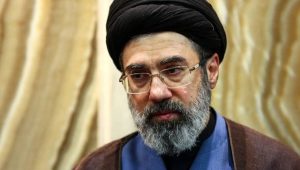
March 8, 2026 — On March 8, the Iranian regime’s Assembly of Experts officially chose Mojtaba Khamenei to succeed his father as Supreme Leader. While the state presents him as a man of faith, investigative dossiers reveal a “corrupted prince” who has spent decades commanding paramilitary death squads and amassing a private fortune through the systematic pillaging of Iran’s oil wealth.
Born on September 8, 1969, in Mashhad, Mojtaba was groomed within the regime’s most elite and controversial circles.
- The Alavi Network: Mojtaba attended the Alavi High School, the premier training ground for the children of the regime’s elite. This provided him with a “Deep State” network of lifelong allies who now occupy top positions in the security services.
- Dynastic Marriage: Mojtaba married Zahra Haddad-Adel, the daughter of a former Speaker of Parliament. This alliance fused the Khamenei family with the regime’s cultural and legislative leadership.
“Switzerland Has Conferred Legitimacy on the Iranian Regime”

Since late February, Iran’s population has been under attack by the United States and Israel. Human rights activist Neda Amani explains how the war has changed the resistance movement inside the country — and what Switzerland should now do.
Ms. Amani, your parents fled Iran in the 1980s for political reasons. The rest of your family still lives there. When did you last hear from them?
Neda Amani: The last time I spoke with them was shortly before the war broke out. Since then, we have heard nothing from them. We are extremely worried. There has been an internet blackout for ten days now. But through my work with human rights organizations, I remain in contact with people in Iran.
What is that work focused on?
As recently as January, the regime killed thousands of people after protests. We are still in the process of coming to terms with those atrocities. Then the war began. The Iranian people did not deserve this.
Concerns Grow Over Safety of Prisoners in Iran Amid Ongoing Bombardments

Amid intensifying military strikes and bombardments across various parts of Iran, concerns are mounting over the safety of detainees—particularly political prisoners—held in the country’s prison system.
In a recent statement, the National Council of Resistance of Iran (NCRI) warned that keeping prisoners incarcerated under active wartime conditions places their lives in serious danger. The organization described the continued detention of inmates during bombardments as a “double crime,” arguing that prisoners are being exposed simultaneously to the risks of war and the harsh conditions of Iran’s penal system.
According to the statement, inmates across multiple prisons are facing both the threat of nearby military strikes and increasing restrictions imposed by prison authorities. These circumstances have intensified fears among prisoners’ families and human rights advocates about the fate of thousands of detainees.
Iran’s Energy Paradox: Vast Oil and Gas Wealth Amid Deepening Structural Crisis

Iran possesses some of the largest oil and natural gas reserves in the world. More than seven decades have passed since the historic nationalization of the country’s oil industry. Yet today, these enormous natural resources have not translated into public prosperity. Instead, they have become part of a deep structural crisis within Iran’s energy economy. The core of the problem extends beyond sanctions or poor management. At its root lies the political and economic structure of the system dominated by the Velayat-e Faqih, which has removed control over national resources from public oversight and concentrated it within powerful state and military networks.
A review of the oil industry’s trajectory over the past four decades reveals a striking gap between potential capacity and sustainable production.
In 1979, the year of Iran’s revolution, the country produced roughly 5.7 million barrels of crude oil per day. During the 1980s—amid the Iran-Iraq War—production collapsed to below two million barrels per day.
U.S. Intelligence Report Says War Unlikely to Topple Iran’s Regime
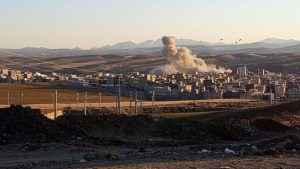
A classified intelligence assessment in the United States, prepared only one week before the start of the war, indicates that even if a large-scale military operation against Iran were carried out, the likelihood of the collapse of the country’s governing structure would be low and the main power institutions in Iran’s regime might remain intact. Doubts among U.S. intelligence agencies about the ability of opponents of Iran’s regime to take power had also been raised in reports by The New York Times, Reuters, and The Wall Street Journal. However, the assessment of the U.S. National Intelligence Council and its analysis of the possible consequences of both small and large attacks against Iran had not previously been reported.
The National Council of Resistance of Iran (NCRI), led by Maryam Rajavi, has repeatedly stated that the overthrow of the mullahs’ regime in Iran will not be achieved through a foreign war.
UN Special Rapporteur Report Condemns Iran’s Use of Death Penalty to Silence Female Activists

A newly released United Nations report by Special Rapporteur Mai Sato has brought international attention to the severe human rights violations in Iran, particularly in the context of the 2025 nationwide protests. The comprehensive document highlights how broadly defined security offenses are being weaponized by the state to silence political dissent. Notably, the report exposes the alarming cases of three female activists currently facing the death penalty, including one whose capital charge is based on nothing more than possessing a piece of cloth featuring a popular protest slogan.
The advance unedited version of the report, dated March 9, 2026, was prepared for the sixty-first session of the UN Human Rights Council. Titled “Situation of human rights in the Islamic Republic of Iran in 2025 and the nationwide protests,” the document rigorously examines the regime’s suppression of the rights to freedom of expression, peaceful assembly, and association during the nationwide unrest that began in late December 2025.
Human Rights Violations in Iran under the Leadership of Ali Khamenei (1989–2026) – Part 3
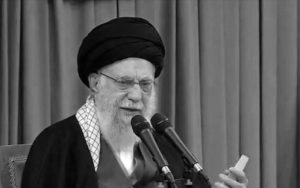
Over the past three decades, official state discourse has repeatedly emphasized the primacy of “preserving the regime” over other considerations. Ali Khamenei has described security and the survival of the political structure as the “highest of obligations,” stressing the necessity of resisting “foreign enemies” and preventing “infiltration.” This conceptual framework has underpinned numerous major security, judicial, and economic decisions.
At the same time, Iran’s economic indicators across multiple periods have reflected sustained double-digit inflation, currency depreciation, rising poverty rates, and unemployment. While precise figures require source-based examination, official domestic data and international reporting indicate that economic pressure on households intensified in the final years of this period.
Within this context, a central question emerges regarding the relationship between security-military policies and the deteriorating socio-economic conditions experienced by large segments of society.
Berlin Rally Backs NCRI Provisional Government, Calls for Democratic Republic in Iran

Berlin, Germany — March 7, 2026 — Supporters of the Iranian Resistance demonstrated outside the Iranian regime’s embassy for the seventh consecutive day, calling for the overthrow of the clerical establishment and endorsing the National Council of Resistance of Iran’s (NCRI) announcement of a Provisional Government. The NCRI, a coalition of democratic Iranian opposition forces, presented the initiative as a viable democratic alternative for Iran following the death of Ali Khamenei.
PMOI Supporters Rally in Gothenburg Backing NCRI Provisional Government Plan

Gothenburg, Sweden — March 7, 2026 — Supporters of the People’s Mojahedin Organization of Iran (PMOI/MEK) gathered in Gothenburg for another consecutive day of rallies to endorse the National Council of Resistance of Iran’s (NCRI) announcement of a Provisional Government. The NCRI, a coalition of democratic Iranian opposition groups, has presented the initiative as a roadmap for a democratic transition in Iran. The rally highlighted support for the NCRI’s initiative as a viable democratic alternative for Iran following the death of Ali Khamenei.