

THIS PAGE WILL BE UPDATED WITH THE LATEST NEWS
UPDATE: 11:00 PM CET
US Adds 80 Foreign Entities to Export Blacklist Over National Security Concerns

The US Commerce Department announced on Wednesday that it has taken significant steps to protect national security by adding 80 foreign entities to an export restrictions list.
The move, spearheaded by the Bureau of Industry and Security, targeted organizations from China, the United Arab Emirates, South Africa, Iran, Taiwan, and other nations.
These entities were identified as engaging in activities that conflict with US national security interests and foreign policy.
Additionally, the measures aim to disrupt Iran’s procurement of drones/unmanned aerial vehicles (UAVs) and related defense equipment, while also addressing unsafeguarded nuclear and missile-related activities.
U.S. State Department: Iranian Regime Is the World’s Leading State Sponsor of Terrorism
In an interview with Fox News on March 24, U.S. State Department spokesperson Tammy Bruce outlined the Trump administration’s uncompromising approach toward the Iranian regime, stating that the Iranian regime must either return to negotiations or face the possibility of military action. According to Bruce, President Trump has reimposed the maximum pressure campaign that marked his first term, and it is already having a crippling impact on Iran’s economy.
Bruce said the administration is making it clear to Tehran that the geopolitical landscape has shifted and that the world will no longer tolerate the regime’s past behavior, not only in the Middle East but globally. “The world knows that Iran is the largest state sponsor of terrorism,” she stated, emphasizing that continued impunity is no longer an option.
The spokesperson also highlighted new sanctions imposed on Chinese firms facilitating the sale of Iranian oil, underlining that Washington is serious about driving Iran’s oil exports to zero. She noted that the Trump administration, with Marco Rubio as Secretary of State, is leveraging both diplomacy and economic tools to change the regime’s behavior without deploying U.S. troops. “America has the tools,” Bruce added, affirming the administration’s commitment to reversing what she described as years of lawlessness and appeasement in global affairs.
UPDATE: 6:30 PM CET
I Was in Iran’s Line of Terrorist Fire for Crime of Being At A Protest in Faraway Country

On June 30, 2018, I unknowingly found myself within the line of terrorist fire of the Islamic Republic of Iran when I attended a massive rally that had been organized near Paris by the National Council of Resistance of Iran. As I later found out, while tens of thousands of NCRI supporters were cheering the cause of regime change by the Iranians and democracy in that country, European law enforcement were thwarting a bomb plot, masterminded by an Iranian diplomat-cum-terrorist which illustrated the Iranian regime’s willingness to target dissidents on European soil, even when doing so also threatened the lives of hundreds of Western lawmakers, including a cross-party delegation of British MPs.
Since then, the task of managing threats from the Islamic Republic has only grown more serious. Tehran has intensified its drive to acquire nuclear weapons. Its role as the “head of the snake” of terror and belligerence throughout the Middle East has become increasingly evident. Its terror networks have even extended to our own soil in the form of plots against dissidents. But one feature of the Iranian regime stands out: it is likely the only state in the world that takes Westerners hostage as an official policy, approved and pursued at the highest levels of government.
UPDATE: 3:00 PM CET
The Threat from Tehran

The Middle East has been a powder keg for decades. Wars, conflicts, and terrorism have not only claimed millions of lives but also triggered economic and social catastrophes. Billions in aid have been spent, yet the region remains a center of instability. Moreover, the ongoing crises have fueled one of the largest migration movements in modern history, posing enormous challenges for both Europe and the United States.
A key driver of this instability is the Iranian regime. Tehran not only suppresses its own people with brutal force but also destabilizes the entire Middle East through proxy wars and support for extremist militias. In response, the U.S. has announced that it will continue strikes against the Iran-backed Houthi militias in Yemen to protect international waterways. At the same time, Washington has warned Tehran to cease its support for the Houthis.
U.S. Intelligence Warns of Growing Threat from Iran’s Regional Proxies and Global Terror Network
The 2025 Annual Threat Assessment by the U.S. Intelligence Community (IC) warns that the clerical regime in Iran remains one of the most persistent and aggressive threats to U.S. interests at home and abroad. The report paints a stark picture of Tehran’s growing reliance on military proxies, cyber operations, and transnational networks to project power and destabilize rivals while trying to ensure regime survival.
According to the report, Iran’s missile and drone arsenal is now the largest in the region, and its military planners are investing heavily in precision capabilities to bolster deterrence and expand regional influence. At the same time, the regime’s use of proxies across the Middle East—particularly Hezbollah, Iraqi Shi’a militias, and the Houthis in Yemen—remains central to its regional strategy, allowing Tehran to strike the U.S. and maritime targets with plausible deniability.
The IC notes a significant escalation in Iran’s cyber capabilities, which now pose a “major threat to the security of U.S. and allied networks and data.” Iranian cyber actors have moved beyond espionage to influence operations and targeted intrusions. In June 2024, the IRGC compromised an email account linked to a former Trump campaign associate and attempted to manipulate U.S. media with stolen data—an example of how Iran blends cyber and psychological operations.
The report also reaffirms that the regime actively plots attacks against U.S. persons globally, including inside the United States. Tehran continues to seek revenge for the 2020 killing of Qassem Soleimani and is reportedly expanding its network of operatives capable of carrying out such missions abroad.
Domestically, Iran is described as politically fragile, facing widespread discontent and economic deterioration. “The seeds of popular discontent could threaten further domestic strife akin to the widespread protests of 2022–2023,” the report suggests. Inflation, currency instability, and regime repression continue to fuel dissatisfaction.
UPDATE: 9:00 AM CET
UN Human Rights Council Condemns Human Rights Violations in Iran
On March 23, 2025, Mizan News Agency, affiliated with the judiciary of Iran’s regime, responded to remarks by UN Special Rapporteur on Human Rights Conditions in Iran Mai Sato at the annual Human Rights Council session by writing, “In her introductory message published on the social media platform X, Sato expressed appreciation for what she called the tireless efforts of Javaid Rehman, the so-called UN Special Rapporteur on human rights in Iran. A look at the past few months since Mai Sato began her tenure as the so-called UN Special Rapporteur on Iran reveals a historical reality: Sato, like her predecessors and contrary to her initial promises, has made politicization and distortion her agenda regarding Iran.”
These remarks come as the regime is still reeling from the final report by former Javaid Rehman, which documented the regime’s genocide against the People’s Mojahedin Organization of Iran (PMOI/MEK) members during 1981–1982 and the 1988 massacre.
Western Appeasement and Character Assassination: The Iranian Regime’s Ongoing Hostage Diplomacy

In recent weeks, an alarming pattern has emerged, exposing the extent to which Western governments and media outlets have played into the Iranian regime’s hands. A defamatory campaign targeting Mrs. Maryam Rajavi, the President-elect of the National Council of Resistance of Iran (NCRI), has gained traction in select French media. This smear campaign, as highlighted by multiple political figures and human rights advocates, appears to be directly linked to Iran’s notorious hostage diplomacy strategy.
On March 18, 2025, the French publication Le Canard Enchaîné published an article laden with false accusations against Mrs. Rajavi and the NCRI. These allegations, reminiscent of discredited claims from two decades ago, have been repeatedly propagated by the Iranian regime as part of its efforts to undermine the Iranian opposition. The British Committee for Iran Freedom (BCFIF) has strongly condemned this character assassination campaign, recognizing it as an attempt to discredit the organized resistance of the Iranian people.
Iran’s Rial Continues to Plummet in New Persian Year
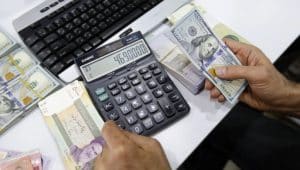
Foreign currency prices in Iran experienced a sudden surge, with the U.S. dollar rising by 50,000 rials compared to the last day of the Iranian year 1403 (March 21, 2025), surpassing the one-million-rial threshold.
According to Iranian exchange rate websites, on Tuesday, March 25, the U.S. dollar reached 1,035,000 rials, setting a new record in the history of the rial’s depreciation.
Since Masoud Pezeshkian took office in August last year, the Iranian rial has lost more than half its value. In late August, the U.S. dollar was around 580,000 rials.
Tehran Dismisses Statements by Iraq’s Oil Minister as Propaganda

Following remarks by Iraq’s Oil Minister regarding the provision of information to the United States about Iran’s sanctions evasion, a senior official from the Iranian regime’s Ministry of Oil rejected these reports, calling them “negative and malicious propaganda.”
Hayan Abdul Ghani, Iraq’s Oil Minister, stated that Iranian oil tankers have been using falsified Iraqi documents to bypass sanctions and that this matter has been reported to the United States.
Without providing details, Abdul Ghani added that Baghdad has received reports regarding the seizure of oil tankers in the Persian Gulf by U.S. naval forces, which were carrying Iraqi documents.
Critical Health Condition of Political Prisoner Azar Korvandi

According to received reports, Azar Korvandi, a political prisoner held in the women’s ward of Evin Prison, is in a critical health condition and has been denied access to necessary medical care. She has been sentenced to five years in prison due to her support for the People’s Mojahedin Organization of Iran (PMOI/MEK) and is currently suffering from multiple health complications, including severe neck pain and shoulder dysfunction.
Specialist medical examinations indicate that Ms. Korvandi is suffering from a serious cervical disc issue and tendon thinning in her shoulder, which causes intense pain in her neck, shoulder, and arm. She is reportedly unable to move her neck and requires urgent surgery. However, Evin Prison authorities have so far refused to transfer her to a hospital outside the prison, despite doctors’ recommendations.
Death of Baloch Prisoner Karim Rigi Due to Lack of Medical Care in Adelabad Prison, Shiraz
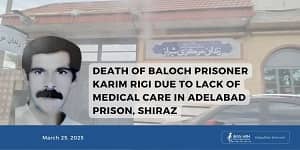
On March 20, 2025, a Baloch prisoner named Karim Rigi passed away in Adelabad Prison, Shiraz, due to cardiac arrest and failure to receive timely medical attention. This incident once again highlights the inadequate medical services in Iranian prisons and raises serious concerns about prisoners’ rights. Karim Rigi, 55 years old, son of Ata Mohammad, was a resident of Zahedan, married, and a father of five. He had been arrested in 2021 on drug-related charges and had spent the past three years in the general ward of Adelabad Prison without a final verdict being issued. His legal uncertainty, combined with the poor prison conditions, had put him at serious risk.
The Iranian Regime’s Strategic Deadlock in Facing Reality!

The survival instinct is deeply ingrained in human nature, especially when faced with existential threats. In such situations, people react in various ways to avert danger and sustain their lives. However, when the sword falls before a warning can be given, one realizes that their fate is sealed, with no power to change the inevitable.
Undoubtedly, dictatorial regimes, deeply entrenched in extreme narcissism, cling to power at all costs. Not only do they refuse to relinquish control, but they also resort to extreme measures, including the most horrific and bloodiest crimes, to maintain their rule. Yet, as history has shown, when a dictatorship nears its downfall, any effort to prevent its collapse is as futile as trying to stop the sun from rising.