

THIS PAGE WILL BE UPDATED WITH THE LATEST NEWS
UPDATE: 9:30 PM CEST
In Madrid, the Mullahs Tried to Kill Me

Longtime leader of the conservatives in Catalonia and Vice President of the European Parliament from 1999 to 2014, this nuclear physics professor is opposed to both Catalan nationalism and the regime of the Ayatollahs in Iran. In 2023, he narrowly escaped an assassination attempt on a street in Madrid. A hired gun shot him in the face. The investigation was assigned to the Spanish anti-terrorism police. Several individuals, including the suspected gunman, were arrested in Spain, the Netherlands, and other countries. The sophistication of the attempt bears the hallmarks of a state-sponsored operation.
UPDATE: 7:00 PM CEST
When The Heart Breaks: Why the World Must Not Look Away from Iran’s Silent Crisis

As an Iranian professional living in the UK, my mornings often begin like anyone else’s, with a cup of coffee and a scroll through social media. But unlike many, my feed is frequently punctuated by heart-wrenching glimpses into a reality far removed from the comfort of my British life.
Just recently, I watched a video clip that broke my heart: a decent man in Iran, his face etched with despair, crying openly because he couldn’t afford a one-bedroom apartment for his family. The soaring prices had rendered him utterly helpless. In the video, his neighbor explains how that destitute man had previously sold one of his kidneys for 50 million tomans (a little over $1,000) to make ends meet for his family. His tears were not just his own, they were the picture of a nation’s pain, echoing the silent screams of millions.
Domestic Hatred, Global Condemnation Render Iran Desperate

An unprecedented situation is currently unfolding in Iran. In just the second month of the Iranian calendar year (April 21 to May 21), at least 158 people have been executed. This means, on average, one execution every 4.5 hours. This is obviously a horrifying figure and, going back to recent decades, it’s unmatched.
Some analysts in Tehran are comparing this wave of executions to the mass killings of political prisoners in the summer of 1988. At that time, Ayatollah Khomeini, following his acceptance of a ceasefire with Iraq after eight years of war — something he famously called “drinking the chalice of poison” — launched a series of widespread executions, particularly targeting members of the People’s Mojahedin Organization of Iran (PMOI), the backbone of the Iranian resistance.
UPDATE: 9:30 AM CEST
Oil Tankers Going Dark Off Malaysia as Iran Trade Draws Scrutiny

Tankers involved in a vital hub of the Iran-to-China oil trade are disappearing from digital tracking systems, as the threat of US sanctions forces tactical changes to keep crude flowing.
Over recent months, more vessels have started switching off their transponders as they near waters off eastern Malaysia, a hotspot for the transfer of Iranian oil from one to ship to another for transport to China. Previously, systems were rarely disabled, signaling when tankers anchored next to each other.
While the tactic of going dark is not new, it’s being used more regularly off Malaysia to avoid scrutiny. The White House says the Iranian oil trade generates revenue that supports Tehran-backed militia groups including Hamas, and has sought to hobble flows through sanctions on ships, ports and refiners.
Rosen Helps Introduce Bipartisan Legislation to Solidify Sanctions on Iran, Target Regime’s Terror Financing

WASHINGTON, DC – U.S. Senator Jacky Rosen (D-NV) helped introduce bipartisan legislation to make permanent critical sanctions targeting Iran’s energy and weapons sectors, aimed at cutting off the regime’s ability to fund terrorism and pursue nuclear weapons. The bipartisan Solidify Iran Sanctions Act builds on the existing Iran Sanctions Act (ISA) of 1996 – which enables the U.S. to impose sanctions on Iran’s energy and weapons sectors that provide critical funding sources for its nuclear program and terrorist proxies – by removing its sunset provision and ensuring continued pressure on the Iranian regime. The bill passed the House of Representatives unanimously earlier this month.
UPDATE: 8:00 AM CEST
Iran’s Regime Unleashes Execution Spree to Quell Dissent, As Prison Resistance Intensifies

The Iranian regime has drastically escalated its use of capital punishment, sending a chilling message of terror across a nation simmering with discontent. In recent weeks, a surge in state-sanctioned killings has been documented, a brutal tactic aimed at crushing the spirit of a populace increasingly vocal in its opposition to the clerical dictatorship. Yet, even as the gallows work overtime, a courageous and organized resistance movement is growing within the very walls of Iran’s notorious prisons.
The final weeks of May 2025 have been particularly bloody. On Wednesday, May 28, the regime announced the execution of Pedram Madani, 41, in Ghezel Hesar Prison. Madani, arrested in 2020, was hanged on charges of “espionage” and “illicit gain” in connection with Israel, with the regime’s Mizan News Agency noting his prior travel to Germany. On the same day, five other prisoners met their deaths: four in Ghezel Hesar Prison, and one in Khash Prison.
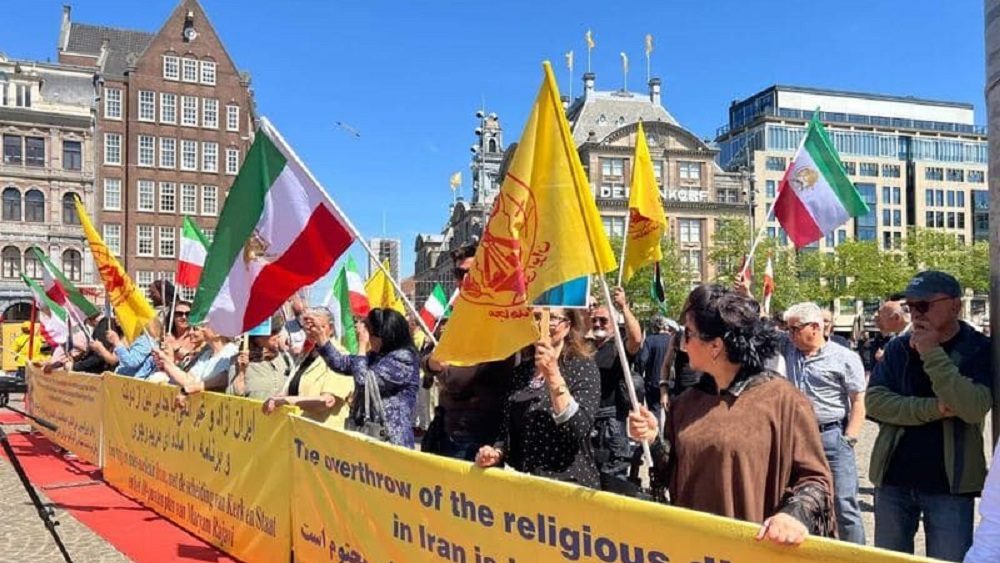
Paris, May 29, 2025: MEK Supporters Hold Exhibition Condemning Iran’s Human Rights Violations

Paris, France – May 29, 2025: Supporters of the People’s Mojahedin Organization of Iran (PMOI/MEK) held an exhibition in Paris to condemn the Iranian regime’s intensifying human rights abuses and its brutal use of the death penalty.
Gothenburg, May 27, 2025: MEK Supporters Rally in Support of the ‘No to Executions Tuesdays’ Campaign

Gothenburg, Sweden – May 27, 2025: Supporters of the People’s Mojahedin Organization of Iran (PMOI/MEK) held a rally in solidarity with the No to Executions Tuesdays Campaign, marking the 36th consecutive week of their solidarity movement. The campaign is a response to the Iranian regime’s continued executions in its prisons.
MEK Supporters Hold Exhibition in Zurich to Protest Iran Regime’s Executions and Repression

Zurich, Switzerland – May 26, 2025 – Supporters of the People’s Mojahedin Organization of Iran (PMOI/MEK) organized an exhibition to protest the Iranian regime’s severe repression, with a particular focus on the death sentences imposed on political prisoners.
MEK Supporters in São Paulo, Brazil Honor PMOI Founders, Urge End to Executions in Iran

São Paulo, Brazil – May 26, 2025: Supporters of the Iranian Resistance held an exhibition in São Paulo to commemorate the anniversary of the execution of the PMOI/MEK’s founders by the Shah’s regime on May 25, 1972. The event also marked the 60th anniversary of the MEK’s founding in 1965 and six decades of steadfast struggle against two successive dictatorships in Iran: first the monarchy of the Shah, and now the theocratic regime of the mullahs.
Truckers vs. Tyranny: Iran’s Freight Strike Becomes National Resistance
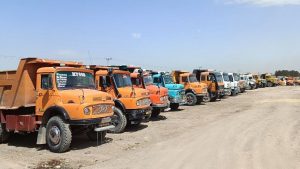
The nationwide strike by Iranian truck drivers has entered its seventh consecutive day, becoming one of the largest and most influential protest movements in recent years. Spanning more than 133 cities, this strike reflects not only the deep frustration of truckers over unbearable living conditions and the regime’s exploitative policies but also signals a broader societal rebellion against injustice and repression.
In a clear sign of desperation, the regime has turned to state media propaganda to downplay the scale of the strike and mislead public opinion.
Despite the determined continuation of the truckers’ strike across the country, the regime under Supreme Leader Ali Khamenei has once again resorted to spreading false information through loyal media outlets. On May 27, 2025, the state-affiliated outlet Eghtesad Online falsely quoted Reza Rostami, alleged head of the National Freight Transport Association, claiming that:
European Officials Consider Adding IRGC to EU Terror List

Efforts to designate Iran’s Islamic Revolutionary Guard Corps (IRGC) as a terrorist organization under the European Union’s framework have recently intensified. Several European and international lawmakers and officials have raised concerns about the IRGC’s activities both within and beyond Iran’s borders. On May 27, 2025, Danish Foreign Minister Lars Løkke Rasmussen addressed the Danish Parliament, supporting a proposal to include the IRGC in the EU’s list of terrorist entities. He cited the IRGC’s actions in Iran and the broader Middle East, including its response to domestic protests and its affiliations with groups operating in the region.
Rasmussen noted that the IRGC is already subject to four EU sanctions regimes, related to Iran, Ukraine, Syria, and the proliferation of weapons of mass destruction. He also referred to the IRGC’s support for various groups, including Hamas, Hezbollah, the Houthis, and the Syrian government.
Iran’s Regime Ties Nuclear Pause to U.S. Concessions

Two Iranian sources told Reuters on Wednesday, May 28, 2025, that Tehran might halt uranium enrichment as part of a “political agreement,” provided that the United States unfreezes Iran’s blocked assets and recognizes Tehran’s right to enrich uranium for civilian purposes. Such an agreement could pave the way for a comprehensive nuclear deal. According to these sources, who are close to the negotiating team, if Washington accepts Tehran’s conditions, a political understanding with the United States could be reached soon.
One of the sources said that this issue has not yet been raised in discussions with the United States. The Iranian sources stressed that Tehran will not agree to halt its nuclear program, dismantle its infrastructure, or seal its nuclear facilities, as demanded by the Trump administration.
75% Of Iranians Live Below the Poverty Line

As public protests against Iran’s regime grow louder by the day, Isa Kalantari, former agriculture minister and a longtime official within the regime, has declared: “In these 46 years, we have destroyed Iran.”
In an interview with the state-run Entekhab website, Kalantari pointed to the unprecedented spread of poverty across the country, stating: “About three-fourths of the Iranian people—that is, something between 70% to 75%—are living below the poverty line.”
This figure starkly contrasts with official statistics, which typically claim that 30% to 40% of the population lives below the poverty line. He also warned that the excessive exploitation of the country’s underground water resources has led to severe land subsidence in some areas—so much so that parts of the city of Isfahan are now effectively “standing on six meters of air.”
Explosive Intel Report Heightens Pressure for Robust Oversight in Iran Nuclear Talks
As diplomatic talks between the United States and Iran’s regime inch forward, Rafael Grossi, Director General of the International Atomic Energy Agency (IAEA), has called for any future nuclear agreement to be backed by stringent, verifiable inspections.
Grossi’s statement comes amid a Fox News Digital exclusive revealing that Austrian intelligence agencies now assess Iran’s nuclear weapons program to be well-advanced—contradicting U.S. intelligence assertions.
Speaking to reporters on Wednesday, Grossi made it clear that any new agreement between Iran and world powers must not rely on trust alone. “If you have that type of agreement, a solid, very robust inspection by the IAEA … should be a prerequisite,” Grossi said, adding that verification would be essential to ensuring Iran’s compliance.
Khamenei’s Delusions Amid a Nation in Crisis
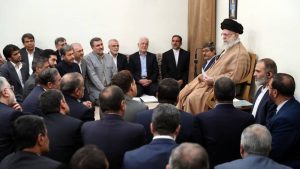
In a recent meeting with Iran regime’s Minister of Interior and provincial governors, Supreme Leader Ali Khamenei made a stunningly tone-deaf declaration: “There is no problem in the country.” He went on to claim that Iran’s public atmosphere is full of “opportunity” and optimism. These comments, made while widespread livelihood protests rock the country and truck drivers in 135 cities are on strike, reveal the staggering disconnect between the regime’s leadership and the brutal reality faced by ordinary Iranians.
Khamenei’s remarks are not just misleading—they are a deliberate insult to the intelligence and suffering of the Iranian people. To speak of “no problem” in a country drowning in economic crisis, systemic corruption, and social repression is either a demonstration of dangerous ignorance or a calculated attempt to distort reality. It is a classic case of authoritarian delusion: deny the crisis, dismiss the pain, and discredit the protest.