

THIS PAGE WILL BE UPDATED WITH THE LATEST NEWS
UPDATE: 1:00 PM CET
Treasury Tightens Sanctions on Iran’s Oil Network Supporting its Military
WASHINGTON—Today, the U.S. Department of the Treasury’s Office of Foreign Assets Control (OFAC) is sanctioning a network of front companies and shipping facilitators that bankroll the Iranian armed forces by selling crude oil. Following its defeat in the 12-Day War with Israel, Iran’s military has increasingly come to rely on the sale of Iranian crude oil to supplement its annual budget and finance the rebuilding of its depleted forces.
“Today’s action continues Treasury’s campaign to cut off funding for the Iranian regime’s development of nuclear weapons and support of terrorist proxies,” said Secretary of the Treasury Scott Bessent. “Disrupting the Iranian regime’s revenue is critical to helping curb its nuclear ambitions.”
UPDATE: 8:00 AM CET
A Historic Verdict: UN Resolution Condemns Iran Regime’s Executions and Breaks Silence on the 1988 Massacre

In a major global blow to the clerical regime, the United Nations General Assembly’s Third Committee adopted a resolution on November 19, 2025, condemning the gross and systematic violation of human rights in Iran. The 72nd such resolution passed with a decisive 79 votes in favor and only 28 against, signaling the international community’s growing alarm over the regime’s brutality. While the resolution addresses the current wave of repression, its true historic significance lies in its unprecedented decision to link the regime’s present-day crimes to the unpunished 1988 massacre of 30,000 political prisoners.
The UN resolution expresses grave concern over the “alarming and significant increase in executions” in Iran, condemning the regime’s use of the death penalty as a tool for “political repression and silencing opponents and protesters.” It specifically notes the rising number of executions targeting women and minors.
Iran Stepping Up Harassment of Its Nationals in Germany, Says Opposition Group
BERLIN, Nov 20 (Reuters) – Iranians living in Germany are facing increased harassment from Iranian security services, including threats and pressure to inform on other exiles, German authorities and an Iranian opposition group said.
German intelligence services have regularly reported Iranian pressure and spying conducted against exiled groups in Germany and the main domestic intelligence agency, BfV, said in its annual report last year that the danger remained high.
Javad Dabiran, spokesperson for the National Council of Resistance of Iran, an opposition group banned in Iran but with a strong presence abroad, said he knew of more than 100 cases in Germany since the start of the year, adding they usually involved pressuring people to inform on other Iranian exiles.
The cases reflect “an unprecedented intensification” in the activities of Iranian intelligence services in Germany, he said.
Carbon Monoxide Poisoning Hits Girls’ School in Babol
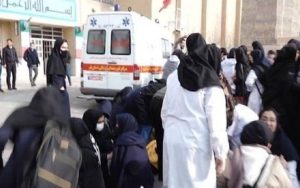
On Wednesday morning, November 19, a leak in the school’s heating system caused carbon monoxide poisoning in several students at a girls’ school in the city of Babol.
Emergency teams were dispatched to the scene after students began showing symptoms of respiratory distress, dizziness, and nausea. Three ambulances and two motorlances were deployed to transport the affected students and provide immediate medical assistance. The poisoned students were transferred to nearby medical centers, where they remain under observation and clinical evaluation.
This incident comes just days after reports of a similar poisoning of students in Shahriar, renewing public concern over school safety and the lack of effective oversight of heating and gas systems in educational facilities.
Iran’s Academic Exodus — A Regime That Devours the People’s Future

The mass departure of Iranian university professors—an unprecedented wave of academic flight—has become one of the most devastating national crises under the regime’s rule. What is unfolding is not a temporary fluctuation in the country’s academic workforce; it is a historic collapse of Iran’s scientific foundation.
Even regime-aligned media can no longer conceal the disaster. On November 14, the state-affiliated outlet Asr-e Iran quoted former regime’s deputy minister of science Gholamreza Zarifian admitting that the “ecosystem and governance of higher education have undergone fundamental changes” and that universities “can no longer be managed with the approaches of the past.” His statement, however, reflects more than a governance failure—it is an indictment of a political system that has suffocated knowledge, punished talent, and driven its brightest minds across the border.
Workers, Students, and Defrauded Citizens Rise Up Across Iran
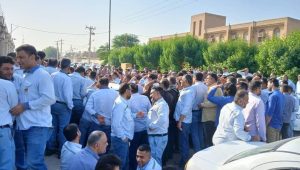
Iran witnessed a new surge of protests on November 19, as workers, students, defrauded investors, and families from various provinces took to the streets. Their demands—justice, accountability, and basic rights—reflect deepening public frustration with a regime that responds to every crisis with more repression instead of solutions. Reports from across the country indicate widespread deployments of security forces, once again demonstrating that the government’s instinct is not to address grievances, but to crush them.
In Nourabad Mamasani, municipal service workers continued their strike after months of withheld wages, wage deductions, threats of dismissal, and exploitative treatment by contractors. Workers accuse the contractor of ruthless and irresponsible behavior. The recurring strikes reveal a complete collapse of trust and a breaking point in the patience of Iran’s workforce—conditions created by the regime’s systematic neglect of labor rights.
Iran’s Hidden Crisis: Educated Mothers Imprisoned Over Debt as Structural Inequality Deepens
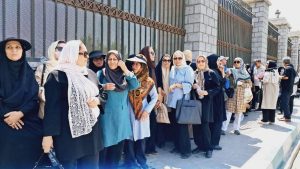
Fresh data from inside Iran reveals that a significant portion of the country’s female prison population consists of educated mothers imprisoned for debt or unintentional financial offenses. This pattern exposes deep structural inequality, the feminization of poverty, and the severe socioeconomic pressures facing women under the current system. According to a report by Arman-e Emrooz, most incarcerated women in Iran are not imprisoned for violent crimes. Instead, they are held over financial debts, unpaid guarantees, or non-intentional financial violations—offenses rooted in economic strain and the absence of protective financial networks.
Tehran has the highest number of female prisoners with 184 cases, followed by Fars with 96 and Mazandaran with 85. In contrast, Sistan and Baluchestan reportedly has almost no women imprisoned for unintentional financial offenses, a disparity that reflects uneven judicial practices and regional inequality.
Iran: In Five Months, Raw Milk Prices Have Risen by What Would Normally Take Fifty Years

Ali Ehsan Zafari, head of the Dairy Products Union, announced a 70% increase in the price of raw milk compared to June and stated that this level of increase is equivalent to fifty years of past price jumps.
Speaking to the state-run ILNA news agency on Monday, November 17, Zafari said that dairy prices change daily due to rising raw milk prices.
According to him, “The price of raw milk had reached 230,000 rials per kilogram over sixty years, but within five months it increased to 390,000 rials per kilogram. This means it has risen by nearly 60%, which is equal to fifty years of price increases.”
It is worth noting that the union official’s claims do not seem accurate, as the five-month increase is not 60% but 70%. Therefore, assuming a consistent upward trend in raw milk prices over the past sixty years, this five-month rise is roughly equivalent to forty-two years of price growth.
Third Self-Immolation in Iran Within Twelve Days

Fereydoun Rostami, an employee of the Marivan municipality, set himself on fire in front of his workplace in protest against pressure, threats, and humiliating treatment by the municipality’s security office. This is the third reported self-immolation in the past two weeks and the seventh media-reported suicide since October 23.
According to the Hengaw human rights organization, Rostami’s coworkers saved him using a fire extinguisher, but “security forces stationed at the Kanidinar municipality” in the Marivan region surrounded him and prevented witnesses from learning about his condition after the fire was put out.
London Rally Honors Iran’s November 2019 Uprising and Rejects All Forms of Dictatorship

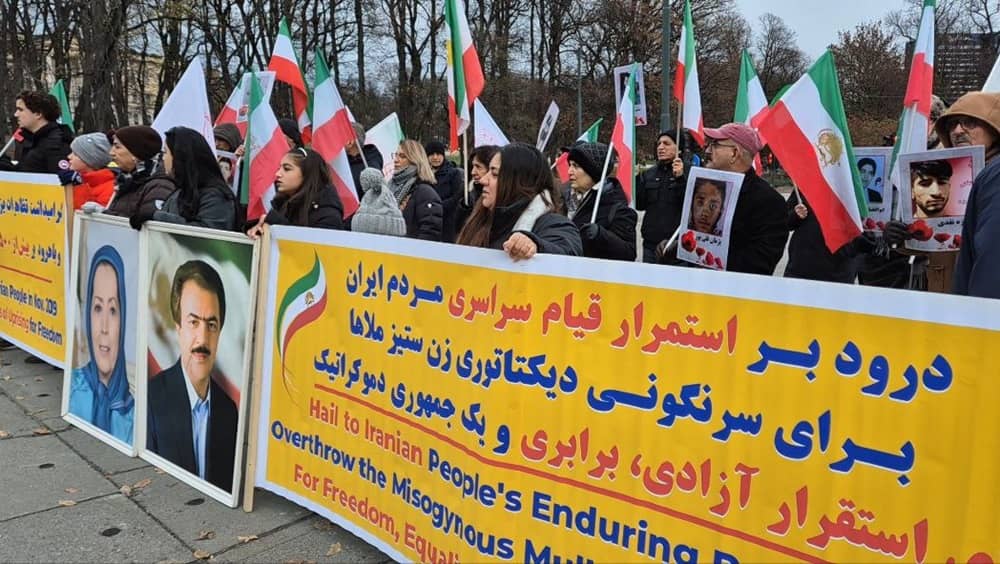
On November 15, 2025, supporters of the People’s Mojahedin Organization of Iran (PMOI/MEK) held a rally in rainy London to honor the 1,500 martyrs of the November 2019 uprising, the victims of the 2022 protests, and political prisoners—especially those executed this year or facing imminent danger.
Gothenburg Rally in Solidarity with the 95th Week of Iran’s ‘No to Execution Tuesdays’ Campaign

Gothenburg, Sweden – November 18, 2025 – Supporters of the People’s Mojahedin Organization of Iran (PMOI/MEK) gathered in Gothenburg to mark the 60th consecutive week of local participation in the global “No to Execution Tuesdays” campaign. The movement protests the Iranian regime’s escalating wave of executions and systematic repression.
Iranians Rally in Cologne to Honor Iran’s November 2019 Uprising and Demand Regime Change

Cologne, Germany — November 15, 2025: A rally and exhibition were held in Cologne by supporters of the People’s Mojahedin Organization of Iran (PMOI/MEK) to honor the 1500 martyrs of the nationwide Iranian uprisings in November 2019 (Aban 98), the 2022 protests, and political prisoners—especially those executed by the mullahs’ regime this year and those still at risk of execution.