


THIS PAGE WILL BE UPDATED WITH THE LATEST NEWS
UPDATE: 7:30 PM CEST
Iran’s Organized Opposition Emerges from the Shadows

Washington still views Iran’s future as a choice between war and negotiations.
But recent developments inside the country point to a third option that should not be ignored: the Iranian people and an organized resistance. In recent days, a rare video emerged from near Karaj, just west of Tehran. A group of motorcyclists and several cars moved through the streets, flying the red-and-white flags of the opposition People’s Mojahedin Organization of Iran, also known as the MEK.
In a country where displaying the symbols of this banned organization can lead to years in prison or even a death sentence, this was more than a publicity stunt.
The regime’s response made the episode even more significant.
Instead of ignoring or denying the footage, Iranian state television announced that “all the individuals” seen in the video had been identified and arrested, although it disclosed neither their number nor when the video was recorded.
UPDATE: 4:00 PM CEST
The West’s Strategic Blind Spot on Iran’s Organized Opposition

A persistent assumption in Western analysis is that the Islamic Republic may be unpopular and crisis-ridden but faces no organized opposition at home. The familiar conclusion is that regime collapse would produce chaos, making negotiation or containment more realistic than contemplating political change.
Recent events raise serious questions about that assessment. In a rare video from near Karaj, west of Tehran, motorcyclists and several cars moved through the streets flying the flags of the People’s Mojahedin Organization of Iran, or MEK. Displaying the symbols of this organization, banned by the regime since 1981, can bring imprisonment or death; the significance lay less in the numbers than in the willingness to accept that risk.
The regime’s response was equally revealing. Iranian state television announced that “all the individuals” in the video had been identified and arrested, although it disclosed neither their number nor when the footage was recorded. For years, Tehran portrayed the MEK as a spent force with no social base. This time it could not ignore the episode. By mobilizing its security apparatus and publicizing the arrests, the regime showed that it considers the same organization an active threat.
Saudi Arabia, Bahrain, Qatar and Egypt condemn Iranian attacks on Jordan

RIYADH: Saudi Arabia strongly condemned on Wednesday the continued Iranian attacks on Jordan, describing them as a violation of international law and the principles of good neighborliness. The Foreign Ministry reaffirmed Saudi Arabia’s solidarity with Jordan and its people, and support for measures taken to respond to the attacks. Riyadh called for an immediate end to Iranian attacks on Jordan and other countries in the region, and urged serious efforts to strengthen regional security and stability.
Bahrain also issued a strong condemnation of the Iranian attacks on Jordan even as it affirmed its continued support and solidarity with Amman regarding measures being undertaken to “safeguard its sovereignty, security and stability, and the safety of its citizens and residents.”
A foreign ministry statement again called on the UN Security to “compel Iran to cease its aggressive actions against the countries of the region, contributing to de-escalation, reducing tensions, and safeguarding regional security and peace.’
UPDATE: 7:30 AM CEST
Resistance Units Mark PMOI’s 61st Founding Anniversary With 61 Operations Across Iran

Resistance Units marked the 61st anniversary of the founding of the People’s Mojahedin Organization of Iran (PMOI/MEK) with 61 operations against regime centers, institutions, and propaganda across Iran.
The operations, reported on September 5, 2026, extended from Tehran, Karaj, Mashhad, and Shiraz to Kermanshah, Bushehr, Chabahar, Iranshahr, Bam, Sarbaz, Maragheh, and other cities. Targets included IRGC Basij facilities, regime buildings, intelligence and surveillance signs, institutions associated with the regime’s repressive apparatus, and propaganda featuring senior regime figures.
The number carried its own anniversary message. The PMOI report presenting the campaign described it as “61 operations” marking 61 years of struggle against the dictatorships of the Shah and the clerical regime.
In Tehran, Resistance Units targeted a regime building and repeatedly set fire to signs and billboards associated with the regime’s surveillance apparatus. Other operations burned posters of Ali Khamenei and Mojtaba Khamenei.
Political Prisoner Parisa Kamali Abruptly Relocated from Yazd to Bandar Abbas Prison
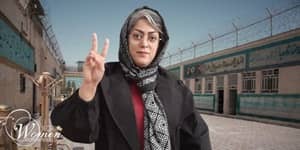
Political prisoner Parisa Kamali held in Yazd Central Prison, was suddenly taken out of her ward and transferred to Bandar Abbas Prison on Wednesday, September 9, 2026.
Yazd prison officials summoned Parisa Kamali from her ward without prior notice and, after completing the arrangements for her transfer, moved her to Bandar Abbas Prison. Parisa Kamali’s family was also not informed of the decision before her transfer.
The transfer of political prisoners from one prison to another, particularly when carried out without notifying their families and under sudden circumstances, can make it more difficult for families to access the prisoner and follow up on their situation. It can also affect visitation, telephone calls, and the prisoner’s access to medical and legal services.
During her imprisonment in Yazd Central Prison, political prisoner Parisa Kamali has faced repeated pressure, including denial of medical treatment, despite suffering from hyperthyroidism and requiring specialized care.
The Clerical Regime Intensifies Repression Through Forced Hijab

At a time when the clerical regime is facing deep economic and social crises and widespread public discontent, it continues to regard forced hijab as one of the tools for subjugating women and repressing and controlling society.
In recent weeks, clear signs of efforts to intensify this pressure have emerged, from schools and universities to the streets and businesses. At the same time, statements by some officials and state-run media indicate that the religious dictatorship is also concerned about the social and political consequences of this policy.
Thus, the clerical regime finds itself caught in a dilemma: on the one hand, it cannot retreat from its policy of imposing the hijab, while on the other, it fears that expanding direct confrontations with women could become a spark for broader protests.
One sign of the intensification of this policy is the expansion of controls over girls and women in educational settings.
Woman Executed in Mashhad; 25th Woman Hanged in Iran in 2026

On the morning of Sunday, September 6, the death sentence of a woman was carried out at the Mashhad Central Prison (Vakilabad).
The woman executed in Mashhad was Fatemeh Jahangard, approximately 40 years old, and from Mashhad in northeast Iran.
She had been imprisoned for the past five years on charges of murder. As of the time of publication, the execution of Fatemeh Jahangard had not been reported by Iranian media or officially announced by authorities. With the execution of Fatemeh Jahangard at Mashhad Central Prison, the number of women executed in Iranian prisons since the beginning of 2026 has reached at least 25.
According to data recorded by the Women’s Committee of the National Council of Resistance of Iran, at least 353 women have been executed in Iran since 2007.
Many of the women executed by the Iranian regime are themselves victims of domestic violence and discriminatory family laws. A significant number have acted in self-defense.
Iran Regime’s Internal Infighting Deepens as Multiple Crises Converge

The internal power struggle at the top of Iran’s regime is entering an increasingly confrontational phase, with disputes over negotiations, economic policy, and the handling of public discontent becoming increasingly difficult to contain.
Factional conflict is not new to Iran’s ruling establishment. What distinguishes the current situation, however, is the extent to which these disputes appear to reflect deeper crises confronting the regime rather than ordinary competition between political factions. The growing confrontation also raises questions about the effectiveness of repeated appeals from Supreme Leader Mojtaba Khamenei for internal cohesion. Calls to avoid public disputes and maintain unity have done little to resolve disagreements that are rooted in fundamental strategic and economic dilemmas.
One of the clearest sources of friction is the regime’s uncertainty over how to respond to its external challenges.
Escalation of Social Protests and Possibility of Nationwide Protests in Iran

This summer, Iran has witnessed a broad wave of labor and professional protests. Experts warn that the authorities’ failure to respond to these demands could expand the scope of these protests beyond professional and labor-related grievances.
Retirees have been among the most organized groups of protesters in recent weeks. According to a report by HRANA, on September 6, a number of retired teachers, telecommunications workers, and Social Security Organization retirees gathered outside the Social Security Organization in Tehran.
Social Security retirees also held protests in the cities of Ahvaz, Shush, Kermanshah, Rasht, and Dezful. Their main demands have been the full implementation of Articles 96 and 111 of the law, revision of pension adjustment provisions, and attention to their livelihood and healthcare problems.
Take Action to Release of Political and Conscientious Prisoners in Iran

An overview of the situation of political prisoners in Iran demonstrates that arbitrary arrests, prolonged pre-trial detentions in a state of legal limbo, denial of access to legal counsel, failure to inform families, punitive transfers, denial of medical care, pressure exerted on prisoners, and the widespread use of security charges remain among the most critical human rights challenges in the country. In many cases, individuals are detained and face charges that violate international fair trial standards not for committing violence or recognized offenses, but for their civic, religious, political, cultural, or media activities, or for participating in protests.
The cases highlighted in this report serve as examples of the situation of political and conscientious prisoners across various parts of Iran, illustrating a broader pattern of suppression targeting freedom of expression, freedom of belief, freedom of peaceful assembly, and the right to a fair trial.
Parisa Kamali, a political prisoner, was transferred from Yazd Prison to Bandar Abbas Prison without prior notice to her family or legal counsel. This sudden transfer took place under conditions where she had previously faced restrictions on contact with her family, medical issues, and security pressures.
Workers, Nurses and Retirees Protest Over Pay and Working Conditions in Several Iranian Cities

Over four days, protests over unpaid wages, living costs and working conditions extended from oil and gas facilities in southern Iran to hospitals, industrial workplaces, the transport sector and gatherings by retirees. In Ahvaz, a metro project worker also set himself on fire in protest over five months of unpaid wages and his dismissal.
Labor and livelihood protests and strikes continued in several Iranian cities from Sunday, September 6, to Wednesday, September 9, involving energy-sector employees, teachers, nurses, industrial workers, retirees and drivers. Reported demands mainly included payment of overdue wages and benefits, higher income, attention to insurance and retirement conditions, and improved working conditions.
On Sunday, workers from Pars Oil and Gas Company gathered in protest at 13 sections and offshore platforms in Asaluyeh and Kangan. The area in southern Iran is one of the country’s main centers of oil and gas activity. In Tehran, about 300 teachers also gathered outside the Planning and Budget Organization and demanded payment of their outstanding claims.
MEK Supporters in The Hague Celebrate the 61st Anniversary of the Founding of the PMOI
The Hague, Netherlands – September 5, 2026: Supporters of the People’s Mojahedin Organization of Iran (PMOI/MEK) gathered in The Hague to celebrate and commemorate the 61st anniversary of the PMOI’s founding.
Alongside celebrating and commemorating the anniversary, they reaffirmed their unwavering support for the PMOI’s struggle to achieve freedom, democracy, and equality in a free and democratic republic in Iran.

They also emphasized their continued support for the PMOI’s Resistance Units inside Iran and for the courageous political prisoners who continue to stand against the regime from within its prisons and voice their support for the PMOI.
MEK Supporters in Stockholm Celebrate the 61st Anniversary of the PMOI’s Founding
Stockholm, Sweden – September 5, 2026: Supporters of the People’s Mojahedin Organization of Iran (PMOI/MEK) held a rally in Stockholm to celebrate and commemorate the 61st anniversary of the PMOI’s founding.
Alongside celebrating and commemorating the anniversary, they reaffirmed their unwavering support for the PMOI’s struggle to achieve freedom, democracy, and equality in a free and democratic republic in Iran.

They also emphasized their continued support for the PMOI’s Resistance Units inside Iran and for the courageous political prisoners who continue to stand against the regime from within its prisons and voice their support for the PMOI.
MEK Supporters in Aarhus Celebrate the 61st Anniversary of the Founding of the PMOI
Aarhus, Denmark – September 5, 2026: Supporters of the People’s Mojahedin Organization of Iran (PMOI/MEK) gathered in Aarhus to celebrate and commemorate the 61st anniversary of the PMOI’s founding.
Alongside celebrating and commemorating the anniversary, they reaffirmed their unwavering support for the PMOI’s struggle to achieve freedom, democracy, and equality in a free and democratic republic in Iran.

They also emphasized their continued support for the PMOI’s Resistance Units inside Iran and for the courageous political prisoners who continue to stand against the regime from within its prisons and voice their support for the PMOI.
The 61st Anniversary of PMOI’s Founding is Marked by MEK Supporters in Paris
Paris, France – September 5, 2026: Supporters of the People’s Mojahedin Organization of Iran (PMOI/MEK) gathered in Paris to celebrate and commemorate the 61st anniversary of the PMOI’s founding.
Alongside celebrating and commemorating the anniversary, they reaffirmed their unwavering support for the PMOI’s struggle to achieve freedom, democracy, and equality in a free and democratic republic in Iran.

They also emphasized their continued support for the PMOI’s Resistance Units inside Iran and for the courageous political prisoners who continue to stand against the regime from within its prisons and voice their support for the PMOI.
MEK Supporters in Hamburg Mark 61 Years of PMOI’s Founding
Hamburg, Germany – September 5, 2026: Supporters of the People’s Mojahedin Organization of Iran (PMOI/MEK) gathered in Hamburg to celebrate and commemorate the 61st anniversary of the PMOI’s founding.
Alongside celebrating and commemorating the anniversary, they reaffirmed their unwavering support for the PMOI’s struggle to achieve freedom, democracy, and equality in a free and democratic republic in Iran.

They also emphasized their continued support for the PMOI’s Resistance Units inside Iran and for the courageous political prisoners who continue to stand against the regime from within its prisons and voice their support for the PMOI.