

THIS PAGE WILL BE UPDATED WITH THE LATEST NEWS
UPDATE: 8:30 PM CEST
Report: Crude Oil Exports from the Gulf Reach Prewar Levels

Despite threats from Iran, oil exports from Arab producers in the Persian Gulf have been on the rise for some time. According to data provider Kpler, a “shuttle fleet” in the Strait of Hormuz is playing a role. According to a report by the data provider Kpler, crude oil exports from Arab countries in the Persian Gulf have reached levels similar to those seen before the outbreak of the Iran war. Crude oil exports through the Strait of Hormuz have recently averaged slightly above comparable levels prior to the outbreak of attacks in the strait, according to a report obtained by the German Press Agency.
The data primarily pertains to unprocessed crude oil. Refined products such as gasoline accounted for only about 19 percent of pre-war export levels by the end of the reporting period on Monday, the report adds.
According to the report, exports via pipelines to coasts outside the Gulf and a “shuttle fleet” escorted by the U.S. Navy play a crucial role: At least 63 VLCC supertankers are currently on the move for this purpose, with 35 of them making round trips through the strait approximately every 16 days, according to Kpler.
‘Strong Indications’ Iran Played Role in Suspected Fairford Terror Plot, PM Says

Andy Burnham has said there are “strong indications” Iran played a part in a suspected terror plot near RAF Fairford. The UK is working closely with US and the authorities have the situation under “the strongest grip”, the Prime Minister insisted after Donald Trump criticized the decision to release the suspects. Five British nationals, all in their mid-20s, were arrested on suspicion of explosives offences and terrorism near the military base over the weekend before being bailed under investigation on Monday.
The Gloucestershire site has been used in recent months by American bombers after Sir Keir Starmer granted the US permission to use British bases for “defensive” strikes against Tehran during the Middle East war.
Counter-terror police have said a quantity of petrol but no explosive devices were found in the vans that sparked the security alert near the airbase.
Turkiye Seizes Iranian Airline’s Plane Over Unpaid Debt: Reports

ISTANBUL: Turkish authorities have seized a plane belonging to Iran’s Caspian Airlines in Istanbul over an alleged unpaid debt of 3.0 million euros ($3.4 million), media from both countries said on Tuesday. The Boeing 737 jet had completed embarkment and was preparing for takeoff on Monday, when officials detained it on the basis of a court-issued seizure order, Turkiye’s Anadolu news agency said.
The reports did not cite new US sanctions against Iranian airlines, an effort to further choke the country’s economy during the Middle East war.
In a statement relayed by Iranian state television, Caspian Airlines said the Istanbul flight to Tehran faced “temporary operational restrictions regarding one of its Boeing aircraft due to an administrative issue in Turkiye.”
UPDATE: 7:00 AM CEST
Students And Retirees Protest Across Iran Amid Heightened Security Measures
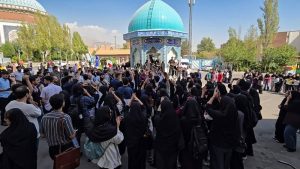
Students and retirees staged protests in several Iranian cities on September 28, highlighting continuing economic, social, and political grievances immediately after authorities had imposed an extensive nationwide security alert.
At Allameh Tabataba’i University in Tehran, students protested rising prices and educational costs as well as measures by university security, particularly those targeting female students. Their demands extended beyond campus expenses to the imprisonment of students, compulsory hijab, and the growing security presence at universities.
On the same day, telecommunications retirees held demonstrations in Isfahan, Kermanshah, and Bijar, while retirees of the Shafaroud company gathered outside the Gilan governorate. The simultaneous protests involved different constituencies and different immediate demands, but reflected continued public mobilization over economic pressures and restrictions.
Who is Ahmad Vahidi: Mastermind of Terror Abroad and Repression in Iran
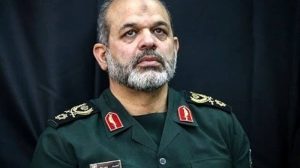
In recent months, as Iran confronts mounting internal unrest, external pressures, and reported leadership shifts within its security apparatus, Ahmad Vahidi has become a central figure in discussions across international news outlets. Analysts and observers are speculating that he may effectively be the one calling the shots in Iran, particularly in military and security matters, amid what some describe as an extreme security crisis and potential power consolidation at the highest levels of the regime. Amid the uprising that began in December 2025, Khamenei appointed Vahidi as Deputy Commander-in-Chief of the IRGC. He is the regime’s “break glass in case of emergency” option.
After previous commander Mohammad Pakpour was killed on 28 February 2026, the first day of the war, Vahidi was said to have become the IRGC commander-in-chief. But no formal appointment was announced, and he remained invisible for months.
He finally appeared on 2 July 2026 for the first time since the war began, and state media released pictures showing him attending a meeting related to Khamenei’s funeral procession.
Italian Senator Giulio Terzi: Change of Regime in Iran Can No Longer Be Delayed
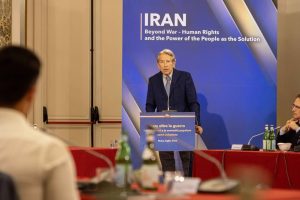
A senior Italian senator has called for a fundamental shift in Western policy toward Iran’s regime, arguing that continued reliance on diplomacy alone cannot address the regime’s repression at home and destabilizing activities abroad.
Senator Giulio Terzi, president of the European Affairs Committee of Italy’s Senate and a former foreign minister, made the remarks on September 25 during a conference in the Italian Senate devoted to peace, security, human rights, and Italy’s Mediterranean policy. The event was organized by the Fondazione Luigi Einaudi and brought together Italian political and diplomatic figures, human-rights advocates, journalists, and supporters of the Iranian Resistance.
Terzi described Iran’s regime as a major source of international instability and argued that its activities can no longer be addressed through diplomatic engagement without meaningful pressure.
Tether Helps Freeze Nearly $550 Million in Iran-Linked Digital Assets

Tether, the world’s largest stablecoin issuer, says it has supported the freezing of approximately $550 million in digital assets linked to Iran’s regime during 2026, as the United States intensifies efforts to disrupt the regime’s financial networks and sanctions-evasion mechanisms.
In a statement on September 28, Tether said the actions were carried out in coordination with U.S. authorities and involved wallets identified as connected to the regime’s Central Bank and other sanctioned networks. The company said the measures demonstrate that digital assets can be traced and restricted when authorities identify links to sanctioned entities.
In April, Tether supported the U.S. government in freezing more than $344 million in USDT across two digital addresses, based on information provided by the U.S. Treasury’s Office of Foreign Assets Control (OFAC) and U.S. law-enforcement agencies.
The following day, OFAC formally added the same two addresses to its sanctions designation as digital-currency identifiers associated with the Central Bank of Iran. The Treasury designation also links the bank to the IRGC-Qods Force and Hezbollah.
Iran Regime Faces Deepening Oil Export Crisis as New Sales to China Dry Up
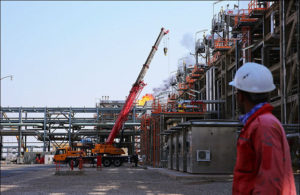
Iran’s regime is facing a growing squeeze on one of its most important sources of foreign currency, as new oil shipments are sharply restricted and previously loaded cargoes move toward their final deliveries in China.
U.S. Treasury Secretary Scott Bessent said Iran could deliver its last remaining oil shipments to China within the next two weeks, after which Tehran may have little left to trade. According to Bessent, approximately 15 million barrels of Iranian oil that had already been loaded remain in transit. The development comes as broader Middle Eastern oil exports recover from wartime disruptions, highlighting the specific pressure facing Iran’s oil trade.
Data from commodity and energy analytics firm Kpler showed that crude exports from major Middle Eastern producers reached approximately 12.8 million barrels per day in September, the highest level since the beginning of the war.
Exports through the Strait of Hormuz also recovered to around 7.4 million barrels per day, approaching more than 90 percent of their prewar level.
The Rising Cost of Food in Iran Has Turned Small Items into Targets for Theft

Iran’s Statistical Center reports that inflation for food and beverages has reached 127.5%, meaning food prices have more than doubled compared with the previous year. The figure takes on a different meaning when set alongside the daily minimum wage of about 554,000 tomans per day (approximately $2.3). Under such conditions, goods that until yesterday were ordinary items in the shopping basket have become so expensive that many families find them difficult to buy, while for some, stealing them has become tempting. A report by the state-run 7Sobh media outlet recounts this very situation.
A man who works as a store security officer watches people’s hands, not their faces. He says: “These days, more than ever, I watch people’s hands. Because everyone’s faces are tired.” A young woman enters the dairy aisle carrying a cloth bag. A 100-gram package of cream cheese costs 450,000 rials. A 200-gram container of cream costs 850,000 rials. She looks at the shelves for a few moments. Then she opens her bag slightly. The sound of the zipper, quietly. She holds her breath, and then… the girl leaves.
Shoplifting does not always look the same. Sometimes it is a 100-gram stick of butter that fits into a pocket. Sometimes it is a carton of eggs hidden in a child’s stroller. Sometimes it is a bottle of cooking oil placed in a shopping bag, while at the checkout, all the cashier sees is bread and chewing gum.
Exposing Tehran’s Efforts To Carry Out Acts Of Sabotage And Bombings In Europe
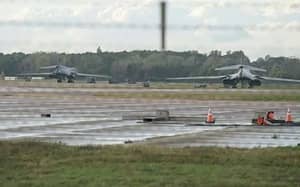
In recent days, two security cases in Belgium and the United Kingdom have once again drawn the attention of European officials to the activities of the Iranian regime on European soil.
In Belgium, the head of the country’s threat analysis agency described the March attacks in Liège and Antwerp as coordinated actions carried out at the direction of Tehran.
In the United Kingdom, counterterrorism police are also investigating a possible link between the Iranian regime and a suspected bombing plot near the U.S. Air Force base at Fairford.
Gert Vercauteren, head of Belgium’s Coordination Unit for Threat Analysis (CUTA), has stated that the attack on a synagogue in the city of Liège and the arson attack on a vehicle belonging to a Jewish person in Antwerp’s Jewish quarter, both of which occurred in March 2026, were part of a coordinated campaign. Speaking to Belgian broadcaster RTBF, he said the perpetrators of these attacks had “definitely” acted on orders from Tehran to target Jewish sites in different parts of the world.
Iran’s Supreme Leader Says Iran Will Not Return to Past as Debate Over War and Negotiations Intensifies
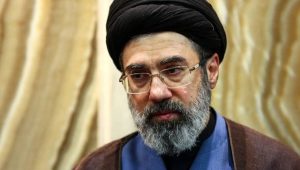
The message from Mojtaba Khamenei, the Islamic Republic’s new leader, backing the continuation of the path of “resistance” comes as domestic reports point to a six-member circle tasked with decisions on war and negotiations, while hardliners have stepped up attacks on senior government officials.
Mojtaba Khamenei said in a message released Sunday that Iran would not return to the conditions its enemies want to restore and voiced support for Lebanon’s Hezbollah continuing on its current path, a position that comes amid public debate within Iran’s power structure over negotiations, war and how key foreign policy decisions are made.
In a message marking the anniversary of the killing of Hassan Nasrallah, Hezbollah’s former secretary-general, he said: “Those past days that our enemy longs to return to are over and will never be repeated.” He also voiced support for Naim Qassem, Nasrallah’s successor, and said Hezbollah would continue on its path.
The message comes as Iranian President Masoud Pezeshkian has disclosed unusual details about a limited mechanism for making decisions on matters related to war and negotiations, with Iranian media reports about its composition intensifying debate over the actual centers of decision-making in the Islamic Republic’s foreign policy.
Bucharest Exhibition Condemns the Iranian Regime’s Executions and Human Rights Violations
Bucharest, Romania – September 27, 2026 – Supporters of the People’s Mojahedin Organization of Iran (PMOI/MEK) held a photo exhibition in Bucharest highlighting human rights violations in Iran and calling for urgent international action to stop the execution of political prisoners and prevent the implementation of death sentences.
The exhibition emphasized that urgent action is needed to stop the execution of political prisoners in Iran. It drew attention to the continued detention of protesters arrested during Iran’s January 2026 uprising, as well as the executions and imminent execution of political prisoners.

The event called for the complete abolition of the death penalty in Iran and the immediate release of all political prisoners and detainees, particularly those facing imminent execution. Organizers also urged the international community to take action and called for senior Iranian regime officials to be held accountable before an international tribunal for crimes against humanity.