

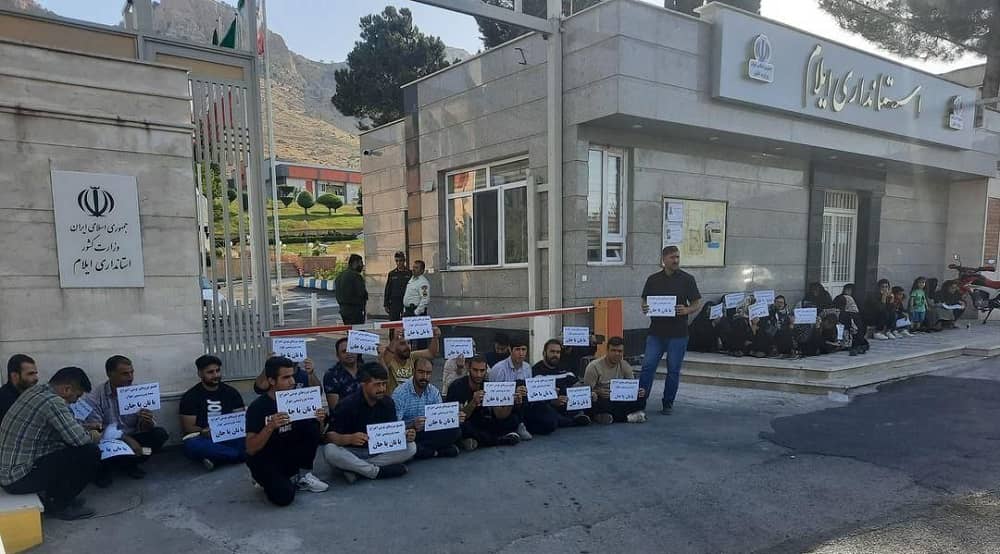
Over the past two days, Iran has witnessed protests and strikes reflecting widespread dissatisfaction with economic conditions, unpaid wages, and lack of basic services. These events highlight the ongoing struggle of various sectors against the regime’s oppressive policies.
In Abadan, petrochemical workers staged a demonstration demanding unpaid wages and insurance benefits. This protest was part of a broader wave of industrial action across the country. Workers in Ilam also took to the streets; in one instance, local workers who had been dismissed from the Arghavan Petrochemical Company protested their termination, while residents of Zifil in Badreh County rallied in front of the governor’s office, demanding access to clean drinking water.
The unrest extended to Sanandaj, where emergency service contractors and municipal workers protested against months of unpaid insurance contributions. These workers highlighted their precarious job security and the financial strain of having to cover medical expenses out of pocket due to lapses in insurance coverage. Similarly, contract workers at Iranshahr University of Medical Sciences reported severe delays in receiving their wages and insurance, with payments arriving sporadically and often incomplete. These workers, fearing retaliation, face threats of dismissal and transfer if they speak out.
June 26—Ilam, western #Iran
Dismissed workers of the Arghavan Petrochemical company hold 22nd day of their protest rally, demanding policy changes that will ensure employment for locals. #IranProtests pic.twitter.com/SI793WlE2x— People's Mojahedin Organization of Iran (PMOI/MEK) (@Mojahedineng) June 26, 2024
A local human rights organization reported that social emergency service workers had not seen their insurance premiums paid for three months, with officials citing delays in contractor selection processes as the cause. Workers noted that despite their low wages, which are insufficient to cover basic living expenses, they are expected to work more hours and face easy dismissal compared to their officially employed counterparts.
In addition, workers from the Sanandaj Municipality in Kurdistan Province have been denied medical insurance benefits due to the municipality’s financial debts to the Social Security Organization. This has left approximately 2,000 workers and their families without necessary medical coverage, exacerbating their already difficult living conditions.
June 26—#Iran
The strikes of oil sector workers, which began on June 19, now includes more than 21,000 workers from 92 companies.
The workers are calling for better work conditions, job security, and other basic rights.#IranProtests pic.twitter.com/sRLMKrhBHT— People's Mojahedin Organization of Iran (PMOI/MEK) (@Mojahedineng) June 26, 2024
On June 25 and 26, the seventh day of strikes by workers in the oil and petrochemical industries was marked by continued protests over dire working and living conditions. These strikes began on June 19 and have seen significant participation from project workers in refineries and petrochemical plants across various cities.
In Minab, a group of farmers and tractor drivers they demonstrated against the reduction of their fuel quotas, gathering with their tractors outside the local government office.
#Iran
The nationwide strike by oil sector workers, which began on June 19, has expanded to 87 oil and gas companies and includes more than 19,000 workers.#IranProtests pic.twitter.com/kj2VsSXixR— People's Mojahedin Organization of Iran (PMOI/MEK) (@Mojahedineng) June 25, 2024
Furthermore, political prisoners in twelve wards of seven prisons across the country, including Evin, Ghezel Hesar, and central prisons in Karaj, Khorramabad, Khoy, Naqadeh, Saqqez, and Mashhad, engaged in a hunger strike as part of the “No to Execution Tuesdays” campaign. This marks the twenty-second consecutive week of this protest, which has seen increasing participation despite the regime’s severe crackdowns, including recent executions and public hangings.
In their latest statement, these prisoners condemned the rising number of executions and the regime’s brutal tactics, which included a public execution in front of a seven-year-old child in Qazvin. The strikers highlighted the sham trials of 40 defendants accused of involvement in the Evin prison fire, accusing the regime of using these trials to shift blame away from itself.
This wave of protests and strikes underscores the growing unrest and dissatisfaction among various sectors of Iranian society, from industrial workers to political prisoners, all united in their call for justice and systemic change.
Iran's rebellious youth are casting their votes early in the regime's sham presidential elections by targeting centers of repression and burning down propaganda banners.#Iranhttps://t.co/vlTVLSt8ML
— People's Mojahedin Organization of Iran (PMOI/MEK) (@Mojahedineng) June 25, 2024