

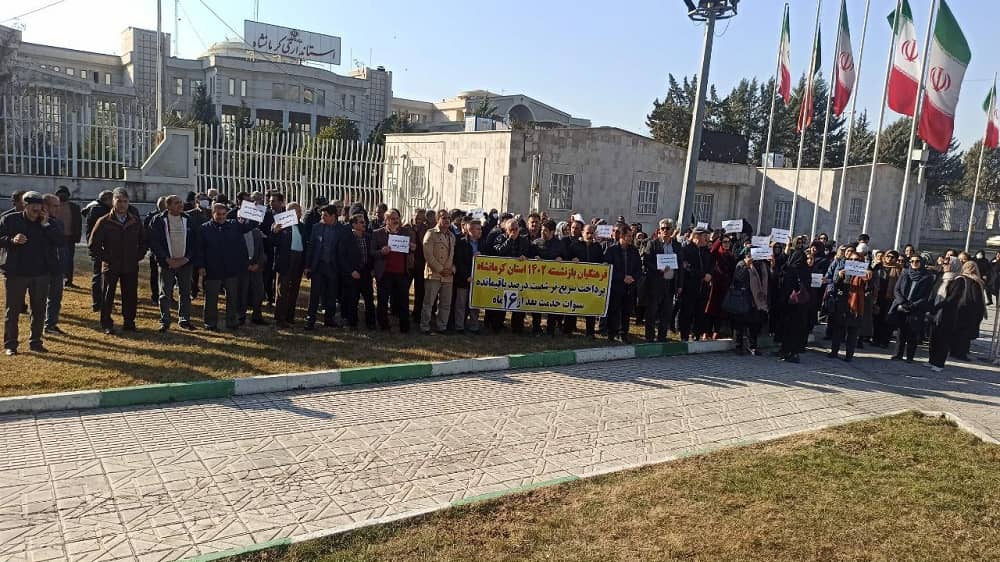
On December 31, protests and strikes escalated across Iran, with citizens from various sectors and regions voicing their grievances against economic hardship, delayed payments, and poor working conditions. These protests highlight the growing discontent with the government’s handling of financial and social crises.
Protests by Recently Retired Teachers
Recently retired teachers staged rallies in multiple cities, demanding long-overdue payments and better pensions:
- Sari, northern Iran: Teachers demanded the payment of 16 months of delayed arrears.
- Rasht, northern Iran: Protesters gathered outside the Gilan Province governorate, calling for overdue payments.
- Gorgan, northern Iran: Similar rallies occurred, with educators raising their voices against delayed salaries.
- Kermanshah, western Iran: Teachers rallied in front of the Kermanshah governorate, protesting low pensions and unpaid arrears.
- Shiraz, southern Iran: Retired educators assembled in front of the Fars Province governorate with the same demands.
- Urmia, northwest Iran: Teachers demonstrated outside the provincial education department, frustrated by unpaid pensions and wages.
Workers’ Strikes and Rallies
Industrial and agricultural workers joined the wave of dissent:
- Bushehr, southern Iran: Workers of the Fajr Jam Gas Refinery and South Pars Gas Company went on strike, protesting low wages and unfair contracts.
- Gachsaran, southwest Iran: Employees of Gachsaran Oil and Gas Company rallied against poor working conditions, inadequate wages, and unresponsive management.
- Ilam, western Iran: Workers from the Ministry of Agriculture demonstrated in front of the local headquarters, demanding better pay and living conditions.
Sixth Day of Strikes in Yadavarn Oil Field
In Khorramshahr, southwest Iran, workers from Iran Ofogh Company continued their strike for the sixth consecutive day at the Yadavarn oil field. They demanded improved wages and working conditions, accusing authorities of ignoring their pleas.
Economic Mismanagement Fuels Protests
Defrauded customers of the Azvico car company in Tehran held rallies outside the courthouse. Many of them lost substantial savings in failed investments, sparking outrage against fraudulent practices and governmental neglect.
Merchants in Mashhad‘s Atlas Bazaar went on strike to protest inflation, soaring prices, and the devaluation of the national currency, underscoring the economic crisis gripping the nation.
Crackdowns and Social Tensions
Amid growing unrest, the regime intensified its crackdown on marginalized communities:
- Zahedan, southeastern Iran: Early on December 29, security forces demolished homes in Shirabad, targeting impoverished Baluchi families. Residents, already burdened by poverty, face harsh winters with nowhere to go.
- Zabol, southeastern Iran: On December 28, regime agents confiscated the goods of street vendors under the guise of “urban management,” sparking public outrage. A protester criticized the move, saying, “How are people supposed to survive if their only means of income is taken away?”
December 31—Bushehr, southern Iran
Workers of Fajr Jam gas refinery and South Pars Gas Company go on strike and rally to protest low wages and unfair contract conditions.#IranProtestspic.twitter.com/tY4og76h0c— People's Mojahedin Organization of Iran (PMOI/MEK) (@Mojahedineng) December 31, 2024
Seeds of Further Protest
The Iranian government’s announcement of plans to cut cash subsidies for approximately 25 million citizens—nearly a third of the population—has sparked widespread concern, particularly as reports reveal that some payments have already been halted. Framed as a cost-saving measure to redirect funds to lower-income groups, the move comes amidst severe economic hardships, including soaring inflation and a depreciating currency. Critics warn that this decision could exacerbate public outrage, particularly as subsidy delays and reductions disproportionately impact struggling households, adding fuel to the growing unrest across the country.
Meanwhile, the regime’s oppressive actions, including demolishing homes and confiscating livelihoods, are fueling public anger. These crackdowns, coupled with the government’s inability to address fundamental economic and social issues, are sowing the seeds for further protests.
As frustration deepens across various strata of society—from retirees and workers to marginalized communities—the potential for broader unrest grows. Iran’s spiraling economic crisis, exacerbated by sanctions and internal mismanagement, has left millions struggling to survive, setting the stage for continued resistance.
Iran's rebellious youth in Tehran commemorate the anniversary of 2009 Ashura protests by targeting regime centers of repression and corruption.#IranProtests pic.twitter.com/l1g7DRxnn5
— People's Mojahedin Organization of Iran (PMOI/MEK) (@Mojahedineng) December 29, 2024