

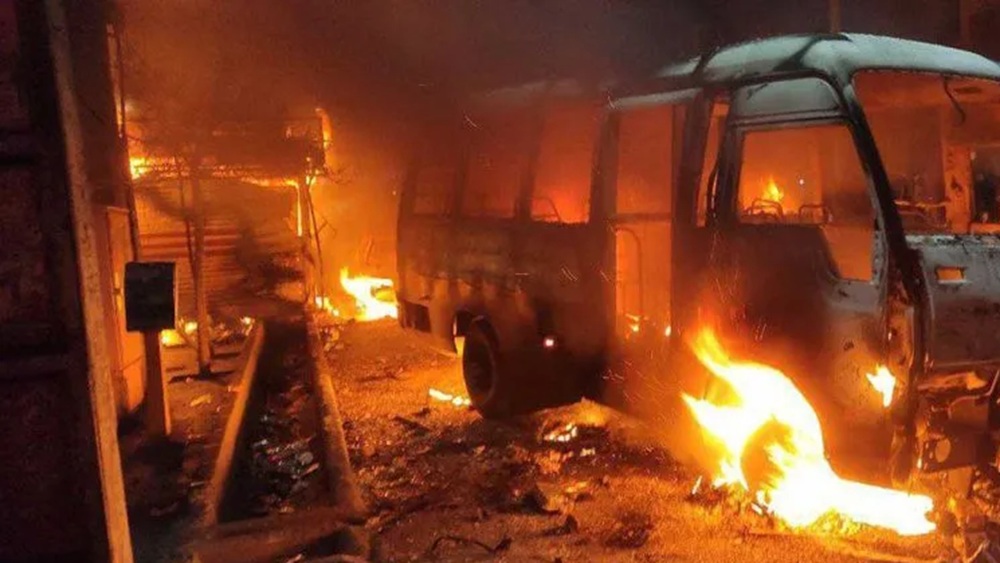
As the sun set on January 15, 2026, the silence emanating from Iran’s digital sphere marked a grim anniversary: exactly one week of total internet blackout. According to network data, the Iranian authorities imposed a national shutdown 168 hours ago, plunging the nation into “digital darkness.” Yet, despite the regime’s attempt to sever the country from the outside world, information has trickled out, revealing a landscape of defiance and draconian repression. As the nationwide uprising enters its 19th day, protests have now spread to more than 200 cities across all 31 provinces, met by a state security apparatus operating without restraint.
A Campaign of Mass Arrests
In an effort to quell the unrest, the regime has launched a staggering wave of detentions. The People’s Mojahedin Organization of Iran (PMOI/MEK) announced today that the number of individuals arrested between December 28, 2025, and January 14, 2026, has exceeded 50,000. These figures, compiled through detailed investigations in 144 cities and inquiries in 76 others, point to a systematic campaign of terror. Reports from the ground indicate that security forces are conducting surprise raids on homes, neighborhoods, and workplaces to abduct suspected dissidents.
The scale of the current crackdown appears to rival, if not exceed, previous suppressions. To provide context, on May 6, 2025, the regime’s own Judiciary Chief, Gholam-Hossein Eje’i, admitted—two and a half years after the fact—that approximately 90,000 cases were filed during the 2022 uprising. The current accumulation of 50,000 arrests in less than three weeks suggests an accelerated pace of repression.
Furthermore, information obtained by the PMOI indicates that over 3,000 protesters have been killed. The violence has breached usually sanctified spaces; security forces have been documented entering hospitals to arrest the wounded, denying medical care to those injured by state violence.
Technological Warfare Against Citizens
The clampdown extends beyond physical arrests to the utilization of military-grade technology against civilians. The US State Department’s Persian-language X account reported that the regime is deploying military drones to identify, track, and hunt down peaceful protesters. By treating its own citizens as “enemy combatants,” the regime is waging an asymmetric war on the streets of its cities.
According to an announcement by the People’s Mojahedin Organization of Iran (PMOI/MEK), the total number of arrests and detentions nationwide during the uprising, from December 28 to January 14, has reached 50,000.
Iran’s criminal rulers, determined to preserve the disgraceful… pic.twitter.com/YQyqvoaLQL— Maryam Rajavi (@Maryam_Rajavi) January 15, 2026
Mrs. Maryam Rajavi, President-elect of the National Council of Resistance of Iran (NCRI), described the regime’s tactics—the mass killings and the wave of arbitrary arrests—as evidence of Supreme Leader Ali Khamenei’s desperation. “He will stop at no crime to preserve the regime,” Mrs. Rajavi stated, warning that the rulers recognize no limits to their brutality in their attempt to maintain the Velayat-e Faqih (clerical supremacy). She has issued an urgent call for an international fact-finding mission to inspect Iran’s prisons immediately.
Global Condemnation and Political Clarity
The international community has responded with escalating alarm. The G7 Foreign Ministers, including those from Canada, France, Germany, Italy, Japan, the UK, and the US, issued a joint statement expressing “grave concern” over the intensification of repression. They condemned the “deliberate use of violence” and warned of potential “additional restrictive measures.” Similarly, New Zealand’s Foreign Minister Winston Peters condemned the killing of protesters and urged New Zealanders to leave Iran.
To The Brave Protestors in the Streets of Iran: You are not alone. Do not doubt that the American people, and millions more across the free world, are on your side. We support your goal of establishing a democratic Iranian Republic that derives its just powers from the consent of…
— Mike Pence (@Mike_Pence) January 15, 2026
In the United States, bipartisan support for the uprising is mounting. Senator Ted Cruz stated that the removal of the tyrannical regime would make America safer. Other lawmakers, including Representatives Nancy Mace, Raja Krishnamoorthi, and Senator Dave McCormick, have denounced the “mass killings” and “reckless threats,” calling for forceful diplomacy.
Significantly, a coalition of 12 former European leaders—including former Prime Ministers of Belgium, Ireland, Romania, and Poland—addressed a letter to the EU leadership that clarifies the political nature of the uprising. They rebuked the regime’s propaganda which attempts to label protesters as monarchists. The letter noted that authorities have circulated doctored videos to falsely suggest a desire for a return to the Pahlavi dictatorship. However, the reality on the ground is defined by the popular chant: “Down with the oppressor, be it the Shah or the Supreme Leader.”
Letter by 12 former EU leaders:
Protesters in Iran have repeatedly chanted: “Down with the oppressor, be it the Shah or the Supreme Leader”
“It is essential that the European Union recognise that Iranian people are seeking democracy—not the restoration of any past dictatorship” https://t.co/6nMr0SeLf1 pic.twitter.com/eB8pwZ6Hfz
— M. Hanif Jazayeri (@HanifJazayeri) January 15, 2026
These leaders urged the EU to recognize the Iranian people’s desire for a democratic republic, one that rejects both the current theocracy and the past monarchy. They further called for the blacklisting of the Revolutionary Guards (IRGC) as a terrorist organization.
As the uprising moves toward its third week, the divide between the Iranian regime and the people has become unbridgeable. The regime has resorted to the ultimate tools of isolation—shutting down the internet—and terror—arresting 50,000 citizens—in a frantic bid for survival. However, the persistence of protests despite such heavy costs indicates a shift in the balance of power. The demand from the streets is clear: a total transition from dictatorship to democracy, with no return to the past.