

Three-minute read
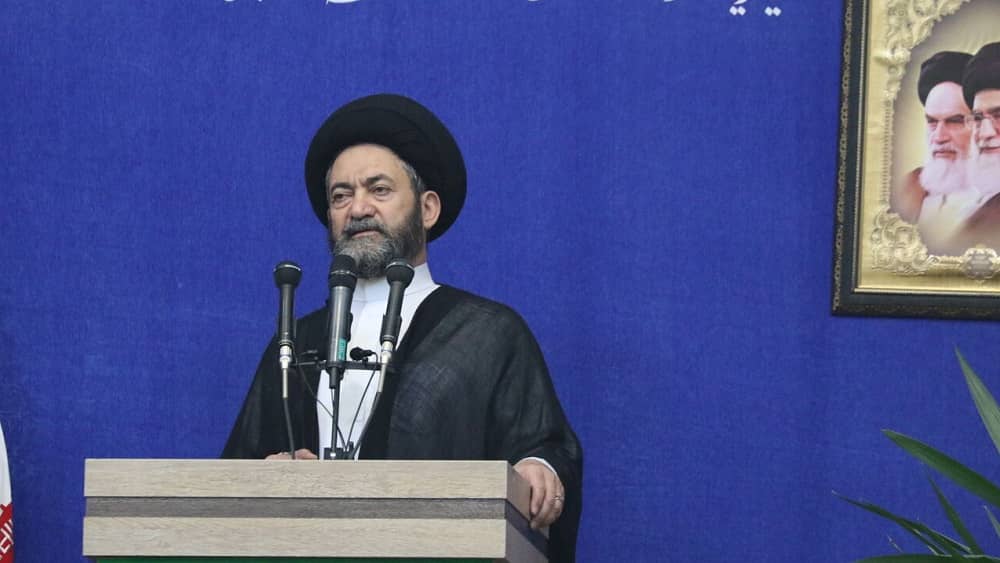
Iran’s clerical regime is increasingly alarmed by the dual threats of growing despair within its own ranks and the expanding influence of the People’s Mojahedin Organization of Iran (PMOI/MEK) on the nation’s youth. Supreme Leader Ali Khamenei’s representatives across the country have issued stark warnings in Friday sermons and public statements, cautioning against the erosion of morale among regime loyalists while emphasizing the PMOI’s role in galvanizing dissent among disillusioned Iranians.
Hassan Ameli, the Friday prayer leader in Ardabil, said on January 10: “One of the enemy’s tools are the hypocrites [the regime’s pejorative to defame the PMOI]. Around a thousand hypocrite members are stationed abroad, targeting over 85 million of our people through computers. They bombard our nation daily with negative and alarming news. Their topics are carefully selected and provided by American and European think tanks, showing a calculated strategy. They focus on specific groups and particular problems, exploiting sensitivities with precision to advance their agenda.”
In Bojnourd, Reza Nouri, the state-appointed Friday prayer leader, warned: “Media activists, cultural figures, youth, men, and women—everyone must engage in cyberspace to fight against America, the Zionists, and the hypocrites. Syria was initially defeated in cyberspace, and only later was it overcome in the real world. Sometimes people are questioning why Iran became involved in the Resistance Front, supported it, and provided assistance.”
Former MOIS Interrogator Warns Against #MEK Influence in #Iran, Calls for Internet Restrictionshttps://t.co/FKQS8AGR8F
— NCRI-FAC (@iran_policy) January 10, 2024
Former Intelligence Minister and cleric Ghorban-Ali Dori Najafabadi alluded to internal cracks within the regime, admitting that morale is faltering under mounting pressures. “At times, we become complacent in pursuing our objectives; occasionally, malicious propaganda causes some hesitation or despair,” he said during the Friday prayer sermon on January 10. “However, we must never doubt. We must steadfastly continue on the path laid out by the Imam and our esteemed Leader, despite all the developments in West Asia, particularly in Syria, Lebanon, Gaza, and elsewhere. Threats, conspiracies, satanic schemes, and false propaganda should never lead us to despair or hopelessness. The helm of our ship rests in the hands of our dear and noble Leader, and we all stand firmly behind him.”
Najafabadi’s acknowledgment of eroding confidence among regime officials aligns with public frustrations over economic collapse, international sanctions, and systemic corruption. While Najafabadi called for unity under Khamenei’s leadership, his remarks reveal the growing unease within the regime’s ranks.
Ali Tavakkoli, Friday Prayer Leader and Khamenei’s Representative in Kerman said, “Some people make inflammatory remarks and express controversial opinions, but we must not allow society to become destabilized. Syria is right before our eyes—it is the best, most vivid, and most up-to-date lesson for us, and we must pay attention to it. On the other hand, there are those who seek to spread despair and hopelessness, painting a bleak and uncertain picture of the future.”
#Iran News in Brief
Facing a volatile society, the regime's top officials warn about the #MEK influence on society.
“The MEK is still there and it has only changed the tools of their struggle against us," said M. Qalibaf, Parliament's speaker. https://t.co/I1iywg7Wi0 pic.twitter.com/EtEnzfOGmP— NCRI-FAC (@iran_policy) July 28, 2022
According to Rasoul Falahi, the Supreme Leader’s representative in Rasht, Khamenei directly instructed his representatives during a recent meeting to counter despair among Iranians. “Inspire hope in the people and steer clear of anything that promotes hopelessness,” Falahi quoted Khamenei as saying.
On January 12, the state-run Khorasan newspaper expressed concern over what it described as a “new wave of Western support for the PMOI.” The paper highlighted the high-profile attendance at a recent meeting of the Iranian Resistance in Paris. The publication warned of potential repercussions, stating: “With the activation of the PMOI, the likelihood of the country entering a security phase is serious, and issues surrounding governance reforms will be overshadowed.”
The regime’s anxiety over the PMOI reflects its growing realization of the opposition group’s effectiveness in mobilizing Iranians and garnering international attention. The clerics’ coordinated messaging, combined with their focus on countering the PMOI’s activities, points to an overarching fear: the PMOI’s growing legitimacy and its calls for regime change are resonating both within Iran and abroad.