

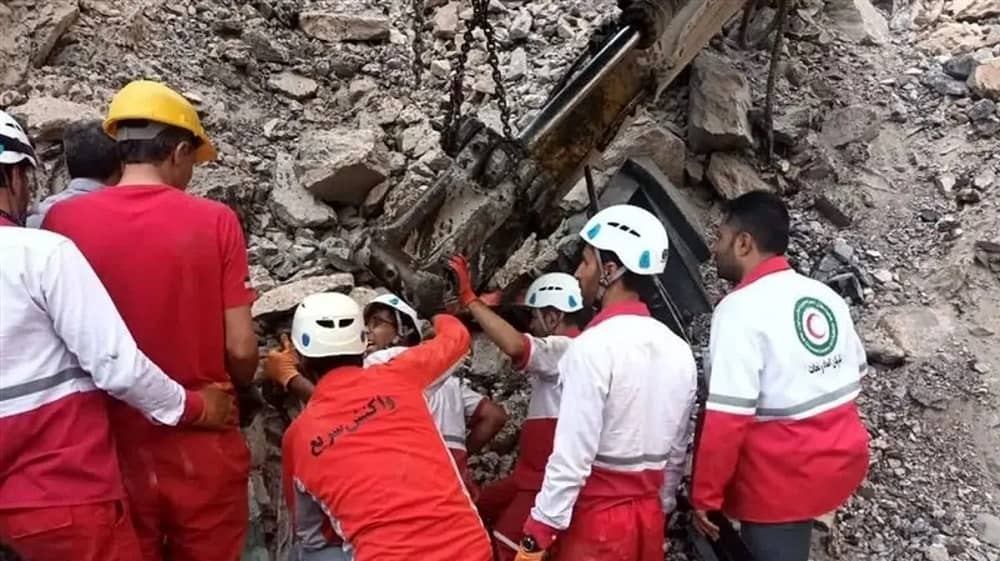
A 46-year-old mine safety worker was killed and two others injured in a deadly incident at the Ahang mine in Bajestan, Khorasan Razavi Province, on April 9. The fatality, caused by a dislodged stone deep in the mine’s second tier, marks the third deadly mining accident in Iran in just four days, bringing the total number of workers killed to nine since the Persian New Year.
Hamidreza Davarkia, governor of Bajestan, told state media that the rockfall occurred as safety personnel were preparing the site for the return of other workers. He claimed the mine had previously been cleared by safety inspectors and recently received 10 billion tomans for improvements. Despite these claims, the incident has forced a temporary shutdown of the mine, one of the few non-defunct operations in a county where 39 out of 43 registered mines are abandoned or inactive.
This comes just a day after the death of seven workers at the privately operated Mihandouyeh mine in Damghan on April 7, which according to government reports was caused by oxygen deprivation, not methane gas as initially claimed. Witnesses told Etemad daily that some of the workers’ self-rescue devices either failed to activate or were never opened.
The endless chain of mining disasters under the mullahs’ regime—and the recent string of tragic worker deaths in Bajestan (Khorasan Razavi Province) and Damghan (Semnan Province)—deeply wounds the conscience and heart of every Iranian.
These tragedies will only come to an end…— Maryam Rajavi (@Maryam_Rajavi) April 10, 2025
The first fatal incident of the month occurred on April 6 at a barite mine near Abdollahabad, Mahabad, killing one worker and injuring another during a tunnel collapse.
These back-to-back tragedies have reopened the national debate on mine safety, labor rights, and the broader treatment of workers in the Islamic Republic. According to data from state-run ILNA, over 1,000 Iranian workers died in job-related accidents in the first half of the past year alone, averaging roughly 200 deaths per month. The leading causes were falls, trauma from falling objects, electric shocks, and lack of oxygen — with mining ranking among the deadliest industries.
Experts and labor advocates consistently point to chronic underinvestment in safety infrastructure, absent regulatory enforcement, and a lack of accountability for mine owners — particularly in the growing number of privately operated or subcontracted mines, which often resume activity without official clearance or adequate inspections.
#Iran News: Gas Leak Kills 7 in Damghan Mine as Regime’s Neglect and #Corruption Claim More Liveshttps://t.co/p7u8scApV6
— NCRI-FAC (@iran_policy) April 8, 2025
One official quoted by Etemad noted that the Mihandouyeh mine had no local workers from the nearest village and had been inactive for months before its sudden reopening after Nowruz. Even essential ventilation systems were reportedly nonfunctional.
These deaths have brought renewed attention to the regime’s misplaced priorities, where billions are allocated for regional militias and military expansion, while critical domestic infrastructure remains underfunded and unsafe. The systemic neglect of worker safety is not merely a labor issue — it is a symptom of the regime’s wider disregard for Iranian lives.
In Bajestan alone, most mines are now classified as abandoned, yet officials continue to issue extraction permits without transparency or enforcement mechanisms. With workers paying the price in blood, public pressure is building. As industrial deaths mount and trust in the system erodes, unrest may not be far behind.