

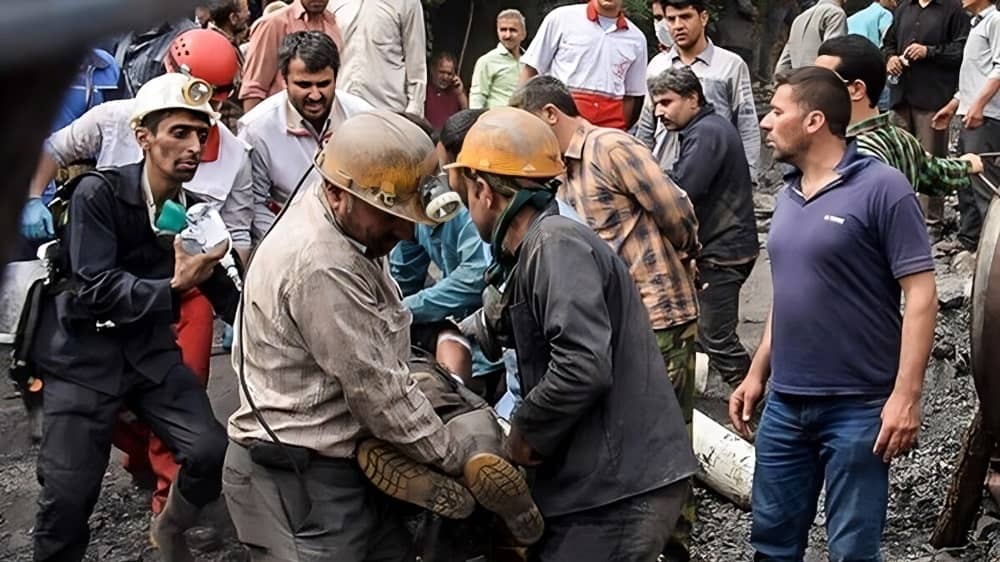
In yet another preventable tragedy, at least seven miners—four Iranian citizens and three Afghan workers—lost their lives in a gas poisoning incident at the Mehmandouyeh coal mine near Damghan, Semnan Province. The victims, including the mine’s private contractor, suffocated in a poorly ventilated tunnel reportedly just 40 meters long and 20 meters deep. Emergency responders were unable to reach the trapped workers in time due to a toxic buildup of gas, which had filled the narrow shaft.
Despite initial confusion about the mine’s legal status, authorities confirmed it operated under the oversight of the state-affiliated Alborz Sharghi Coal Company, a subsidiary with known connections to regime-controlled industries. The incident is the latest in a string of catastrophic mining accidents that have exposed the regime’s systemic failure to protect its workers—failures rooted in corruption, regulatory neglect, and misplaced national priorities.
This comes just months after the September 2024 disaster in Tabas, where 52 miners died and 22 were injured in one of the worst mining explosions in Iran’s modern history. That tragedy, like many before it, was blamed on a methane gas leak in a tunnel lacking adequate ventilation and emergency equipment. In both cases, the Iranian regime’s response has been a familiar mix of vague promises and performative outrage, without structural reform or accountability.
#Iran News: Fatal Qom Mine Accident Highlights #Safety Concernshttps://t.co/JIiyXzuwUB
— NCRI-FAC (@iran_policy) December 12, 2024
Iran’s Minister of Labor, Ahmad Meidari, recently admitted that 100 out of 101 active mines in the country operate with outdated methods and without proper safety standards. Sixty-two coal mines are specifically marked as unsafe, yet only seven have been temporarily shut down. “We still haven’t defined the basic safety standards for mining machinery,” he said, adding that many of the mines use non-standard locomotives and life-saving equipment.
Labor activists and independent observers say the pattern is clear: Iran’s mining sector, rich in resources, is dangerously mismanaged and intentionally under-regulated. With 2,115 recorded worker deaths and over 27,000 injuries in the last year alone, the mining industry has become a symbol of the regime’s broader disregard for human life, particularly that of the working class.
#Iran’s Regime Scrambles to Suppress Outrage Over #Tabas Mine Disasterhttps://t.co/ht4EPQ8aqg
— NCRI-FAC (@iran_policy) September 24, 2024
Adding to the outrage, authorities warned families of the Damghan victims against gathering at the site, even as many waited in anguish for news of their loved ones. Instead of support and transparency, the regime responded with suppression—a recurring tactic in the face of public grief and frustration.
While Iran’s mines remain death traps, billions continue to flow into military projects, proxy wars, and regime propaganda. Calls for independent investigations and labor protections have been routinely ignored. As long as the regime continues to prioritize its own survival over the safety and dignity of its people, these tragedies will persist—not as accidents, but as state-sanctioned crimes against the working poor.