

THIS PAGE WILL BE UPDATED WITH THE LATEST NEWS
UPDATE: 08:00 AM CET
Speech by Maryam Rajavi at the Memorial Ceremony for Dr. Mohammad Ali Sheikhi, Chairman of the Universities Committee of the National Council of Resistance of Iran
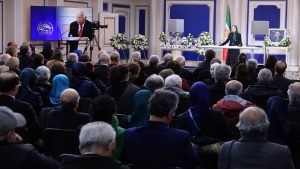
With deep regret, on December 15, Dr. Mohammad Ali Sheikhi, Chairman of the Universities Committee of the National Council of Resistance of Iran, passed away, and the National Council of Resistance of Iran lost one of its most valued members. The funeral procession and burial were held on December 22, followed by a memorial ceremony at the headquarters of the National Council of Resistance of Iran, attended by his family, friends, and members of the NCRI. At this ceremony, Mrs. Maryam Rajavi delivered a speech honoring the memory of this departed companion of the Resistance and paying tribute to this distinguished personality, both a combatant and a man of science, in which she said: Friends of the Resistance, distinguished members of the National Council of Resistance, Dear sisters and brothers, my dear daughters, Maryam, Sara, and dear Amitis, The sorrow of losing Dr. Sheikhi weighs heavily on all of us. Just hours ago, we laid him to rest and bade farewell to this long-standing companion of the Resistance.
How The Iranian Regime’s 2026 Fiscal Plan Institutionalizes Poverty for the Working Class

Masoud Pezeshkian, the president of the Iranian regime, has presented the budget bill for the Persian year 1405 (March 2026–March 2027) to the Majlis (parliament). While the regime attempts to frame this as standard fiscal planning, a closer look reveals what is effectively a “great looting” of workers, employees, and retirees. The government’s intent was declared weeks in advance by its spokesperson, Fatemeh Mohajerani, who brazenly stated that to control inflation, “we will not have a large salary increase,” claiming that any raise above 20 percent would be “inflationary.” This budget serves as an official declaration of the reduction of wages and a catastrophe for the Iranian people. While the government offers hollow apologies for the “economic pressure,” it simultaneously implements policies that guarantee the further impoverishment of the nation to serve the interests of the ruling elite.
Eight Bahaii Women Detained in Isfahan to Serve 90 Years in Prison

Eight Bahaii women residing in Isfahan were arrested on Saturday, December 27, after reporting to Branch Two of the Sentence Enforcement Office of the Revolutionary Court in the city, and were transferred to Dowlatabad Prison in Isfahan to serve their prison sentences. Those whose sentences have begun to be enforced include Negin Khademi, Yeganeh Rouhbakhsh, Neda Badakhsh, Mojgan Shahrezaei, Shana Shoghi-Far, Arezoo Sobhanian, Parastoo Hakim, and Neda Emadi. These individuals had previously been summoned to judicial authorities in late December after receiving official notices ordering them to appear for the enforcement of their sentences. Their convictions were fully upheld in early October of this year by Branch 47 of the Isfahan Court of Appeals.
Iranians in Heidelberg Rally Against Executions, Demand Freedom for Political Prisoners

Heidelberg, Germany – December 27, 2025 – Supporters of the People’s Mojahedin Organization of Iran (PMOI/MEK) held a rally and photo exhibition to denounce the Iranian regime’s widespread use of the death penalty as a grave violation of human rights, particularly the execution of political prisoners. The event also voiced strong backing for the “No to Execution” campaign.
Shadow Oil and Banking Networks Targeted Over Iranian Links
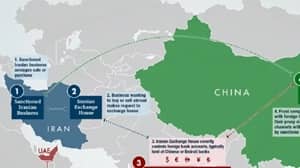
In recent days, several developments have occurred in parallel, including new announcements by the U.S. Department of the Treasury regarding sanctions enforcement, discussions in Iraq about limiting the role of armed groups, reports of intercepted weapons shipments allegedly destined for Hezbollah, and renewed debate at the UN Security Council over Iran’s nuclear program. These developments have been reported by multiple international media outlets and have drawn attention from diplomats and policy observers monitoring regional and international affairs related to Iran. In recent days, a series of parallel developments has drawn attention from diplomats and analysts. These include new announcements by the U.S. Department of the Treasury on sanctions enforcement, increased pressure in Iraq to limit the role of armed factions, reports of intercepted weapons shipments allegedly bound for Hezbollah, and intensified discussions at the UN Security Council regarding Iran’s nuclear program.
Iran Has Become the Record Holder for Soil Erosion
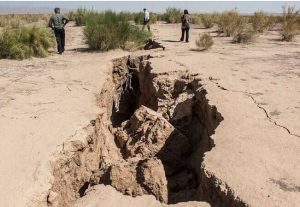
Hadi Kiadaliri, the vice president of the Iran Forestry Association, criticized prevailing approaches to development, food security, the water crisis, and forest protection, stating that Iran has reached the highest level of soil erosion and has become the record holder for this crisis. Kiadaliri said in an interview with the state-run ISNA news agency on Sunday, December 28, that according to the findings of a study, “50% of oil revenues” must be spent annually solely on restoring soil fertility in the Zagros region. He added that between 2004 and 2020, 3.6 million hectares were added to orchard and rain-fed agricultural lands, meaning that nearly 500 hectares of rangelands and forests were destroyed every day.
Iran’s Silent Social Collapse
Two recent reports published in Iran’s state-aligned daily Arman-e Melli inadvertently shed light on a far deeper reality: Iran is experiencing a silent but accelerating collapse of its human and social capital. One crisis unfolds through the mass emigration of educated elites; the other through the breakdown of marriage and family formation among the younger generation. Though presented separately, both stem from the same source—systemic failure in governance under the clerical regime. The decline of Iran’s scientific standing in recent years is not a statistical anomaly nor an isolated academic issue. As sociologist Amanollah Gharaei-Moghadam notes, this decline reflects the increasingly toxic social, cultural, and institutional environment that has taken shape over decades. Rather than attracting and retaining talent, the regime has created conditions that actively push elites out of the country. Warnings about brain drain were raised as early as 25 years ago by academics and experts. Those warnings were ignored. Today, they have materialized into a structural loss.