

THIS PAGE WILL BE UPDATED WITH THE LATEST NEWS
UPDATE: 09:30 PM CET
Strikes Hit State Media and Naval Assets as Iran Hits Neighboring Nations, Uses Prisoners as Human Shield

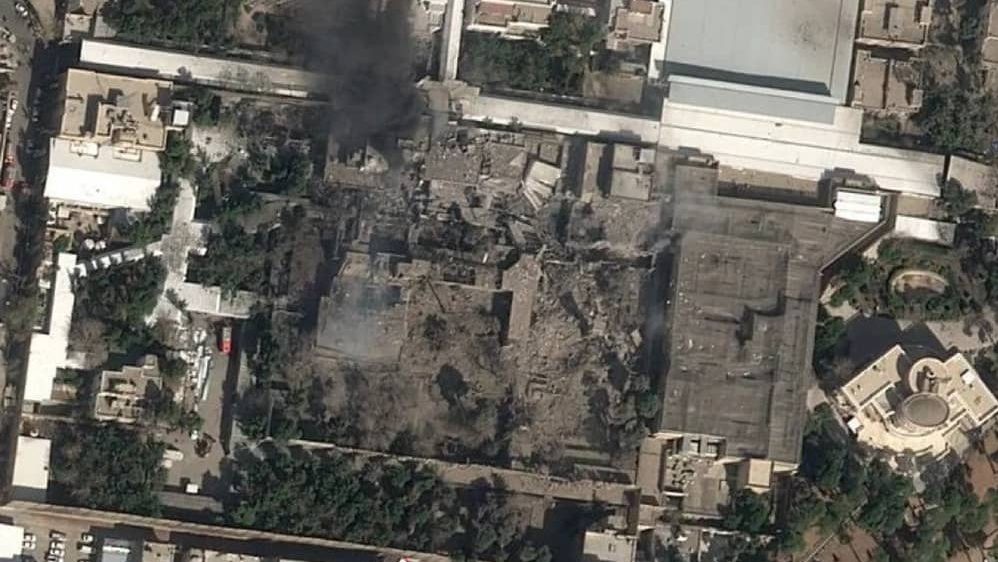
In the last four hours, a series of high-intensity aerial bombardments by U.S. and Israeli forces has systematically targeted the regime’s command-and-control infrastructure.
A primary strike leveled the headquarters of the Islamic Republic of Iran Broadcasting (IRIB) in Tehran, severely disrupting the state’s ability to disseminate official propaganda, though emergency backup transmitters continue to provide intermittent coverage.
Targets hit
On the naval front, U.S. President Trump announced that the United States has successfully neutralized much of the Iranian regime navy’s operational capacity, reporting that nine Iranian vessels were sunk in the Persian Gulf during a concentrated engagement aimed at keeping the Strait of Hormuz open to international shipping. However, these gains have come at a cost. U.S. Central Command confirmed the deaths of three American service members earlier this evening following a retaliatory drone swarm launched by IRGC-affiliated units against a regional coalition base.
The regime’s retaliatory campaign, dubbed Operation True Promise 4, has expanded the theater of war into neighboring territories. Ballistic missile impacts have been confirmed near Jerusalem and Tel Aviv, resulting in at least nine civilian fatalities in Israel. Furthermore, Iranian strikes have targeted U.S. military perimeters in Kuwait, Qatar, and Bahrain. In the United Arab Emirates, intercepted missile debris caused significant fires at Dubai’s Jebel Ali port and visible damage to the Burj Al Arab landmark, underscoring the widening regional instability.
Human rights crisis
Amidst the heavy bombardment of major cities, a dire humanitarian crisis is unfolding within Iran’s prison system. Legal advocates and human rights monitoring groups are issuing an urgent call for the immediate implementation of Resolution No. 211. This 1987 legal mandate obligates the Iranian judiciary to release non-dangerous detainees or evacuate prisoners during wartime emergencies. The memory of the June 23, 2025, strike on Evin Prison—which killed 71 people including staff and visitors—has heightened fears that thousands of inmates in facilities like Qarchak and Greater Tehran remain trapped in high-risk zones without access to shelters.
International observers warn that these prisoners face a dual threat: the external danger of airstrikes and the internal risk of violent crackdowns or “enforced disappearances” by a regime under extreme duress. While the newly formed Transitional Leadership Council, led by the regime’s president Masoud Pezeshkian and Judiciary Chief Gholamhossein Mohseni Ejehi, attempts to maintain domestic order, the absence of a clear evacuation plan for detention centers has led to international demands for UN monitoring to prevent a large-scale humanitarian disaster.
UPDATE: 04:30 PM CET
IRGC Appoints Interpol-Wanted Chief Amid Airstrikes
The clerical dictatorship is facing a total systemic collapse as a second wave of U.S.-Israeli strikes has decapitated what remained of its political and military leadership.
While official state confirmation is pending, state media outlets have reported his death alongside several bodyguards, effectively removing one of the regime’s notorious figures from the board.
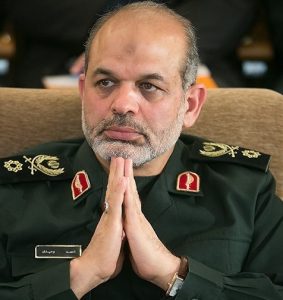
In a desperate attempt to stabilize the security apparatus, the regime has appointed Brigadier General Ahmad Vahidi as the new Commander-in-Chief of the IRGC. Vahidi, a former Defense Minister wanted by Interpol for his role in the 1994 AMIA bombing, takes over a shattered command structure following the death of previous chief Mohammad Pakpour, Army Chief Abdolrahim Mousavi, and Defense Minister Aziz Nasirzadeh. Vahidi’s first act has been to oversee what the regime calls “Operation True Promise 4,” with the IRGC claiming retaliatory strikes against 27 U.S. bases and Israeli defense headquarters in Tel Aviv.
The Strait of Hormuz Grinds to a Halt
Meanwhile, global energy markets are in shock as the Strait of Hormuz is now “practically closed.” While no formal legal notice has been issued to the UN, the IRGC has begun broadcasting VHF radio warnings to all commercial vessels: “No ship is allowed to pass.” Major shipping giants including MSC, Hapag-Lloyd, and CMA CGM have suspended all transits. Currently, approximately 170 containerships and tankers are trapped inside the Gulf, while a massive flotilla is building up in the Gulf of Oman, fearing a total blockade of the world’s most vital oil chokepoint.
Jubilation and “Shadow” Governance
Inside Iran, the regime’s 99% internet blackout has failed to stifle a nationwide explosion of joy. Footage verified by international observers shows citizens in Karaj, Isfahan, and Shiraz dancing in the streets—an act long criminalized by the clergy.
In Dehloran, protesters toppled a statue of the regime’s leadership, while in the town of Lapuee, crowds celebrated outside the home of Pooya Jafari, a 15-year-old killed by security forces in 2025.
The duality in Tehran is absolute. While state TV broadcasts staged mourning rituals, the streets are ringing with the sounds of fireworks and the slogans of a population that believes the 47-year dictatorship is finally reaching its end.
UPDATE: 10:30 AM CET
North Texas Iranian Community Rallies after Reports of Supreme Leader’s Death

Members of the Iranian community in North Texas gathered in Dallas on Saturday, praising what they see as a turning point for Iran’s future following reports that the country’s Supreme Leader is dead.
“The Iranian fight for freedom and democracy, we believe, has entered a new phase today,” said Homeira Hesami with the Iranian American Community of North Texas. After the day’s developments, many demonstrators said they feel a renewed sense of hope.
With Iran’s Supreme Leader confirmed to be dead after the attacks, some believe the decades‑long dictatorship could be nearing its end.
“If the main person is dead or is eliminated, the situation is different on the ground,” one demonstrator said.
Supreme Leader Khamenei Confirmed Dead; Iran and U.S./Israel Exchange Massive Strikes
The announcement of Iranian regime’s Supreme Leader Ali Khamenei’s death by the Supreme National Security Council has fractured the internal landscape of Iran. While the state has officially mandated forty days of mourning and a seven-day general strike, the response from the population has been marked by significant defiance. Reports from various provinces indicate that the public has taken to the streets not in grief, but in celebration. In Tehran, large numbers of men and women are moving toward Azadi Square, while in cities like Isfahan, Karaj, and Babul, the news was met with public dancing, music, and fireworks. In the town of Lapu-yi in Fars province, residents gathered to celebrate in front of the home of Pouya Jafari, a 15-year-old killed by security forces in 2025, highlighting the deep-seated grievances within the local population.
“It feels like I’m dreaming… hello to a new world.”
Footage circulating on social media shows scenes of celebration reported in Galeh Dar, in southern Iran, following the death of Ali Khamenei.pic.twitter.com/OZVEm2PnbV— SIMAY AZADI TV (@en_simayazadi) February 28, 2026
The government establishment is currently attempting to project a sense of continuity and strength despite major losses within its high command. Beyond the death of the Supreme Leader, the IRGC has confirmed the loss of Commander Pakpour and Admiral Ali Shamkhani. To fill the leadership vacuum, a temporary council consisting of President Masoud Pezeshkian, Chief Justice Ejei, and a member of the Guardian Council has taken control. Pezeshkian has released a statement vowing that this “great crime” will not go unanswered, while Ejei has called for a renewed struggle against the regime’s enemies. Meanwhile, Parliament Speaker Mohammad-Bagher Ghalibaf has attempted to reassure the public that the military and management structures of the country have been designed to operate independently of any single individual.
⚠️ Update: #Iran's internet blackout has now passed the 24-hour mark with national connectivity flatlining at 1% of ordinary levels.
The measure limits civic engagement at a key moment for the country's future after the killing of Ayatollah Khamenei in US and Israeli airstrikes. pic.twitter.com/W4jDgds1Ty
— NetBlocks (@netblocks) March 1, 2026
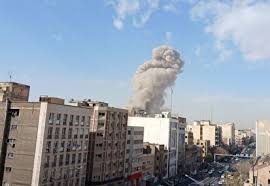
Despite these calls for order, the internal security situation is deteriorating in specific regions. In the Ilam province, particularly in Abdanan and Dehloran, reports indicate that protests have escalated into direct action, including the torching of the Dehloran governorate building. In Alvand Qazvin and several cities in Mazandaran, residents have engaged in open festivities. Simultaneously, the military remains on a high-war footing; the IRGC has declared the launch of “Operation True Promise 4,” and explosions have been heard across northeast Tehran as air defense systems engage. State media continues to emphasize a narrative of “martyrdom” and “resistance,” even as the government maintains an internet shutdown in various parts of the country to manage the flow of information.
UPDATE: 9:30 AM CET
Crown and Turban: Two Faces of the Same Authoritarian Coin
At this critical juncture in Iran’s modern history, the reemergence of monarchical claims—combined with their rhetorical and strategic overlap with narratives long promoted by the Islamic Revolutionary Guard Corps—reveals an unsettling reality: authoritarianism, regardless of its aesthetic or symbolism, speaks a common language. That language is the denial of popular sovereignty and the suppression of oppressed nationalities.
Once again, it becomes evident that the “crown” and the “turban” function not as opposites, but as complementary mechanisms of centralized domination.
While Iranian society grapples with suffocating economic crises and political repression, a curious spectacle unfolds. A self-proclaimed heir to monarchy issues medieval-style pronouncements calling for the suppression of Kurdish political forces, invoking the backing of a notional army. The irony is striking: the implicit audience for such pronouncements appears to be the very military and security apparatus whose hands are already stained with the blood of uprising youth.
Engineering Denials in Iran; Judicial Ambiguity and Systematic Suppression of Children and Protesters

Following the widespread protests in January 2026, the Judiciary of the Islamic Republic of Iran has established a new strategy based on “serial and coordinated denials.” The unprecedented volume of these denials does not indicate adherence to the law, but rather signals a profound lack of transparency and the calculated use of the “preliminary investigation phase” to isolate defendants and deprive them of their right to defense.
According to a report by Rokna News Agency on February 24, 2026, judicial authorities, while denying the issuance of a death sentence for Mahsa Sarli (12 years old), officially confirmed:
“The named individual has a judicial case and is in custody due to charges related to recent events… The charges against this individual are cited as ‘Propaganda against the state’ and ‘Membership in a group or association with the intent to disrupt national security’.”
Death Blow to Academic Independence
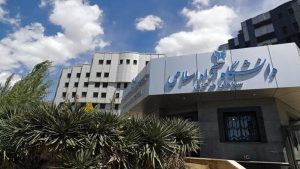
With the escalation of student protests in late 2025 and early 2026, especially in recent days after the nationwide protests of January 2026, the Judiciary of the Islamic Republic of Iran, has adopted an aggressive stance to conquer the last bastions of academic independence. The recent remarks by the Chief of the Judiciary transcend mere rhetoric; they serve as a roadmap for the “securitization” of educational environments and the transformation of universities into an arm for security agencies.
According to the ILNA News Agency on February 25, 2026 (Esfand 6, 1404), Gholam-Hossein Mohseni-Ejei, the Chief of the Judiciary, took an unprecedented stance against the university institution during his provincial visit to Alborz on February 23 (Esfand 4). Acknowledging the pressure exerted on executive officials, he stated.
Supporters of the Iranian Resistance Rally in European Capitals as NCRI Announces Provisional Government

Berlin, Paris, Stockholm, The Hague, and Bern — Saturday, February 28, 2026
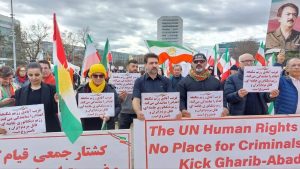
Supporters of the Iranian Resistance demonstrated in front of the embassies of the ruling clerical regime in Berlin, Paris, Stockholm, The Hague, and Bern on Saturday, February 28, 2026. The protests coincided with the official announcement of a Provisional Government by the National Council of Resistance of Iran (NCRI), a coalition of Iranian democratic opposition forces.