

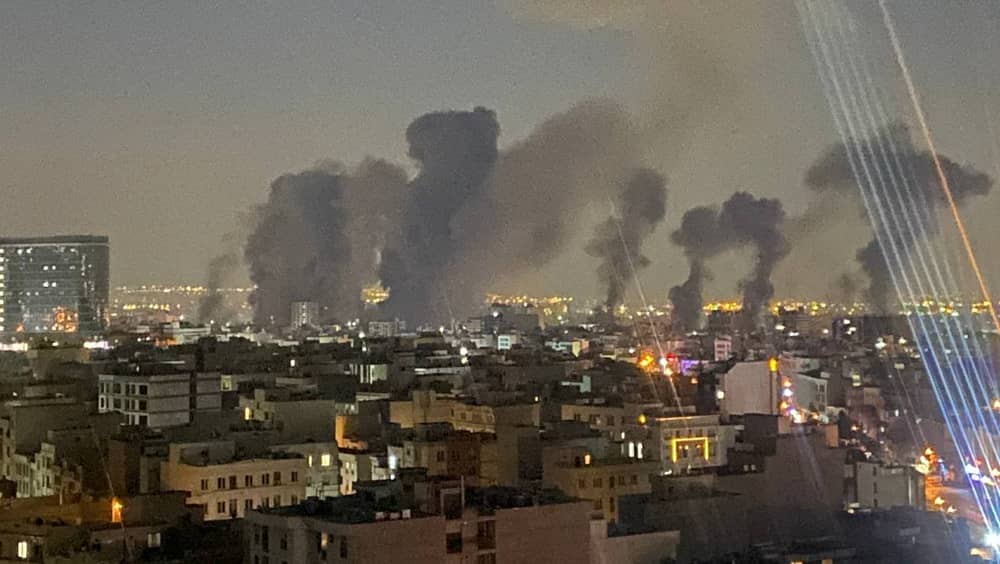
THIS PAGE WILL BE UPDATED WITH THE LATEST NEWS
UPDATE: 10:30 PM CET
Trump Demands Tehran’s “Unconditional Surrender” as War Enters Seventh Day
The war involving the United States, Israel and Iran entered its seventh day on Friday with fresh strikes on Tehran and Beirut, new Iranian regime attacks on Israel and Gulf states, and an increasingly hardline U.S. position after President Donald Trump said there would be no deal with Iran short of its “unconditional surrender.”
On the battlefield, Reuters reported that Israel launched fresh attacks on Iran and major strikes on Beirut after unprecedented evacuation orders for the Lebanese capital’s southern suburbs. Reuters said about 300,000 people had been displaced in Lebanon in four days, while Israel said it had also struck a bunker beneath the destroyed Tehran compound of the regime’s slain supreme leader. The IRGC, meanwhile, continued firing missiles toward Israel and Gulf states hosting U.S. forces.
Diplomatically, the European Union and Gulf Cooperation Council issued a joint statement on March 5 strongly condemning what they called “unjustifiable Iranian attacks” on GCC states, saying the strikes threatened regional and global security. The statement called on Iran to stop its attacks immediately and reaffirmed that GCC states have the right to defend themselves under Article 51 of the U.N. Charter.
Iran News Alert
Tehran Jomhuri Street – March 6, 2026 #IranWar pic.twitter.com/omddLoVf29— SIMAY AZADI TV (@en_simayazadi) March 6, 2026
Washington says it is intensifying operations but not expanding its objectives. U.S. Defense Secretary Pete Hegseth said the U.S. was not widening its military mission in Iran, even as Admiral Brad Cooper said U.S. forces had struck more than 2,000 targets, destroyed 30 Iranian warships, and were moving into a phase aimed at crippling the regime’s ability to rebuild missile capacity.
The war is now rippling through global energy and shipping markets. CNBC reported that U.S. crude futures jumped 12.21% on Friday to $90.90 a barrel, while Brent settled at $92.69, up 8.52%, as the Strait of Hormuz remained effectively shut and about 20% of normal global oil flow through the waterway stayed disrupted. Reports suggest that the U.S. will offer up to $20 billion in reinsurance for Gulf maritime losses as insurers pull back and tanker traffic is disrupted.
#Iran News Alert
The headquarters of the Khabat Organization of Iranian Kurdistan in Erbil was targeted by IRGC drone strikes on Thursday night, March 5.The @iran_policy and the @Mojahedineng strongly condemned the attack as a brutal and inhumane act. pic.twitter.com/9TuN6AjXnb
— SIMAY AZADI TV (@en_simayazadi) March 6, 2026
Another major development on Friday was the emergence of Russian support claims. The Washington Post reported that Russia is providing Iran with targeting information including the locations of U.S. warships and aircraft in the region. AP separately reported that U.S. intelligence indicates Russia has provided information that could help Iran strike American assets, though U.S. officials said there is no evidence Moscow is directing Tehran’s decisions.
Iranian state media in the last 10 to 12 hours presented a sharply different picture. Press TV claimed that the regime had launched the 22nd wave of “Operation True Promise 4” and quoted an IRGC spokesman welcoming any U.S. escort of tankers through the Strait of Hormuz. Mehr reported that Iran had “not yet used its new weapons,” repeated official accusations over the Minab school strike, and said President Masoud Pezeshkian had ruled out hesitation in defending the country.
Pressure on Tehran also intensified from Arab capitals. Qatar rejected Iran’s claim that its strikes were aimed only at U.S. interests, while Saudi Arabia said it intercepted three ballistic missiles fired toward Prince Sultan Air Base. Bahrain also reported an Iranian strike on a hotel and two residential buildings in Manama, causing material damage but no deaths.
The conflict also spilled into Iraq’s Kurdistan region and the Caucasus. Kurdish Iranian dissident groups in northern Iraq said they would not launch attacks from Iraqi territory, even as tensions rose after previous strikes on their bases, while Azerbaijan accused Iran of a drone attack on Nakhchivan and said it was evacuating diplomatic staff from Tehran and Tabriz.
Axios reported that dozens of IRGC officers, mainly from the Quds Force, left Beirut over the past two days for fear of being targeted, while Lebanon moved to curb IRGC activity on its soil as Israeli strikes intensified.
UPDATE: 12:00 PM CET
Tehran Hit by Heavy Strikes as Iranian Media Vows Escalation and Regional Fallout Grows
Tehran came under some of the heaviest bombardment of the war early Friday, while Israel also widened attacks in Lebanon after ordering an unprecedented evacuation of Beirut’s southern suburbs. NBC News reported especially intense strikes in Tehran, including in civilian and residential areas, while Reuters described the Beirut evacuation order and overnight bombing as a major expansion of the conflict’s regional footprint. AP separately reported that the U.S. struck Iranian naval and missile assets, including the drone carrier IRIS Shahid Bagheri.
Iranian state media framed the latest phase around civilian losses, legal self-defense and broader retaliation. Press TV reported Foreign Minister Abbas Araghchi warning of a “decisive” response to any new aggressive act, Iran’s U.N. envoy saying Tehran would continue defending itself until the attacks end, and military officials saying Iranian strikes would expand in the coming days. Press TV also reported the 21st wave of Operation True Promise 4, saying Khayber missiles and drones were used against Tel Aviv. Those battlefield claims were presented as Iranian official statements and were not independently verifiable.
International outlets emphasized the scale of the operations and the widening target set. AP said B-2 bombers dropped dozens of 2,000-pound penetrator bombs on deeply buried Iranian missile launchers, and that the Iranian regime answered with missile and drone fire toward U.S.-linked sites in Qatar, Saudi Arabia, Bahrain and Kuwait. AP put the war toll at at least 1,230 killed in Iran, more than 120 in Lebanon, around a dozen in Israel, and six U.S. troops killed. According to a statement from the regime’s Foundation of Martyrs and Veterans Affairs, “1,230 military personnel and civilians have been killed as of March 5, 2026, following recent military attacks by U.S. and Israeli forces against Iran.”
"We are prepared for anything."
EU Commissioner Hadja Lahbib reacts on #EuropeToday to the war in #Iran, saying the EU "didn't expect it" but is ready to act if a humanitarian crisis unfolds.
Watch the full interview on Euronews. pic.twitter.com/LAi4bAVq6R
— euronews (@euronews) March 6, 2026
Diplomatic and humanitarian consequences also sharpened. Reuters said Azerbaijan is evacuating staff from its embassy in Tehran and its consulate in Tabriz after Baku said four Iranian drones crossed into Nakhchivan and injured four people. Tehran has denied any involvement in the incident. In a separate exclusive, Reuters reported that U.S. investigators tentatively believe American forces were likely responsible for the strike on a girls’ school in Minab, though the inquiry is incomplete and Reuters could not independently confirm the reported death toll. The WHO also said it had verified 13 attacks on health facilities in Iran.
The broader crisis is now disrupting relief and transport networks well beyond the battlefield. Reuters quoted UNHCR calling the situation a “major humanitarian emergency,” with about 100,000 people displaced inside Iran and roughly 100,000 in shelters in Lebanon. Another Reuters report said aid routes by air, sea and land are being constricted, Dubai’s humanitarian hub is badly affected, and Gulf carriers are only partially resuming service while missile fire keeps regional airspace unstable. Oil markets also remain on edge, with Reuters reporting that U.S. officials were considering but for now ruling out Treasury intervention in oil futures.
4 Men Arrested in UK on Suspicion of Aiding Iran by Spying on Jewish Community
LONDON (AP) — London police said Friday that four men have been arrested on suspicion of aiding Iran by spying on the Jewish community.
In a statement, the Metropolitan Police said the suspects — one Iranian and three dual British-Iranian nationals — were taken into custody on suspicion of assisting a foreign intelligence service. The men, who were arrested at addresses in and around north London shortly after 1 a.m, are suspected on spying on locations and individuals.
Police said the men arrested are aged 22, 40, 52 and 55 and that searches are ongoing at the addresses as well as other properties nearby.
UPDATE: 09:00 AM CET
Online Conference in Support for the Announcement of the Provisional Government by the NCRI Based on Its Ten-Point Plan

Mrs. Maryam Rajavi’s speech: “Today’s conference is dedicated to the extraordinary situation in Iran. Iran’s history is at a critical moment, shaped by long-term developments over the past five decades. Ali Khamenei died. Now it is time for the entire regime of religious dictatorship to be overthrown by the Iranian people, the Liberation Army and their organized uprising.
“Now, Khamenei’s remnants have proposed a temporary leadership council to appoint a new supreme leader. At the same time, they continue using threats and pressure to remove any possibility of a popular uprising by people who have reached the limits of their endurance. Under these conditions, the regime’s agents intimidate the People’s Mojahedin Organization of Iran and issue threats of missile attacks on them at Ashraf-3 in Albania.”
How PMOI Resistance Units Are Answering the NCRI’s Call for a New Iran
On February 28, 2026, the National Council of Resistance of Iran (NCRI) announced the formation of a Provisional Government, providing a clear roadmap to transfer sovereignty back to the Iranian people. Simultaneously, the network of the People’s Mojahedin Organization of Iran (PMOI) inside the country, the Resistance Units, took to the streets, projecting a powerful message of readiness and defiance.
March 1—Iran
PMOI Resistance Units across Iran express their support for the provisional government announced by the NCRI:
Tehran: "Salute to Rajavi"
Ahvaz: "The National Liberation Army will return#NCRIAlternative #No2ShahNo2Mullahs pic.twitter.com/CVpa37vIlz— People's Mojahedin Organization of Iran (PMOI/MEK) (@Mojahedineng) March 4, 2026
Welcoming the NCRI’s announcement regarding the provisional government for the establishment of a democratic republic, Resistance Units carried out 31 daring operations across Tehran and 18 other cities, including Karaj, Mashhad, Tabriz, Isfahan, Shiraz, and Ahvaz. These operations systematically targeted the regime’s centers of suppression, corruption, and propaganda.
Qarchak Prison: Women Prisoners Face Water Shortage and Uncertainty Amid War
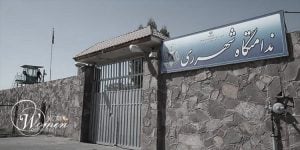
Reports received indicate that Qarchak Prison in Varamin, which holds female prisoners, is facing a critical situation under current wartime conditions.
A number of staff members from various sections of the prison, including medical personnel, infirmary staff, administrative employees, and even prison guard units, have reportedly left their posts. As a result, many matters related to the management and welfare of prisoners have been left in a state of uncertainty.
The absence of staff has severely disrupted the processing of inmate requests, the distribution of basic supplies, and the provision of medical services. Prisoners have complained about the lack of response from prison authorities and are facing numerous difficulties in securing their basic needs.
The Death of Ali Khamenei: The Record of a Supreme Leader Accused of Systematic Repression and Corruption
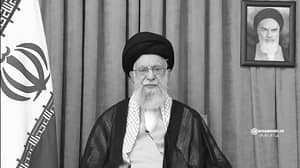
Ali Khamenei, the second Supreme Leader of the Iranian regime, ruled Iran for nearly 37 years—from June 1989 until his death on February 28, 2026. His tenure marked one of the longest and most consequential periods of centralized power in modern Iranian history. Rising from a relatively obscure cleric in Mashhad to the apex of the political system built on the doctrine of Velayat-e Faqih (Guardianship of the Islamic Jurist), Khamenei presided over an era characterized by strict political control, extensive security apparatuses, and vast economic networks tied to the leadership.
Supporters portrayed him as the guardian of the Iranian regime and the protector of its ideological foundations. Opponents, however, described his rule as an era of systemic repression, economic monopolization, and severe restrictions on political and civil freedoms. His death has intensified debates over the historical legacy of his leadership and the future of the political structure he dominated for decades.
IRGC Adviser Attempts to Whitewash Khamenei After His Death as Regime Faces Deepening Crisis

In the aftermath of the February 28 airstrike that killed Iran regime’s supreme leader Ali Khamenei, officials within the ruling establishment are increasingly attempting to reshape his image while trying to prevent demoralization within the regime’s ranks. Recent remarks by an adviser to the Islamic Revolutionary Guard Corps (IRGC) reveal both the leadership’s propaganda efforts and the deep anxiety spreading among loyalist forces.
Speaking on March 2 on the state-run Channel Three television network, IRGC adviser Hamidreza Moghadamfar attempted to frame Khamenei’s death as the fulfillment of a supposed long-held desire for martyrdom. In comments later published by the regime-affiliated Tasnim News Agency, he claimed that “Khamenei had always wished for martyrdom.”
Iranian Regime Missile Stockpiles Are Running Out

The Telegraph newspaper reported that due to the sharp decline in the number of missiles launched from Iran, it appears that the Iranian regime may be losing its capability to fire ballistic missiles.
The Telegraph wrote on Wednesday, March 4, that the reason for this appears to be both the depletion of missile stockpiles and the destruction of missile launchers during Israeli and U.S. attacks. It added that according to analyses published by countries targeted by the Iranian regime’s attacks, Tehran has significantly reduced the number of ballistic missiles it launches within a 24-hour period.
The newspaper added, quoting experts, that this could be the result of the loss of ground-based missile launchers in U.S. strikes.
Resistance Units Intensify Activities Across Iran Amid External Military Strikes

In late February 2026, as tensions escalated between the Iranian regime and foreign powers, developments inside Iran pointed to another dynamic unfolding across the country. Following the announcement of a provisional government by the National Council of Resistance of Iran (NCRI), networks associated with the People’s Mojahedin Organization of Iran (PMOI) reported a series of coordinated activities in multiple Iranian cities.
On February 28, the NCRI declared the formation of a provisional government intended, according to the organization, to provide a framework for transferring sovereignty to the Iranian people. Around the same time, activists affiliated with the PMOI’s internal network—commonly referred to as “Resistance Units”—carried out operations in Tehran and at least 18 other cities.
Prison or Death Trap in Iran? Urgent International Intervention Needed to Save the Lives of Political Prisoners

During military conflicts, especially bombardments, prisoners are among the most vulnerable populations. The security of prisoners, particularly political prisoners, during periods of military tension is a matter that demands immediate action from the international community and human rights organizations. Due to the nature of detention centers and severe physical restrictions, prisoners lack the possibility of emergency evacuation or independent access to safe shelters. In the event of such attacks, they are effectively trapped in a closed, defenseless space.
On Tuesday, March 3, following the bombardment of a Basij center of the Revolutionary Guards (IRGC) near Mahabad Prison, prisoners protested their continued detention in war conditions. As a sign of protest, some set fire to their blankets; however, instead of being moved to a shelter or a safe location, or being released on bail, this protest was suppressed by the entry of Special Forces and the firing of tear gas.
Who Was Ali Khamenei? From a Cleric in Mashhad to Iran’s Supreme Ruler

Ali Khamenei, the second Supreme Leader of the Islamic Republic of Iran, rose from a little-known cleric in Mashhad to become the absolute ruler of the country under the doctrine of Velayat-e Faqih (Guardianship of the Islamic Jurist). For nearly 37 years—from June 4, 1989, to February 27, 2026— he ruled Iran with sweeping powers, overseeing one of the most controversial and repressive periods in the country’s modern history.
During his rule, Iran experienced political repression, widespread executions, economic corruption, and growing international tensions. Khamenei, who rose to power in alignment with Ruhollah Khomeini, held key positions after the Iranian Revolution, including roles connected to the Revolutionary Guard, the presidency, and eventually the supreme leadership.
Iranian Resistance Supporters Rally in Paris Backing NCRI Provisional Government as Iran’s Democratic Alternative

Paris, France – March 3, 2026 — Supporters of the Iranian Resistance (NCRI and PMOI, along with Kurdish compatriots and members of other Iranian ethnic groups, gathered in Paris to endorse the official announcement of a Provisional Government by the National Council of Resistance of Iran (NCRI). The rally highlighted support for the NCRI’s initiative as a viable democratic alternative for Iran following the death of Ali Khamenei.
Stockholm Rally: Backing NCRI’s Provisional Government Declaration, Call for a Democratic Republic

Stockholm, Sweden – March 3, 2026 — Supporters of the People’s Mojahedin Organization of Iran (PMOI/MEK) gathered outside the Iranian regime’s embassy, calling for the overthrow of the clerical establishment and expressing support for the MEK’s Resistance Units inside Iran. They described the moment as a turning point in the country’s political future.
MEK Supporters in Gothenburg Mark 110 Weeks of “No to Execution Tuesdays”

Gothenburg, Sweden — March 3, 2025 — Supporters of the People’s Mojahedin Organization of Iran (PMOI/MEK) held a rally to mark the 110th consecutive week of the “No to Execution Tuesdays” campaign, a movement protesting the Iranian regime’s escalating wave of executions and ongoing systematic repression.