

THIS PAGE WILL BE UPDATED WITH THE LATEST NEWS
UPDATE: 08:00 PM CET
Iran’s Regime Absorbs Heavy Losses as Natanz Is Hit Again, Missile Sites Across the Country Are Struck, and Tehran’s Retaliation Fails to Shift the War
Iran’s rulers ended the last 24 hours with a visibly weaker hand: military and security sites were reported hit in more than 20 cities, Natanz was struck again, ballistic-missile production facilities in Tehran came under renewed attack, several regime-linked personnel deaths were reported, and Tehran’s most ambitious retaliatory move of the day — a missile strike toward the joint U.S.-U.K. base at Diego Garcia — failed to land. At the same time, the conflict widened outward into Lebanon, Iraq and the Gulf, while inside Iran the authorities appeared to answer pressure with blackout, repression and tighter control.
The day’s regime losses began with the breadth of the strikes. From Friday evening into Saturday morning, military points were reported hit in Tehran, Semnan, Isfahan, Bushehr, Kelardasht, Kish, Bandar Abbas, Karaj, Tabriz, Ahvaz, Ramsar, Astaneh-ye Ashrafieh, Shahr-e Rey, Abyek, Khorramshahr, Chabahar, Hashtgerd, Khomein, Shiraz, Dargazin and Darab. Among the sites reported struck were naval headquarters in Bushehr, Chabahar and Bandar Abbas; a naval weapons factory and ammunition depot at Bushehr air base; military industries in Bidganeh and Parchin; the Khomein missile site; military warehouses and ammunition depots in Hashtgerd; a Basij base in Dargazin; the Fars provincial command headquarters in Shiraz; and an IRGC ammunition shed in Khorramshahr. Natanz was also reported hit again by midday.
Iran war halts Qatar helium output, threatening global tech supply chains https://t.co/37rxECKWMu
— The Associated Press (@AP) March 21, 2026
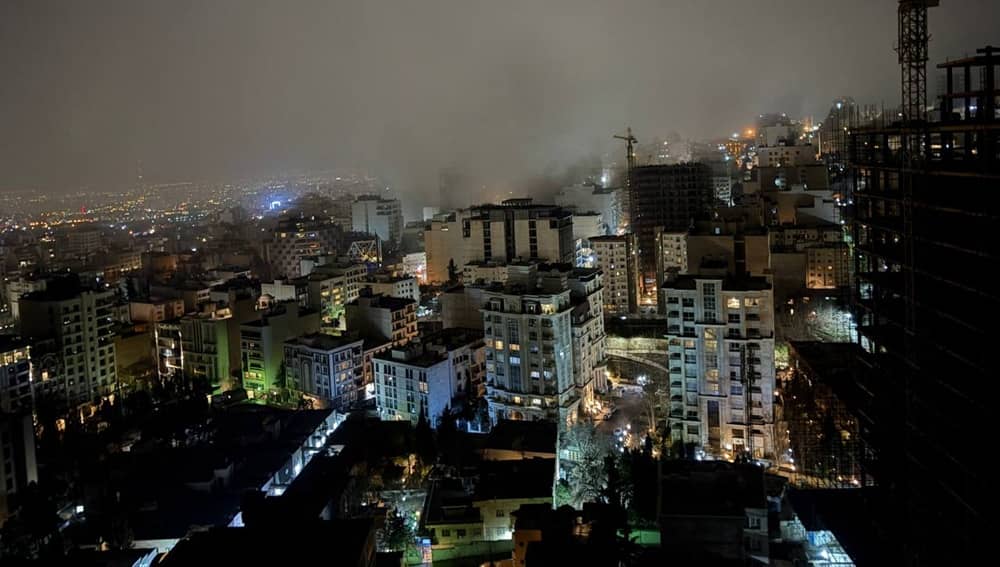
Tehran itself appeared to take the heaviest concentrated fire. Explosions were reported from Tehransar, Pirouzi, Tehranpars, Aminabad, Se Rah Siman, Shahrak-e Gharb, the Imam Hossein Square area, around Azadi Stadium and Mehrabad, Chitgar, Heravi, Mirdamad, Narmak, Nobonyad, Pasdaran, Lavizan, the Imam Reza highway and Jadeh Khavaran axis, and the east Tehran air force barracks. Power was reported cut for a time in western districts including Poonak, and fresh strikes later hit eastern districts including Pirouzi and the air force barracks. Separate reporting on Saturday said Israeli strikes in Tehran targeted ballistic-missile production infrastructure, including the central IRGC complex for producing ballistic-missile components, a missile-component storage site, a Defense Ministry complex tied to missile fuel production, and another missile-parts production site.
Reports circulating through the day also identified personnel losses inside the regime’s political-military apparatus. Those named included Azim Esmaeili, identified as a Basij deputy; Reza Ebrahimi, described as Ali Khamenei’s representative in the missile system; Ramin Jafari, described as a former Basij student member killed in a strike on a checkpoint in Tehran; and Qader Azarian, described as a senior IRGC commander in East Azerbaijan. Esmaeili was also linked in those reports to the earlier strike that reportedly killed Gholamreza Soleimani.
🇮🇷 More than 20 countries on Saturday said they would contribute to efforts ensuring safe passage in the Strait of Hormuz, condemning Iran's closure of the vital waterway.
➡️ https://t.co/oJZOAfTqML pic.twitter.com/meDMtBRR47— AFP News Agency (@AFP) March 21, 2026
The most strategically important strike of the day remained Natanz. The regime said the enrichment complex had been attacked again, and both AP and Reuters reported that no off-site radiation leak had been detected. The IAEA said it had been informed by Iran that the site was hit and that no increase in off-site radiation levels had been reported, while again urging military restraint to avoid a nuclear accident. Saturday’s strike came after earlier reported damage this month to the entrances of Natanz’s underground section, underscoring sustained pressure on the regime’s core nuclear infrastructure rather than a one-off hit.
The clerical regime did retaliate, but mostly in ways that signaled reach more than effect. Toward Israel, reports said four missiles were launched at central and southern areas; debris from one intercepted missile damaged an empty kindergarten in Rishon LeZion, but no deaths were reported. Israeli authorities also said Iran fired a surface-to-air missile at an Israeli fighter over Iran, without causing damage, and local reports from Najafabad said a missile launched from a site linked to the IRGC exploded in the sky minutes after launch. The most consequential attempted strike was farther away: Iran fired two intermediate-range ballistic missiles toward Diego Garcia in the Indian Ocean, but neither hit the base; one reportedly failed en route and the other drew an SM-3 interceptor launch from a U.S. warship.
Trump said the US was considering 'winding down' its military operation against Iran as Iran and Israel traded attacks and Iranian media said the nuclear enrichment facility in Natanz had been attacked https://t.co/mxjtkWbVO7 pic.twitter.com/884v2QWxLT
— Reuters (@Reuters) March 21, 2026
The Gulf front remained active as well. The UAE said its air defenses were responding to incoming Iranian missile and drone threats, while Saudi Arabia said it intercepted 51 drones over eastern oil regions and Kuwait also reported interceptions. Reports also said Tehran threatened to strike Ras al-Khaimah after claiming that U.S. attacks on Iranian-held Gulf islands had originated from Emirati territory. As the regime’s maritime pressure campaign continued, Britain said it would allow the U.S. to use certain British bases for defensive operations tied to protecting shipping from Iranian missile threats in the Strait of Hormuz, though London separately said Cyprus’s Akrotiri base would not be used for offensive action. More than 20 countries said they were ready to support efforts to protect navigation through Hormuz, and Iran simultaneously signaled to Japan that Japanese-linked vessels might be allowed through — a sign that Tehran was still trying to preserve leverage while selectively easing pressure on key Asian customers.
The war also widened on other fronts. Israel said it was striking Hezbollah targets in Beirut after issuing evacuation warnings in seven neighborhoods in the southern suburbs, adding another day of heavy spillover into Lebanon. In Iraq, witness footage and security sources described a large fire at a U.S. diplomatic facility near Baghdad airport after repeated drone strikes, later claimed by the Iran-aligned militia Ashab al-Kahf. Together, those developments reinforced the picture of a conflict no longer confined to Iran and Israel, but increasingly fought across Tehran’s wider regional network.
NEW: CENTCOM releases video of U.S. strikes inside Iran as the commander confirms Tehran's "capabilities are declining." pic.twitter.com/3D5hjjY2XX
— Fox News (@FoxNews) March 21, 2026
Inside Iran, the domestic picture darkened further. NetBlocks said the nationwide internet blackout had passed 504 hours, with ordinary users largely confined to the national information network while only a small number of circumvention tools still functioned. The same reporting described “digital discrimination,” with access preserved for users aligned with the state while the broader public remained cut off. In Chabahar prison, rights reports said security and special forces opened fire on protesting Baluch prisoners after days of food shortages, leaving dozens reported dead or wounded. In that sense, the regime’s internal response to a day of military losses looked less like stabilization than isolation and coercion.
Set against the day’s battlefield events was a broader cumulative assessment of attrition. In an update on Saturday, CENTCOM commander Brad Cooper said Iran had lost thousands of long-range missiles over the past three weeks, effectively the naval force used to threaten shipping, a large share of its advanced missile and one-way attack drone launch capability, and 130 vessels among some 8,000 military targets destroyed overall. He also said U.S. strikes had destroyed underground coastal facilities, intelligence-support locations and missile-radar relays used to threaten Gulf shipping, and highlighted the destruction of a Shahed drone workshop in Khomeinishahr, Isfahan.
The Justice Department has seized several websites it says were used by Iran as part of “psychological operations” targeting perceived advisories and spreading terrorist propaganda. https://t.co/jniCeGgSFT
— CNN (@CNN) March 19, 2026
UPDATE: 05:00 PM CET
Treasury Sanctions Global Network Diverting Funds to Benefit Hizballah
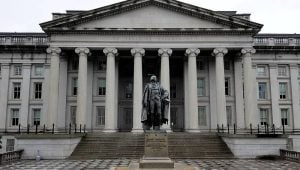
WASHINGTON—Today, the U.S. Department of the Treasury’s Office of Foreign Assets Control (OFAC) is designating a network of 16 individuals and entities led by Hizballah financier and former public investment official Alaa Hassan Hamieh (Alaa Hamieh). Alaa Hamieh oversees a network of companies, controlled through family members and close associates, that launder and raise funds for Hizballah’s finance team. These individuals and companies—located in Lebanon, Syria, Poland, Slovenia, Qatar, and Canada—have been involved in numerous economic projects and are estimated to have enabled the diversion of over $100 million since 2020. This network represents a critical source of funding for Hizballah, which continues to embrace violence despite calls to disarm.
Justice Department Disrupts Iranian Cyber Enabled Psychological Operations

The Justice Department announced the seizure of four domains as part of an ongoing effort to disrupt hacking and transnational repression schemes conducted by the Islamic Republic of Iran’s Ministry of Intelligence and Security (MOIS). The affidavit supporting the seizure warrant can be found here. The seized domains – Justicehomeland[.]org, Handala-Hack[.]to, Karmabelow80[.]org, and Handala-Redwanted[.]to – were used by the MOIS in furtherance of attempted psychological operations targeting adversaries of the regime by claiming credit for hacking activity, posting sensitive data stolen during such hacks, and calling for the killing of journalists, regime dissidents, and Israeli persons. For example, the MOIS used the Handala-hack[.]to domain to claim credit for a March 2026 destructive malware attack against a U.S.-based multinational medical technologies firm.
UPDATE: 09:00 AM CET
Iranian Authorities Weld Shut Evin Prison Doors, Heightening Risk to Political Prisoners

Recent reports from Evin Prison in Tehran indicate that, amid wartime conditions and the risk of unforeseen incidents, the lives of detainees, particularly political prisoners and approximately 200 incarcerated women, are in serious danger.
The absence of official accountability, the deterioration of essential services, and the failure to consider the release or transfer of prisoners have significantly heightened concerns about the emergence of a humanitarian crisis inside the facility.
Continued incarceration under such volatile conditions has heightened concerns for the safety and well-being of detainees, particularly women political prisoners.
Iran’s Unrest in 2025–2026: A Society in Continuous Protest Despite Repression and War
Despite severe repression, war, and intensified state control, Iran in 2025–2026 witnessed one of the most sustained waves of protest in its recent history. Beneath the surface of military confrontation and political crisis, a deeper reality persisted: a society under economic pressure, continuously mobilizing for basic rights.
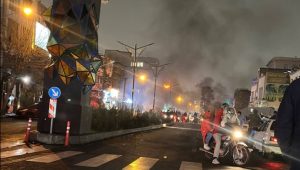
The most significant turning point came with the nationwide uprising that began on December 28, 2025 (7 Dey 1404) and continued for nearly three weeks until January 17, 2026 (27 Dey 1404). Triggered by the collapse of the national currency—when the U.S. dollar reportedly surged to around 145,000 tomans—the protests initially began with strikes by shopkeepers in Tehran’s commercial districts. Within days, the unrest expanded into a broad-based uprising involving youth, workers, and diverse social groups.
Iran in 2025–2026: A Year of War, Uprising, and the Collapse of Authority
From nuclear tensions and regional war to nationwide protests and leadership crisis, Iran’s trajectory signals a decisive historical turning point.
As the Iranian year 1404 comes to a close (March 2025–March 2026), Iran stood at the center of global attention—shaken by war, domestic unrest, economic crisis, and unprecedented political fragmentation. A chronological review of events reveals a system under intense strain, facing both internal explosion and external pressure.
The year began with renewed diplomatic maneuvering. On March 22, 2025 (2 Farvardin 1404), Donald Trump reportedly sent a letter to Ali Khamenei, the regime’s killed supreme leader proposing new nuclear negotiations. While Khamenei rejected the overture as an attempt at domination, signals soon emerged that Tehran had indirectly engaged through intermediaries.
Iran’s Defining Struggle: Rejecting Both Theocracy and Monarchy in the Fight for Popular Sovereignty
Modern Iranian history is defined by a persistent and unequal struggle between popular sovereignty and entrenched structures of power. From the Persian Constitutional Revolution to the present day, the Iranian people have consistently sought one fundamental right: self-determination. Yet, this right has repeatedly been usurped—either by charismatic strongmen or by traditional institutions claiming legitimacy beyond the will of the people.
At its core, Iran’s current deadlock stems from the confrontation between two fundamentally undemocratic models: one rooted in religious absolutism, embodied by the doctrine of Velayat-e Faqih, and the other in hereditary monarchy, represented by the legacy of the Pahlavi dynasty. Despite their apparent differences, both systems share a common foundation: the denial of the people’s sovereignty.
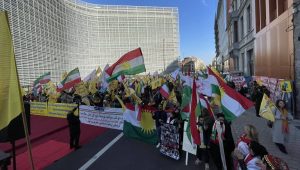
Iranian Rally in Brussels Sends Clear Message to EU Leaders: Peace, Freedom, and Popular Sovereignty
On the morning of March 19, as European leaders convened behind closed doors in Brussels to discuss the escalating crisis in Iran and broader global tensions, a different voice of Iran emerged just outside the summit venue.

In the streets surrounding the meeting, the sound of the patriotic anthem “Ey Iran” echoed among waving flags and determined chants. A traditional Nowruz Haft-Seen display stood beside a large board featuring images of those killed during the January 2026 uprising—symbolizing a powerful fusion of cultural identity, resistance, and hope for a free future.
Mai Sato: The Human Rights Crisis in Iran Is Not Limited to the War

Mai Sato, the United Nations Special Rapporteur on the situation of human rights in Iran, warned in a new message about the continuation of the human rights crisis in Iran and emphasized that this crisis is not limited to recent developments and conflicts.
Ahead of the Iranian New Year, this United Nations official stated in a message on X (formerly Twitter) that the human rights situation in Iran neither began with the recent U.S. and Israeli attacks nor will it end with the possible conclusion of these conflicts. According to her, the roots of this crisis go back many years and continue to persist.
In part of her remarks, Sato referred to the condition of citizens who have been affected during recent developments and said that these individuals are the same people who had previously played a central role in nationwide protests. With this reference, she emphasized the continued pressure on civil society and ordinary citizens.
Public Execution of January 2026 Protesters: State Revenge on the Eve of Nowruz
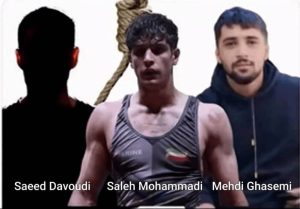
On the 21st day of the massive internet blackout and on the eve of the Persian New Year (Nowruz), the Islamic Republic’s judiciary, in a criminal act, executed three young men arrested during the January 2026 uprising, in public, in the city of Qom. Saleh Mohammadi (19, a national wrestling champion), Mehdi Ghasemi, and Saeed Davoodi were victims of this “death show” in a legal process that was a blatant violation of the “Rule of Law” from start to finish. The charges against these youths, alleging the “murder of agents,” were based solely on security scenarios and forced confessions extracted under brutal torture in solitary confinement. According to Article 169 of the Islamic Penal Code of Iran and international human rights instruments, these confessions—obtained under duress and pressure—lack any legal or religious validity and cannot serve as the basis for a judicial verdict.
Iranian Resistance Supporters Rally in Berlin, Back NCRI Provisional Government

Berlin, Germany — March 19, 2026 — Supporters of the Iranian Resistance demonstrated outside the Iranian regime’s embassy for several consecutive days, calling for the overthrow of the clerical establishment and endorsing the National Council of Resistance of Iran’s (NCRI) announcement of a Provisional Government. They also demanded the closure of the Iranian regime’s embassy in Berlin, describing it as a center of espionage and terrorism.