

THIS PAGE WILL BE UPDATED WITH THE LATEST NEWS
UPDATE: 10:00 PM CEST
Widespread Strikes Across Iran as US Fighter Jet Downed and Regional Attacks Intensify
Over the past 24 hours, large-scale US–Israeli airstrikes have targeted multiple regions across Iran, hitting infrastructure, military facilities, and urban areas, while Iran carried out retaliatory missile and drone attacks. The confirmed downing of a US fighter jet over Iranian territory, combined with widespread explosions across several provinces and expanding regional spillover, marked a significant escalation in the conflict.
A major strike west of Tehran destroyed the Karaj–Tehran (B1) bridge, a critical transportation route linking the capital to surrounding provinces. Iranian reports indicated at 13 fatalities and approximately 95 injured, highlighting the impact on both infrastructure and civilians. The strike appears to have targeted a key logistical corridor used for movement between Tehran and western regions.
⚠️ Update: The internet blackout in #Iran is now on its 35th consecutive day as connectivity flatlines at 1% of ordinary levels after 816 hours. The general public remain cut off from the world without vital updates and without a voice as the incident closes its fifth week. pic.twitter.com/TpoS5RVOHQ
— NetBlocks (@netblocks) April 3, 2026
In the capital and surrounding areas, residents reported multiple waves of explosions overnight. The first sequence, between approximately 01:20 and 02:30, involved air defense activity and detonations in eastern and northeastern districts such as Narmak, Tehranpars, Qeytarieh, and areas near Parchin and Pardis, where military-related facilities are believed to be located. A second, more intense wave followed between 03:38 and 03:41, when stronger explosions were reported across western Tehran, Karaj, Shahriar, and nearby towns. Witnesses described heavy shockwaves that shook buildings and suggested multiple impacts occurring in rapid succession. Additional strikes were reported near Mosalla and in the Valenjak area, where a facility linked to optical or technical research was reportedly destroyed.
Beyond Tehran, strike activity was reported across a wide geographic area, indicating a coordinated national campaign. In Khuzestan province, a key energy and industrial region in southwestern Iran, multiple cities experienced repeated explosions, including Ahvaz, Abadan, Mahshahr, Behbahan, Omidiyeh, and Ramshir. In several of these locations, residents described clusters of blasts occurring within short intervals, suggesting repeated targeting of specific sites such as ports, logistics hubs, or industrial infrastructure. Reports also indicated damage to port facilities in Mahshahr and to vessels or landing craft near Bandar Charak, where at least one fatality was reported.
Dozens of countries met to discuss restoring energy shipments through the Strait of Hormuz as President Trump and Iran exchanged threats, sending oil prices higher https://t.co/rJUuFkLhFW pic.twitter.com/MqNQuYy9LE
— Reuters (@Reuters) April 3, 2026
Other major cities also experienced significant strike activity. In Isfahan, several explosions were reported near industrial zones, including areas associated with steel production. Shiraz saw repeated detonations near military installations, including a particularly large explosion shortly before 05:00. In Qom, multiple blasts were reported along with structural shaking, while in Tabriz, an industrial facility was reportedly hit. In Lorestan province, including Khorramabad and Aleshtar, residents reported numerous explosions, in some cases exceeding ten separate blasts over a short period. In Tehran, there were also reports of explosions in the vicinity of Evin Prison, accompanied by visible smoke, although the extent of damage and any casualties remain unclear.
A significant development during this period was the confirmed downing of a US F-15E fighter jet over Iran. According to US officials, the aircraft was lost during operations, and both crew members ejected. One crew member has been rescued, while search operations continue for the second. Iranian sources circulated claims suggesting the possibility of capture, but these remain unverified. This incident represents the first confirmed loss of a US fighter aircraft inside Iranian territory during the current phase of the conflict.
BREAKING: Kuwait said an Iranian attack damaged a desalination plant.
The attack came after an oil refinery was hit by drones Friday morning.
About 90% of drinking water in Kuwait comes from desalination. https://t.co/nRRzECnSgS
— The Associated Press (@AP) April 3, 2026
US and Israeli military activity during the same period reportedly included dozens of strike missions targeting missile launch systems, drone storage facilities, and air defense infrastructure. The pattern of strikes indicates a focus not only on military assets but also on transportation routes and industrial capacity linked to logistical support.
Iran responded with missile launches toward Israel, with impacts reported in central and northern areas, although interception systems appear to have limited the scale of damage. In parallel, Iran and allied groups carried out attacks targeting US-linked positions in the region, including in Iraq, and continued coordinated operations involving regional partners.
The conflict also expanded further into the Gulf. A drone strike on Kuwait’s Al-Ahmadi refinery caused a fire and disrupted operations, while in Abu Dhabi, debris from intercepted missiles reportedly ignited a fire at a gas facility. Maritime tensions remained high in the Strait of Hormuz, where shipping activity has been disrupted amid Iranian attempts to exert greater control over transit through the strategic waterway. These measures have been rejected by the United Kingdom and other countries.
Second U.S. Plane Reportedly Crashes In Persian Gulf—After Iran Shot Down Jet
A second U.S. Air Force plane crashed in the Persian Gulf on Friday, unnamed U.S. officials reportedly said, in addition to a fighter jet shot down by Iran, though it’s unclear why or how the second… pic.twitter.com/9dFvjxxdES
— Forbes (@Forbes) April 3, 2026
Inside Iran, authorities intensified internal security measures. At least 37 arrests were reported across several provinces on charges including espionage, contact with foreign entities, and use of unauthorized communication technologies such as satellite internet. The nationwide internet blackout continued, exceeding 816 consecutive hours, severely restricting public access to information and communication channels. Additional reports indicated ongoing enforcement actions related to earlier unrest.
Overall, the past 24 hours were marked by sustained, geographically widespread strikes inside Iran, continued retaliatory operations by Iranian forces, the confirmed loss of a US combat aircraft, and further escalation across regional energy infrastructure and maritime routes.
UPDATE: 08:00 PM CEST
Iran’s Future Won’t Be Crowned — It Will Be Won

Geopolitical challenges are often complex, but sometimes an old allegory can make them easier to understand.
Every American child grows up with the story of the tortoise and the hare, and its moral that “slow and steady wins the race.” That lesson may say a great deal about the future leadership of Iran, a country whose current rulers are now at war with the United States.
Strange? Not really. Allow me to explain.
Regime change in Iran appears increasingly inevitable. Weeks of bombardment by the United States and Israel have depleted the country’s military resources and left the clerical regime struggling to defend itself. But the prospect of change was already evident before the war began, when authorities brutally suppressed a nationwide uprising at the start of this year, killing thousands in a desperate attempt to maintain their grip on power.
Regime Prepares to Execute More Protesters After Putting Teen to Death – Amid Fears of Jail ‘Massacre’ to Crush Dissent

Iran is preparing to execute more protesters after a teen was put to death, as the regime scrambles to clamp down on political dissent.
Eighteen-year-old Amirhossein Hatami was among seven protesters and dissidents who human rights group Amnesty International had warned were at risk of imminent execution after four men were hanged in secret earlier this week.
The teen had been ‘subjected to torture and other ill-treatment in detention, before being convicted in grossly unfair trials that relied on forced confessions,’ the group claimed.
He was found guilty of entering a restricted military site in Tehran, damaging and setting fire to the facility and attempting to seize weapons and ammunition.
Amnesty International has warned that four other protesters sentenced in the same case – Mohammad Amin Biglari, Ali Fahim, Abolfazl Salehi Siavashani and Shahin Vahedparast Kolo – will be executed soon, one each day.
The two dissidents, Vahid Bani Amerian and Abolhassan Montazer, also remain at imminent risk since their transfer to an undisclosed location on 30 March.
UPDATE: 03:00 PM CEST
Threats Posed by Iranian Intelligence Services in Germany

Berlin: (hib/STO) Surveillance and persecution of Jewish and Israeli institutions and individuals, as well as Iranian opposition figures, by Iranian intelligence services in Germany are the subject of the federal government’s response (21/4959) to a parliamentary inquiry by the Bündnis 90/Die Grünen parliamentary group (21/4626). According to the response, the surveillance, persecution, and suppression of (pro-)Jewish and (pro-)Israeli targets continue to be the primary focus of Iranian intelligence activities in Germany.
In recent years, it has been observed that Iranian intelligence services have relied almost exclusively on so-called proxies for their surveillance activities and state-terrorist operations against (pro-)Jewish and (pro-)Israeli targets, the federal government further explains. The use of organized crime structures also plays a particularly significant role. Iranian intelligence services are not fixed in their selection of proxies or organized crime networks they employ.
UPDATE: 09:30 AM CEST
Who Represents the Main Threat to the Survival of the Iranian Regime?

Despite the intensity of the bombings and the scale of the destruction, the priorities of the Iranian regime appear to lie elsewhere. The execution of four political prisoners within the span of two days is a particularly revealing and deeply concerning illustration of this. On Monday morning, the judicial apparatus of the Islamic Republic carried out the execution of two political prisoners, Akbar Daneshvarkar and Mohammad Taghavi. The authorities stated that they were accused of belonging to the People’s Mojahedin Organization of Iran (PMOI) and of participating in armed operations in Tehran.
Akbar Daneshvarkar, 58, a civil engineer, had been arrested in January 2024. Mohammad Taghavi, 59, who was detained in 2020, had spent three years in custody. He had also previously been imprisoned as a political prisoner in the 1980s.
UPDATE: 08:00 AM CEST
Iran Executions Surge in 2026, Raising Alarm Over Wartime Crackdown

According to a Fox News report, the Islamic Republic has already carried out 657 executions in the first three months of 2026, putting it on track to surpass last year’s record, the Iran Human Rights Society says. Critics say the regime is using the fog of war to tighten its grip at home. Hiding behind its ongoing conflict with the United States and Israel, Tehran is accused of ramping up executions to eliminate dissent, particularly after anti-regime protests that shook the country’s leadership.
Opposition groups say their members are being directly targeted. The National Council of Resistance of Iran reported that several members of the dissident People’s Mojahedin Organization of Iran were transferred from prison and executed within days. Among them were Mohammad Taghavi and Akbar Daneshvarkar, with additional executions reported days later, including Babak Alipour and Pouya Ghobadi. Ali Safavi, a senior NCRI official, called for “urgent action” to prevent further killings. Maryam Rajavi, the president-elect of the NCRI, described the executions as a sign of regime weakness.
Iran’s Regime Executes 18-Year-Old Amirhossein Hatami in a Desperate Purge of Dissidents

On Thursday morning, April 2, 2026, the Iranian regime committed yet another heinous crime by executing 18-year-old Amirhossein Hatami in Tehran. A courageous and rebellious youth, Hatami was a participant in the massive December 2025–January 2026 nationwide uprisings that brought the clerical establishment to its knees. Arrested by the IRGC Intelligence Organization, Hatami was sentenced to death on fabricated charges of “Moharebeh” (waging war against God) and “corruption on earth” by the notorious executioner Judge Abolghasem Salavati in Branch 15 of Tehran’s Revolutionary Court.
The regime’s judiciary news agency, Mizan, claimed that during the January uprising, Hatami attacked a classified military location, alleging he explicitly confessed his goal was “to overthrow the regime” and find firearms. Hatami’s execution raises immediate alarm for four other uprising prisoners—Mohammad Biglari, Ali Fahim, Abolfazl Salehi, and Shahin Vahed-Parast—who were transferred to solitary confinement in Ghezel Hesar Prison alongside him on March 31.
Why Iran’s Regime Is Using the Gallows to Mask Its Terminal Weakness
On April 1, 2026, Mohammad Mohaddessin, Chair of the National Council of Resistance of Iran (NCRI) Foreign Affairs Committee, held an urgent press conference in Paris to address a dangerous new wave of political executions in Iran. Over a bloody two-day period on March 30 and 31, 2026, the Iranian regime executed four members of the People’s Mojahedin Organization of Iran (PMOI/MEK): Mohammad Taghavi, 59; Akbar Daneshvarkar, 60; Babak Alipour, 34; and Pouya Ghobadi, 33.
These rapid, consecutive executions are not a projection of the regime’s strength, but an act of sheer desperation. As Mohaddessin outlined, the ruling clerics are deeply terrified of a growing organized resistance and the looming threat of another nationwide uprising. Operating under the shadow of external conflicts, the state is rushing to physically eliminate its most capable adversaries.
Despite Mothers’ Pleas, Four Political Prisoners Executed in Iran
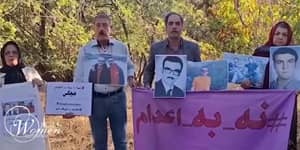
Despite pleas from their mothers and widespread international outcry, the clerical regime executed four political prisoners on March 30 and 31, 2026: Mohammad Taghavi Sangdehi, Akbar Daneshvarkar, Babak Alipour, and Pouya Ghobadi.
The parents of Akbar Daneshvarkar and Pouya Ghobadi were among the justice-seeking families who supported the “No to Execution Tuesdays” campaign and participated in protests every Tuesday for two years. They called for a halt to executions for anyone, anywhere.
The four political prisoners were members of the main Iranian opposition group, the People’s Mojahedin Organization of Iran (PMOI/MEK), and had been imprisoned for over two and a half years, enduring torture, solitary confinement, beating and mistreatment in harsh prison conditions. They were secretly executed without being granted a final visit with their families.
International Condemnation Mounts After Execution of Four Political Prisoners in Iran

The execution of four political prisoners in Iran over the course of just two days has triggered a wave of strong international condemnation from senior political figures, members of parliament, and human rights organizations, all warning of an escalating pattern of repression and calling for urgent global action.
Among the most vocal critics, Rudy Giuliani condemned the executions of Pouya Ghobadi, a 33-year-old electrical engineer, and Babak Alipour, a 34-year-old law graduate, noting that their deaths followed the earlier execution of Mohammad Taghavi and Akbar Daneshvar Kar. He characterized the charges against them—linked to alleged membership in the People’s Mojahedin Organization of Iran (PMOI/MEK) and accusations such as acting against national security—as part of a broader effort by the Iranian regime authorities to suppress dissent. He argued that carrying out such executions in the midst of wartime conditions reflects deep concern within the regime about internal opposition and growing resistance among the population.
War Pressures Mount: Iran Faces Growing Food Supply Risks Amid Maritime Disruptions

As military tensions between the United States, Israel, and the Iranian regime escalated in March 2026, a new and less visible front of pressure has begun to emerge—one that directly affects the daily lives of ordinary Iranians. Beyond the immediate risks of conflict, disruptions in food supply chains are raising serious concerns about the country’s ability to sustain stable access to essential goods in the coming months.
Unlike direct military confrontation, this pressure is unfolding through logistical bottlenecks, maritime insecurity, and rising costs across the global supply chain.
Iran’s food supply system is structurally dependent on maritime imports. Each year, approximately 25 million tons of essential commodities—including wheat, corn, barley, soybeans, cooking oil, and sugar—are imported, with over 90% entering through southern ports such as Imam Khomeini, Shahid Rajaee, Bushehr, and Chabahar.
Iran’s Internet Blackout Fuels Risky VPN Market and Rising Cyber Threats

Amid a widespread internet blackout in Iran, the market for VPN services and connection configurations has surged dramatically. What has emerged is a chaotic and high-risk ecosystem where users struggle not only to regain access to the global internet, but also to navigate growing threats of fraud, surveillance, and data exploitation.
Prices for VPN configurations have skyrocketed, reportedly reaching between 500,000 and one million tomans per gigabyte. Yet the issue is no longer simply connecting to the internet—it is about how that connection is established, through which pathway, and at what cost to user security and privacy.
Recent network monitoring data suggests that fewer than 2% of people in Iran currently have access to the global internet. A significant portion of this limited access is reportedly restricted to users with specially authorized SIM cards. Statements by government officials have further reinforced this reality, indicating that access has been selectively granted to individuals deemed capable of “effectively transmitting information.”
Infiltration Inside Iran’s Regime: Where is IRGC Being Struck From?
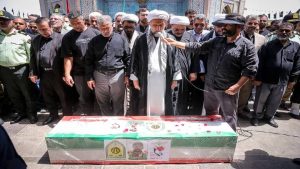
In recent months, the issue of “infiltration inside the IRGC” has become one of the most controversial subjects in Iran’s political and social landscape. Numerous reports of commanders being targeted and sensitive information being exposed have raised serious questions about the effectiveness of the regime’s security structures. At the same time, official narratives seek to attribute these incidents to foreign actors, but public opinion is following a different narrative.
In recent weeks, state-run media have repeatedly reported the arrest of infiltrators. These reports have often been published without providing precise details. In contrast, citizens on social media emphasize that infiltration inside the IRGC cannot merely be the result of foreign operations. Many believe that this level of access to sensitive information would not be possible without internal cooperation or internal weakness.
Iran: Enforced Disappearance of Executed Prisoners/Death Row Queue Amidst the Fog of War

While global attention regarding Iran is currently consumed by ongoing wartime tensions, the judicial and security apparatus of the Islamic Republic is exploiting this emergency to launch a systematic strategy of “physical elimination of political opponents” within the country’s prisons. This trend—characterized by rushed executions, flagrant violations of the right to a fair trial, and the refusal to return the bodies of the deceased—constitutes a clear example of “Crimes Against Humanity” and a systematic violation of the International Covenant on Civil and Political Rights (ICCPR). The enforced disappearance of executed prisoners’ remains is not an incidental occurrence, but a long-standing state policy designed to psychologically torture families and prevent the graves of protesters from becoming hubs of justice-seeking. Under international conventions, this practice itself constitutes “torture” against the survivors and a violation of human dignity.
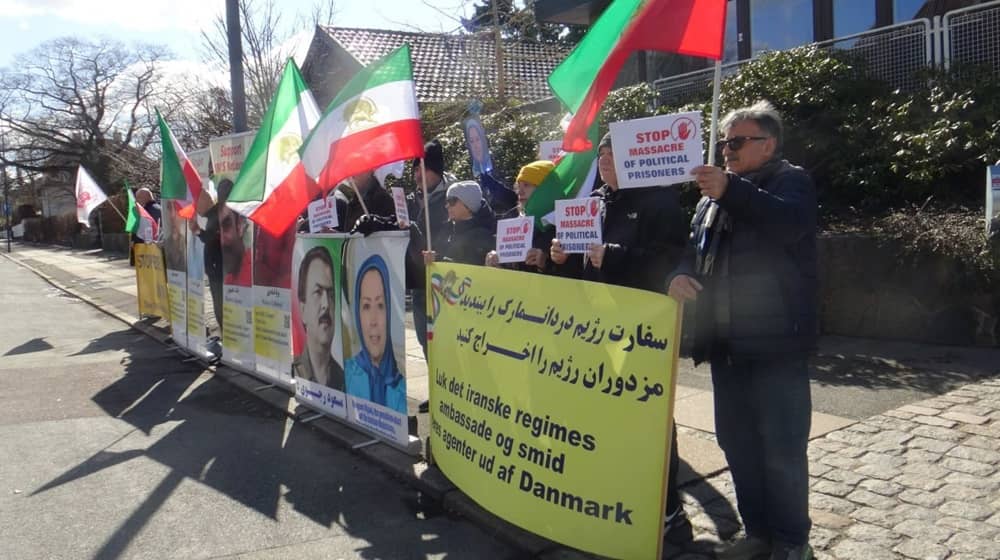
Iranian Resistance Supporters Rally Across European Cities to Condemn Executions of MEK Political Prisoners
March 31, 2026 — Supporters of the Iranian Resistance held coordinated rallies across several European cities on March 31 to condemn the execution of four political prisoners affiliated with the People’s Mojahedin Organization of Iran (PMOI/MEK in Qezel Hesar Prison: Babak Alipour and Pouya Ghobadi, Mohammad Taghavi and Akbar Daneshvarkar.
Video
Iranian Resistance Supporters Rally Across European Cities to Condemn Executions of MEK Political Prisoners#StopExecutionsInIran #NoImpunity4Mullahs #Save_Vahid #Save_Abolhassan pic.twitter.com/fFUriYhs2O— Iran Freedom (@4FreedominIran) April 2, 2026
In Oslo, demonstrators gathered in front of the Iranian regime’s embassy, where Mr. Parviz Khazaei, the representative of the National Council of Resistance of Iran (NCRI) in Nordic countries, addressed the crowd. He strongly condemned the executions, describing them as a brutal crime aimed at silencing dissent and instilling fear among the population.