

THIS PAGE WILL BE UPDATED WITH THE LATEST NEWS
UPDATE: 06:00 PM CEST
Neither Bombs nor Illusions Will Deliver Freedom in Iran

The Iranian situation is as dangerous as it is misunderstood. A fragile ceasefire hangs by a thread. The region remains volatile. And yet, despite a sustained and devastating military campaign by two of the world’s most powerful armed forces, the theocratic regime in Tehran still stands. That fact alone should force a long-overdue reckoning in Western capitals. For decades, some argued that engagement and appeasement would moderate the regime’s behavior. They insisted there were “reformists” and “pragmatists” lurking within the clerical establishment, figures who could be trusted to steer Iran toward a more responsible path. It was always a fantasy. Time and again, those illusions were exposed. The regime exploited diplomatic openings not to reform, but to regroup. It extended its influence across the Middle East, fueling proxy wars, sponsoring terrorism, and destabilizing fragile states. All the while, it lied, obfuscated and advanced its nuclear ambitions alongside an expanding arsenal of ballistic missiles and drones. Appeasement did not change the regime. It emboldened it.
Iranian Citizen Extradited from Panama to U.S. on Indictment in Seattle

Seattle – A 44-year-old citizen of Iran was extradited to the United States last week and will appear today at 2:00 PM in U.S. District Court in Seattle on a nine-count indictment related to his scheme to violate trade sanctions against Iran, announced First Assistant U.S. Attorney Charles Neil Floyd. Reza Dindar, aka Renda Dindar was indicted by the grand jury in August 2014. Dindar was arrested in Panama in July 2025 at the request of the United States. The indictment was unsealed with his arrival in the Western District for his initial appearance.
“The members of this conspiracy thought they could evade export restrictions by shipping goods through a third country – in this case China,” said First Assistant U.S. Attorney Neil Floyd. “But law enforcement uncovered the scheme, and the grand jury returned the indictment leading to the appearance today.”
According to the indictment, the conduct in this case violates sanctions against Iran imposed by the President’s Executive Order in March 1995 and reimposed in 2001. The orders prohibit the unauthorized exportation, re-exportation, sale, or supply, directly or indirectly, from the United States of any goods, technology, or services to Iran or the Government of Iran; as well as the exportation or supply of goods, technology, or services to persons in third countries knowing or with reason to know that the goods, technology or services are intended for supply, trans-shipment, or re-exportation to Iran.
Kosovo Declares Iran’s Islamic Revolutionary Guard Corps A Terrorist Organization

The Government of Kosovo has designated the Islamic Revolutionary Guard Corps (IRGC) as a terrorist organization during a meeting held on Monday in Pristina.
Prime Minister Albin Kurti said that “through this decision, Kosovo strengthens its stance in defense of international security, democratic values, and human rights.”
“This is a clear alignment of Kosovo alongside its strategic allies in the joint fight against terrorism,” Kurti emphasized. He described the IRGC as “a structure that uses terrorism and organized violence as an instrument of foreign policy, contributing to regional and global destabilization.”
The Islamic Revolutionary Guard Corps is the ideological arm of Tehran’s military and was established after the Iranian Revolution of 1979 to protect the clerical leadership.
UPDATE: 07:00 AM CEST
Onwards to a Democratic Republic in Iran
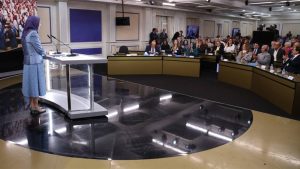
On Sunday, April 19, at an event attended by Mr. Rudy Giuliani and Dr. Maria Ryan, Maryam Rajavi delivered remarks addressing recent developments and outlining a solution to the current crisis in Iran and the region. She stated: “We extend our warmest welcome to Mr. Giuliani and dear Dr. Ryan,
You stood alongside the Iranian people and Resistance in their most difficult times, and for many years you have supported the vanguards of the people of Iran in Ashraf.
During those years, when under orders from Khamenei, the Maliki government carried out the massacre of the residents of Ashraf and subsequently forced them into relocation to Camp Liberty, you spoke out. You rightly described that place as a killing field and raised your voice before the international community.
During the relocation from Iraq to Albania, you continued to support them and were among the first to visit the MEK members in Albania.”
Echoes of 1988: Renewed Wave of Political Executions Signals Systematic Strategy in Iran
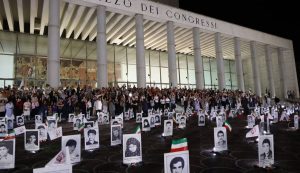
In the weeks following the cessation of hostilities between the United States, Israel, and Iran, a familiar and deeply troubling pattern has re-emerged: the systematic execution of political prisoners. This development is not unprecedented. It closely mirrors the events of 1988, when the Iranian regime, shortly after accepting a UN-brokered ceasefire in the Iran-Iraq War, carried out one of the most notorious mass executions of political detainees in modern history. Today, the parallels are difficult to ignore.
In August 1988, immediately after Tehran accepted the UN Security Council resolution that ended the war with Iraq, thousands of political prisoners—many already serving sentences—were executed following summary proceedings. At the time, regime authorities justified the killings by pointing to a military incursion by the People’s Mojahedin Organization of Iran (PMOI/MEK).
However, the current wave of executions—occurring in the absence of any comparable external trigger—undermines that narrative. Instead, it reinforces a more structural interpretation: that such executions are a preemptive tool used by the regime during moments of perceived internal vulnerability, particularly after external conflicts subside and the risk of domestic unrest rises.
The Heavy Cost of Khamenei’s Ambitions: War Leaves Deep Scars on Iran’s Economy and Society
The far-reaching consequences of Iran’s nuclear, missile, and proxy-driven policies have now materialized in the form of widespread destruction and economic hardship. The recent conflict involving Iran, the United States, and Israel—rooted in Tehran’s regional interventions—extended well beyond military arenas, directly impacting the daily lives of ordinary citizens. Even after the cessation of active hostilities, the scale of devastation continues to unfold, revealing a crisis that has deeply affected livelihoods, public health, and social stability. Initial official estimates point to a catastrophe of unprecedented proportions. Government spokesperson Fatemeh Mohajerani announced that the preliminary cost of damages stands at $270 billion—a figure she cautioned may rise as further assessments are conducted. This immense financial burden has struck at the core of everyday life across Iran.
The housing sector has been among the hardest hit. According to official figures, 83,351 residential units across the country have been damaged, including 39,508 homes and small commercial properties in Tehran alone. The destruction has left thousands of families homeless, stripping them of both shelter and lifelong assets. Beyond the physical damage, the targeting of residential areas has severely undermined citizens’ sense of safety and psychological well-being.
Iran’s Internet Blackout: Economic Devastation and Systematic Control
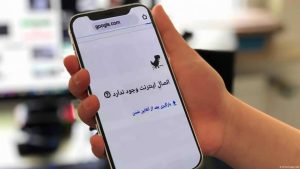
In authoritarian systems, every instrument—from ideology and economics to communication networks—serves as a mechanism of control. In Iran, the regime has pushed this logic to an extreme, imposing one of the most extensive and prolonged internet shutdowns in modern history. By severing roughly 90 million citizens from the global internet, authorities have sought not only to silence dissent but also to tighten their grip on society through digital isolation. The primary objective behind this large-scale disruption is clear: suppress the flow of information, censor public voices, and facilitate more effective surveillance and repression. Reports indicate that during these shutdowns, authorities have expanded mobile inspection checkpoints across urban and rural areas, alongside widespread arrests—measures that become far easier to implement in the absence of open communication channels.
The Naval Blockade and the Structural Fracture of Iran’s Economy

The blockade of the Strait of Hormuz has now become one of the most decisive variables in Iran’s political economy.
The blockade of the Strait of Hormuz has occurred under conditions where Iran’s economy was already suffering from deep structural dysfunctions. This structure is heavily dependent on maritime routes, through which more than 80% of its foreign trade is conducted. Under such conditions, any disruption to this route amounts to a direct blow to the backbone of the economy. The blockade of the Strait of Hormuz effectively targets exports of oil, petrochemicals, and other energy-based products. This quickly reflects in the balance of payments and exacerbates the budget deficit. As a result, rising inflation and a surge in exchange rates will be inevitable consequences for this situation.
However, the crisis is not limited to exports. Imports are also at serious risk. Iran’s economy depends annually on tens of millions of tons of imports of essential goods, medicine, and production inputs. The blockade of the Strait of Hormuz disrupts this chain, and particularly with the removal of the United Arab Emirates’ role as a regional trade hub, the supply network collapses.
Iran’s Regime Moves to Seize Assets of Dissidents

Iran’s regime has once again revealed its true nature in the form of an overt state-backed theft; this time by confiscating and seizing the assets of opponents and closing all legal avenues to defend private property.
Azam Ghoveydel, spokesperson for the State Organization for Registration of Deeds and Properties, announced that the assets of individuals seized by the judicial system of Iran’s regime cannot be transferred even with a power of attorney. In clearer terms, the regime has not only limited itself to suppressing individuals but has also designed an official and online mechanism to plunder their assets.
This official said that even if a power of attorney for selling a property has been issued before the seizure, as long as the official transfer has not been registered, the property remains under the ownership of the individual, and as soon as a judicial order is issued, the seizure is recorded in electronic records, making any official transfer impossible from that moment onward.
How Iran Funds Missiles Under Sanctions: The Hidden Aghazadeh Network

Despite heavy sanctions, Iran continues funding missiles and drones through covert financial networks, including the global activities of elite insiders known as “Aghazadeh.”
Iran funds missiles despite some of the toughest sanctions in the world. While financial restrictions were designed to choke off resources, the country’s missile and drone programs continue to expand. Behind this contradiction is a hidden financial system—one driven by elite insiders known as the Aghazadeh, who move money across borders and keep funding channels alive beyond the reach of enforcement.
The term “Aghazadeh” refers to the children of senior Iranian officials—individuals who combine political access with global mobility.
Oslo Rally Condemns Executions of Political Prisoners in Iran, Calls for Regime Change
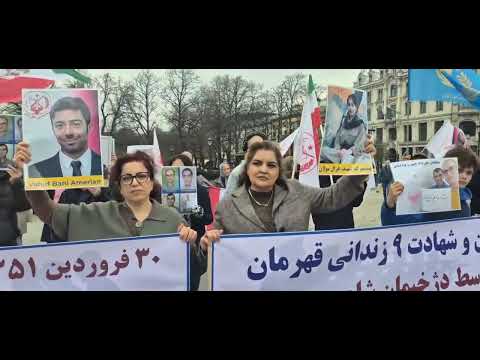
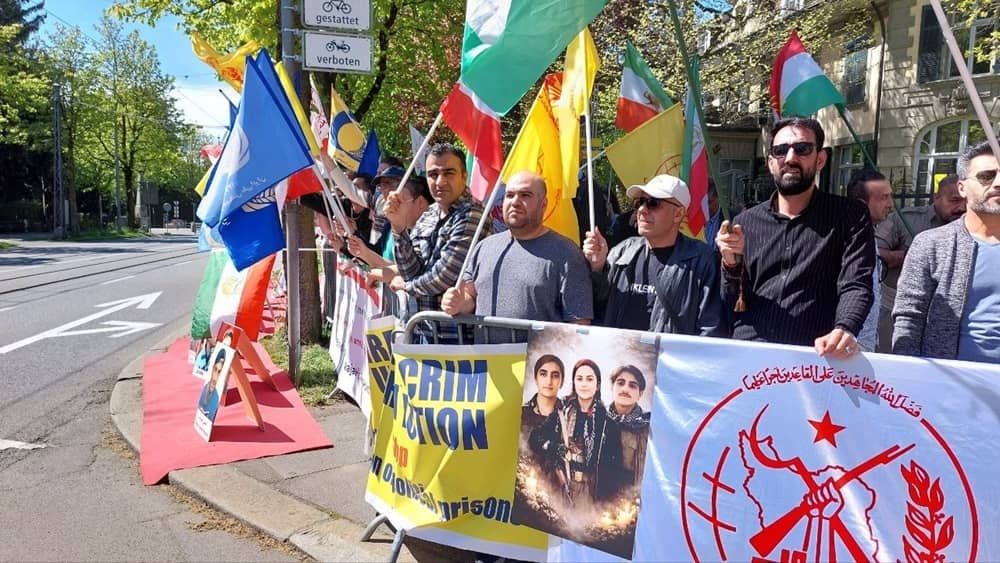
Oslo, Norway – April 18, 2026: Supporters of the Iranian Resistance have been rallying for several consecutive weeks outside the Iranian regime’s embassy in Oslo, protesting the execution of PMOI political prisoners.
They also commemorated the fallen heroes of April 19, 1972, and 1975—dates that mark the execution of 13 political prisoners by the Shah’s regime, remembered by Iranians as “30 Farvardin.”
MEK Supporters in Gothenburg Mark 116 Weeks of “No to Execution Tuesdays”

Gothenburg, Sweden — Last week on April 14, 2026, supporters of the People’s Mojahedin Organization of Iran (PMOI/MEK) held a rally marking the 116th consecutive week of the “No to Execution Tuesdays” campaign, a movement protesting the Iranian regime’s escalating wave of executions and ongoing systematic repression.
Participants warned of intensifying repression, a surge in executions, and a nationwide internet blackout. In a major escalation, PMOI political prisoners—who were among the earliest and most committed participants in the weekly Tuesday hunger strikes—were executed.