

THIS PAGE WILL BE UPDATED WITH THE LATEST NEWS
UPDATE: 6:30 PM CEST
Iran Reportedly Funneled Billions Through Binance to Fund Its Military

Iran has reportedly still found ways to funnel money through entities like Binance despite previous sanctions against the company and a jail sentence for its former CEO, Changpeng Zhao. An Iranian named Babak Zanjani, who has called himself an “ant sanction operator,” made $850 million in transactions on the exchange until as recently as December 2025, according to internal Binance compliance reports seen by The Wall Street Journal. That’s on top of another $1.7 billion that the same network may have moved through Binance, as reported earlier by The New York Times and WSJ.
Binance itself flagged the alleged activity, but Zanjani’s main account continued to operate for as long as 15 months and was still open in January 2026, the reports showed. Around half of the sum (about $425 million) could have moved through Binance to fund Iran’s military, experts told the WSJ. “Binance’s own investigators assessed the accounts were a money-laundering network to finance the regime, according to compliance reports,” the article states.
Binance told the WSJ in a statement that “it appears the overwhelming majority of these transactions have nothing to do with the Binance platform.” A company spokesperson added that Binance didn’t allow any transactions with any sanctioned individuals or wallets, and that it took appropriate actions when it uncovered sanctioned accounts. However, the company declined to answer questions about the specific transactions in question. Earlier this year, Binance sued the WSJ for defamation over previous reports on alleged Iran-linked money laundering.
EU Adopts Sanctions Targeting Iran’s Blockade of Strait of Hormuz

The European Union has formally adopted sanctions targeting Iranian officials and entities responsible for disrupting shipping through the Strait of Hormuz, the Council of the European Union confirmed on May 22.
The decision, taken by the bloc’s member states, allows the EU to impose travel bans and asset freezes on individuals and bodies behind actions against vessels transiting the waterway. EU citizens and companies are also forbidden from making funds, financial assets or economic resources available to those listed.
The move delivers on the political agreement reached by EU foreign ministers at the Foreign Affairs Council on April 21, 2026. In a statement, the Council said: “Iran’s actions against vessels transiting through the Strait of Hormuz are contrary to international law.”
UPDATE: 1:00 PM CEST
A Weakened Tehran Faces Its Greatest Threat: The Iranian People

In the aftermath of the military conflict between Iran and the United States, the Iranian nation itself stands at a historic crossroads. The death of Supreme Leader Ali Khamenei and the cumulative impact of 40 days of war have left the religious dictatorship in a more fragile position than at any other point in its history. Yet the regime’s vulnerability did not begin with recent events. For years, it has been eroded by deepening international isolation, economic collapse, and recurring nationwide uprisings supported by an increasingly organized opposition movement.
For 47 years, Western powers have vacillated between appeasement and confrontation in their approach to Iran. The former has consistently emboldened Tehran’s aggression, while the latter has demonstrated its clear limitations. When the shah’s dictatorship was overthrown in 1979, the world saw the Iranian people’s capacity to bring about change. However, that opportunity was quickly hijacked by an Islamist faction led by Ayatollah Ruhollah Khomeini. Owing to its medieval outlook, incompetence and ruthlessness, that regime never achieved legitimacy in the eyes of the Iranian people. From the outset, activists and dissidents resisted the new regime.
UPDATE: 7:30 AM CEST
Conference at the Italian Parliament: Support Human Rights and Condemn Executions in Iran
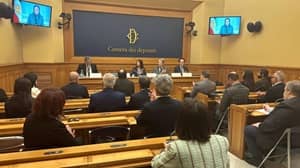
Mrs. Maryam Rajavi’s speech: “Greetings to the distinguished Senators and Deputies of Italy, I would like to express my profound gratitude for the initiative to convene this meeting and for your solidarity with the Iranian people’s resistance for freedom and democracy. As a nation that has experienced defining and pivotal moments over the past century, you are uniquely positioned to understand the reality of our country today. A truly unprecedented, critical, and exceptional situation has taken hold accompanied by unbearable pressure bearing down on tens of millions of Iranians.
“The consequences of this situation will undoubtedly impact not only the destiny of Iran but also the broader landscape of the Middle East and Europe. The conflict and tensions of recent months have obscured the real war taking place within Iran.
In reality, the fundamental conflict is between the ruling regime and the Iranian people. This is a battle that began forty-five years ago, and today it persists through the ongoing popular uprisings and the activities of the Resistance Units. The people of Iran aspire to achieve a democratic republic defined by the separation of religion and state, gender equality, autonomy for ethnic nationalities, and progressive economic and social development. This is the vision represented by the National Council of Resistance of Iran. Conversely, the remnants of the regime seek only to preserve their dying regime.”
Iran’s Execution Spree Continues: A Desperate Regime’s Futile Attempt to Silence a Restive Nation
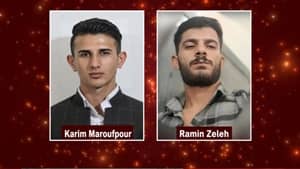
On Thursday, May 21, the Iranian regime’s judiciary carried out the brutal execution of two Kurdish political prisoners, Ramin Zeleh and Karim Maroufpour, in Naqadeh Central Prison. Ramin and Karim had been incarcerated for two and five years, respectively, before being sent to the gallows.
The regime’s judiciary executed them under the pretext of “armed rebellion” and the “assassination of an IRGC commander,” accusing them of emptying two magazines into a military vehicle and filming the operation. To justify this state-sanctioned murder, the judiciary fabricated additional charges, including forming groups to disrupt state security and shooting.
Ramin Zeleh was arrested by Intelligence Ministry forces in August 2024 and, after approximately 507 days of detention and legal limbo, was sentenced to death. According to reports, his court hearing lasted only a few minutes and was held without the presence of his chosen lawyer. His death sentence was formally delivered to him in prison in December 2024.
Karim Maroufpour, 29, from Naqadeh, had previously been arrested in the city of Sardasht in April 2021. He was severely beaten at the time of arrest and held for a long period incommunicado and without contact with his family. He was ultimately sentenced to death alongside Ramin Zeleh in the same joint case.
Death Sentences, Torture, And Hostage-Taking: Inside the Iranian Regime’s Escalating War on Political Prisoners

In the wake of the massive nationwide uprisings from December 2025 to January 2026, Iran’s profoundly weakened regime is quietly moving to eliminate dissidents. Operating under the shadow of war and a protracted internet blackout, the desperately vulnerable state is waging a cruel, two-front war against dissidents inside and outside of its prisons.
In its latest move to physically eliminate organized opposition, the regime’s judiciary has upheld the death sentence of political prisoner Manouchehr Fallah, signaling a terrifying escalation in state-sanctioned violence against supporters of the People’s Mojahedin Organization of Iran (PMOI/MEK).
The primary target of this renewed judicial terror is 36-year-old Manouchehr Fallah, who was arrested in June 2023 and is currently languishing in the Mithaq Ward of Lakan Prison in Rasht. In early May, a kangaroo court in Rasht, presided over by executioner judge Ahmad Darvish-Goftar, re-confirmed Fallah’s death sentence.
Iran Regime Makes Massive Arrests to Intimidate Society

The Iranian regime’s apparatus of repression has accelerated once again as the state grapples with a profound crisis of legitimacy and an enduring fear of another nationwide uprising. A closer examination of the recent massive arrests, severe judicial sentences, and the prolonged, indefinite holding of protesters reveals a distinct security strategy: the systematic arrest of women and teenage girls, who represent the progressive core of society, to enforce preemptive public intimidation.
Security agencies are deploying arbitrary arrests and denying detainees the right to due process, deliberately weaponizing indefinite detention as a form of psychological torture. Beyond exerting double the pressure on political prisoners, this approach purposefully targets the psychological stability and welfare of their families to maximize the cost of any civic activism. Recent admissions of mass arrests by senior military and law enforcement officials further testify to the fact that the ruling establishment views society as a powder keg ready to explode.
In a continuation of the crackdown on society, the regime’s security forces arrested Forouzan Eslami, a Kurdish English language teacher, in the city of Urmia on Wednesday, May 13, 2026. The arrest was executed without a judicial warrant, and she was subsequently transferred to an undisclosed location. Days after her arbitrary detention, no information has been disclosed regarding the reasons for her arrest, the charges against her, or her current place of confinement, which has heightened concerns over her physical well-being.
Iran’s Internal Power Struggle Exposes a Regime Trapped Between Fear and Escalation
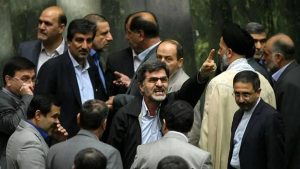
The Iranian regime’s growing internal conflict over possible negotiations with the United States has once again exposed the deep strategic paralysis consuming the ruling establishment. What appears on the surface as a dispute over diplomacy is, in reality, a struggle over survival itself — a regime trapped between mounting international pressure, economic collapse, military vulnerability, and fear of domestic unrest.
As tensions between rival factions intensify, media outlets affiliated with the camp of Saeed Jalili have launched a fresh wave of attacks against President Masoud Pezeshkian, portraying any form of negotiation with Washington as an act of surrender that would inevitably lead to renewed war and further retreat by the regime.
At the same time, the Islamic Revolutionary Guard Corps (IRGC) issued threats warning that any future attack on Iran would expand the war beyond the region. Meanwhile, members of the regime’s parliamentary security apparatus escalated rhetoric even further by claiming that any concession during negotiations — particularly regarding enriched uranium — could invite a nuclear strike against Iran.
Iran’s Engineered Economic Collapse: How the Regime Uses Inflation and Currency Devaluation to Preserve Power

Iran’s devastating economic crisis and runaway inflation are not accidental developments, nor are they merely the byproduct of regional military tensions. They are the direct outcome of a systematic political strategy aimed at preserving power through the destruction of public livelihoods. While the regime’s propaganda apparatus continually attempts to blame the collapse of the national currency on external factors and foreign conflicts, even economists within Iran increasingly acknowledge that the roots of the catastrophe lie within the regime’s own policies and power structure.
For years, the ruling religious dictatorship in Iran has exploited self-created international crises as cover for implementing some of the harshest anti-public economic measures. In this context, regime economist Hussein Ragfar rejected government claims that recent inflation was primarily caused by war and military confrontation.
According to Ragfar, the economic effects of war do not emerge immediately because damaged facilities and warehouses still maintain reserves, and much of the current inflation stems from psychological expectations and temporary disruptions rather than direct wartime destruction. His remarks amount to an implicit admission that the regime has deliberately intensified inflationary pressures by exploiting wartime fears to shift the burden of its chronic budget deficits and financial failures onto the population.
Reza Pahlavi Is the Obstacle to Regime Change in Iran
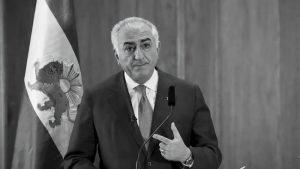
Some Western governments and analysts still cling to a comforting fiction: that Iran’s path out of theocracy runs through a familiar, exiled royal face. They entertain Reza Pahlavi — the son of the last shah — as a unifying alternative, much as Washington once hailed the Pahlavi regime itself as an “island of stability” in a turbulent region. That delusion collapsed spectacularly in 1979. Today it repeats the same error, elevating a marginal diaspora voice over the gritty, homegrown resistance that actually threatens the clerical state. The winter uprising of 2025-2026 exposed the danger. Ordinary Iranians launched the protests. Pahlavi’s attempt to steer them did not accelerate victory; it supplied the regime with a perfect pretext for massacre. And the pattern continues.
The revolt began on Dec. 28, 2025, in Tehran’s Grand Bazaar — merchants shuttering stalls over hyperinflation and the rial’s collapse, not over any exile directive. The fury spread organically to Mashhad, Rasht and western towns like Malekshahi and Abdanan, where security forces briefly melted away. Decentralized neighborhood networks, hardened by past revolts and supported by the organized Resistance movement, were already channeling the strikes, radicalizing tactics and building serious momentum. The regime wavered, caught between two different playbooks— the mass killings of 2019 and the measured crackdown of 2022. Collapse seemed possible.
Iran: Death Sentence of Political Prisoner Manouchehr Fallah Reconfirmed

As pressure against political prisoners in Iran intensifies, reports indicate that a court in Rasht has once again confirmed the death sentence of Manouchehr Fallah, a political prisoner accused of membership in the People’s Mojahedin Organization of Iran (PMOI/MEK).
According to the report, the relevant branch of the regime’s court in Rasht, presided over by Ahmad Darvish Goftar, reconfirmed the death sentence of the 36-year-old prisoner during the third week of May. This comes despite the fact that the regime’s Supreme Court had previously returned the case to the lower court for reconsideration.
Manouchehr Fallah was arrested in June 2023 and has since been held in the Mithaq ward of Lakan Prison in Rasht. Human rights sources say the handling of his case has been accompanied by extensive ambiguity and heavy security pressure.
In another case, Roozbeh Alipour, the brother of Babak Alipour, a member of the PMOI/MEK who was executed on March 31, has reportedly been subjected to pressure and mistreatment in Ghezel Hesar Prison and deprived of access to medical care. Reports indicate that he is in poor physical condition and continues to face medical restrictions in prison.
Iran’s Regime Forms New Headquarters for Repression and Control of Cyberspace Amidst Internet Blackouts

As widespread internet disruptions and blackouts continue across Iran, reports indicate the formation of a new body called the Headquarters for the Organization and Guidance of Cyberspace. This development comes as internet shutdowns and restrictions have entered their 83rd day, with millions of citizens still facing severe limitations in accessing the global internet.
On Tuesday, May 19, the state-run Shargh newspaper revealed the formation of this new headquarters in a report. According to the report, government officials and cabinet members have been prohibited from speaking to the media about the details of this structure. This official silence has increased uncertainty regarding the objectives and powers of the new body.
Reports indicate that the headquarters includes a broad combination of regime, security, and military institutions. Members include the attorney general, members of the Majlis (parliament), the ministries of communications, intelligence, culture and Islamic guidance, and science, the presidential vice presidency for science and technology, secretaries of the Supreme Council of Cyberspace and the Supreme National Security Council, the IRGC Intelligence Organization, and several representatives from the private sector.
Iran Brain Drain: Empty Operating Rooms and the New Exodus of Skilled Professionals
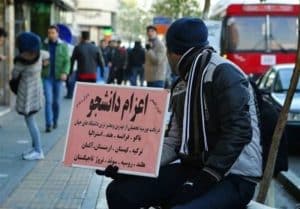
It is just before dawn when his exhausting 24-hour shift in the emergency department of a crowded public hospital finally ends. He sits on a worn-out lounge chair, hangs up his white coat — still carrying the smell of Betadine and exhaustion — and picks up his phone. But instead of checking social media, he immediately opens a language-learning app to review B2-level German medical vocabulary. He is a second-year surgical resident; someone who spent his entire youth buried in thick medical textbooks, but now, approaching 30, his biggest concern is no longer tomorrow’s surgeries, but his language exam score.
This image is not the story of one particular person. It reflects the mental state of a generation whose existence is split in two: one half beating inside operating rooms or behind engineering design desks, the other wandering through immigration websites and currency exchange platforms.Today, Iran’s growing brain drain has evolved into something deeper: a limbo between staying and leaving. An exhausting state in which skilled professionals can neither devote themselves fully to their country nor entirely detach from their roots. A constant suspension that melts away the vital energy of development long before the suitcases are packed.
MEK Supporters Hold Exhibition in Achern to Protest Executions in Iran
Achern, Germany – May 19, 2026 – Supporters of the People’s Mojahedin Organization of Iran (PMOI/MEK) held an exhibition in Achern, Germany, to protest the execution of PMOI political prisoners as well as protesters arrested in January 2026. The event also expressed solidarity with the “No to Execution” campaign.
The event emphasized the Iranian people’s demand for a democratic republic led by the Iranian Resistance as a path toward peace and freedom.
MEK Supporters Hold Exhibition in Achern to Protest Executions in Iran #StopExecutionsInIran #FreePoliticalPrisonershttps://t.co/SzSLvFsfxt
— Iran Freedom (@4FreedominIran) May 21, 2026
Organizers called on the German public and the international community to recognize the suffering of the Iranian people and their firm rejection of all forms of dictatorship—whether monarchical or theocratic. Through powerful images and personal testimonies, the exhibition highlighted the courage and sacrifices of Iranian protesters during the 2026 Iran protests, while strongly condemning ongoing human rights violations, including the execution of political prisoners.
Zurich Exhibition Backs “No to Execution Tuesdays” Campaign Against Executions in Iran
Zurich, Switzerland – May 19, 2026 – Freedom-loving Iranians and supporters of the People’s Mojahedin Organization of Iran (PMOI/MEK) held an exhibition in Zurich to protest the execution of PMOI political prisoners, along with protesters arrested in January 2026. The event also expressed solidarity with the “No to Execution” campaign.

Participants displayed banners reading “No to Executions in Iran” and voiced support for the abolition of the death penalty in Iran, calling for an end to executions and the immediate release of all political prisoners.
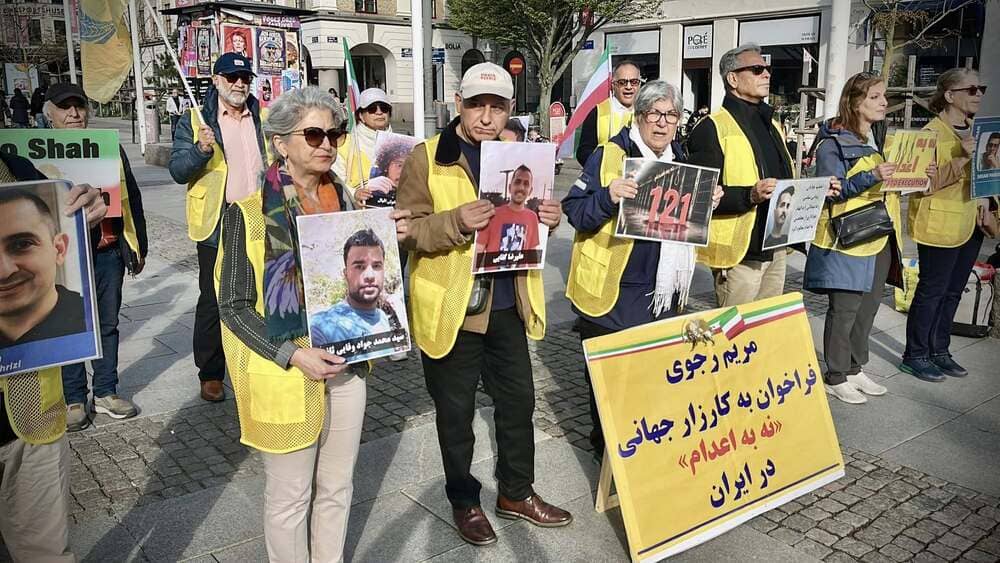
MEK Supporters in Gothenburg Rally in 121st Week of Iran’s “No to Execution Tuesdays” Campaign
Gothenburg, Sweden — May 19, 2026: Supporters of the People’s Mojahedin Organization of Iran (PMOI/MEK) held a rally to mark the 121st consecutive week of the “No to Execution Tuesdays” campaign, a movement protesting the Iranian regime’s escalating executions and systemic repression.

Protesters condemned the recent execution of political prisoners and demonstrators arrested during the January 2026 uprising. They warned that dozens of political detainees and protesters arrested during recent uprisings are now at imminent risk of execution.