

Four-minute read
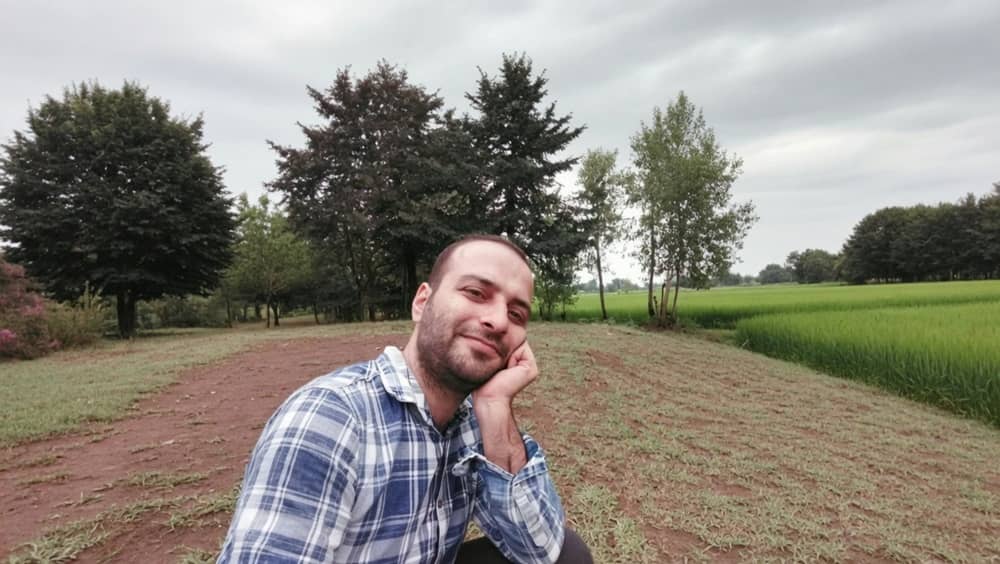
The machinery of death in Iran moves with a cruel and predictable velocity. On May 27, 2026, the Secretariat of the National Council of Resistance of Iran (NCRI) issued a dire warning: the regime’s Supreme Court has finalized the death sentence of 38-year-old political prisoner, laborer, and dissident poet Amin (Peyman) Farahavar. His crime? The ultimate offense in the eyes of a terrified totalistic state—refusing to bow, supporting the People’s Mojahedin Organization of Iran (PMOI/MEK), and daring to write verses that expose the rotting core of the ruling theocracy.
Amin, known to his readers under the literary pseudonym Peyman, is currently trapped within the walls of Lakan Prison in Rasht. He is facing the medieval, fabricated charges of Baghi (armed rebellion) and Moharebeh (enmity against God).
To look closely at Amin’s case is to look directly into the anatomy of Iranian state terror. Convicted originally in May 2025 by a notorious judicial henchman, Ahmad Darvish-Goftar, Amin’s trial lacked even the superficial illusion of due process; he was condemned to death without a lawyer present. Over the last year, as the regime scrambled to suppress widespread domestic dissent, every legal avenue was systematically dismantled. In early May 2026, his final request for a retrial was rejected. He now stands in the shadow of the gallows.
But the regime has not just sought to break Amin’s spirit through legal lynching; they are actively breaking his body. Suffering from severe complications and agonizing pain following gallbladder surgery, Amin experienced internal bleeding during brutal interrogation sessions. In an act of calculated, slow-motion torture, prison authorities have systematically deprived him of vital medical treatment.
Peyman (Amin) Farahavar is under sentence of death & at grave risk of execution in Iran following an unfair trial in relation to his real or perceived links with banned opposition groups. Amid rising arbitrary executions, urgent diplomatic action is needed to halt executions. 1/2 pic.twitter.com/Z6t5zmAu8s
— Amnesty Iran (@AmnestyIran) May 26, 2026
Yet, what the mullahs fail to grasp is that intellectuals and poets cannot be silenced by the snap of a rope. From the depths of Lakan Prison’s isolation, battling illness and the looming specter of the hangman, Amin did what Iranian freedom fighters have done for generations: he turned his confinement into a crucible of resistance. He penned a defiant masterwork—a poem smuggled from the quarantine ward that strips the regime of its religious mask and stands as a testament to the enduring soul of a laborer who loves his country.
The Iranian Resistance has launched an urgent international appeal, calling upon United Nations human rights bodies and global advocates to intervene immediately. We must scream for those who are being suffocated in the dark. Amin Farahavar must not become another number in the regime’s bloody ledger of executions.
Read his words below, written at 12:05 AM from his prison cell. It is the voice of a man who knows his back is bent, but whose spirit remains as unyielding as the cypresses of his native Gilan.
PEN-Berlin – Pressemitteilung vom 7. Mai 2025#Iran: Todesurteil gegen den Dichter Peyman #Farahavar#SaveFarahavar #StopExecutionsInIran
PEN Berlin ist zutiefst erschüttert über das Todesurteil gegen den Dichter Peyman Farahavar aus der Provinz Gilan im Iran, bekannt unter dem… pic.twitter.com/81RgGjqyhF— Javad Dabiran (@JavadDabiran) May 7, 2025
The Accusation of Warring Against God is a Slanderous Lie
By Amin (Peyman) Farahavar
Composed in Lakan Prison – Misaq Quarantine
12:05 AM
The accusation that I warred against Holy God was a slander.
Your father was a heartbroken lover of God.
Your father said: “Do not steal; the homeland is our house.
May my head be sacrificed for my homeland, for it is our beloved.”
My homeland is my mother, my Iran, my soul and my heart.
By God, my mother is my life, my soul and my heart.
Shall the feet of the tyrants stand firm while we are upon the gallows?
We carry the cry of “Never to humiliation!” upon our lips.
We are imprisoned for the sake of all the people of our homeland;
We are a wave of tears, yet we smile through our weeping.
Be joyful, dear ones of the homeland, for we are here;
We were cypresses, and we did not break under the blizzard of calamity.
IRAN: Peyman (Amin) Farahavar is among dozens of people under death sentences on politically motivated charges & at risk of execution. Fears of further executions are mounting as Iranian authorities continue weaponizing the death penalty to repress dissent. https://t.co/XmKqFslq7F
— Agnes Callamard (@AgnesCallamard) May 26, 2026
We were boulders that witnessed storm after storm;
We witnessed the death sentence of the flower, and the lamentation of the garden.
Our share became pain, death, mourning, and grief—
The daily offering of condolences by one city to another.
My back has bent under this heavy burden, O people!
Woe to the shame of a father, woe for the bread of the people.
By God, the grief of the people burns the liver;
By the divinity of God, it burns the existence of a father.
My liver burned because I became the grieving soul for the people;
My liver burned because I became a wanderer for the people.
To be a worker, a laborer, and yet be in prison?
To be a worker, and be only a name of a human being?
Tears pour like a burning thirst upon the face of this poem;
A hot dagger plants itself in the forehead of the flower.
Peyman (Amin) Farahavar is among dozens of people under death sentences on politically motivated charges & at risk of execution. Fears of further executions are mounting as Iranian authorities continue weaponizing the death penalty to repress dissent. 2/2 https://t.co/tYWIRKqeyf
— Amnesty Iran (@AmnestyIran) May 26, 2026
The words around me stand ready for rebellion;
The eyes have become a dad fountain of blood, ready to surge.
The eye of the forest is anxious for the footsteps of Kuchak Khan;
O Lion of Lakan Prison, the sleep of my Gilan, may my soul be sacrificed for you.
Be joyful, for spring is coming to the meadow;
Be joyful, for the Simurgh of the homeland is coming.
We have been, and still remain, indebted to our homeland;
We have not yet broken our covenant with our Mother.
Historical & Cultural Context Notes
* “Your Father” (Pedar-et): In Iranian culture, when a father addresses his children or society from a place of suffering, he often refers to himself in the third person (“your father did this…”). It underscores his dignity as a family man and a laborer, directly countering the regime’s attempt to brand him an outcast or criminal.
* “My liver burned” (Jigaram sookht): In English, we often translate this idiom to “my heart ached.” However, in Persian poetry, the liver (jigar) is the seat of deep, visceral sorrow and courage. Leaving it literal preserves the raw, bleeding imagery of the original text.
* The Tone of Defiance: The cypress tree (Sarv) is a traditional Persian symbol of freedom and upright resistance, which translates perfectly into English.
* The Gilaki Dialect Line: The line “Shire zendane khos e Gilaname jan ghorban” shifts into a local northern accent/dialect, brimming with regional affection. The English translation (“Oh, Lion of Lakan, my Gilan, my pride!”) captures the emotional weight and regional pride, even if the exact vernacular syntax of northern Iran can’t be perfectly replicated in English phonetics.
* “Never to humiliation!” (Heyhat min-al-Zilleh): A historical Arabic battle cry originating from Imam Hussein at the Battle of Karbala, heavily used in Iranian culture to signify absolute refusal to surrender to tyranny. Farahavar brilliantly subverts it against the current religious establishment.
* Kuchak Khan & Gilan: Mirza Kuchak Khan was a legendary early 20th-century revolutionary nationalist who led the Jungle Movement (Nahzat-e Jangal) in the forests of Gilan (where Lakan Prison is located). Farahavar invokes him to root his struggle in the historic geography of northern Iranian resistance.
* The Simurgh (Persian for Phoenix): A benevolent, mythical flying creature in Persian mythology (famed in Ferdowsi’s Shahnameh). It represents collective wisdom, healing, and ultimate liberation, also referred to Mrs. Maryam Rajavi in the literature of the Iranian Resistance.