

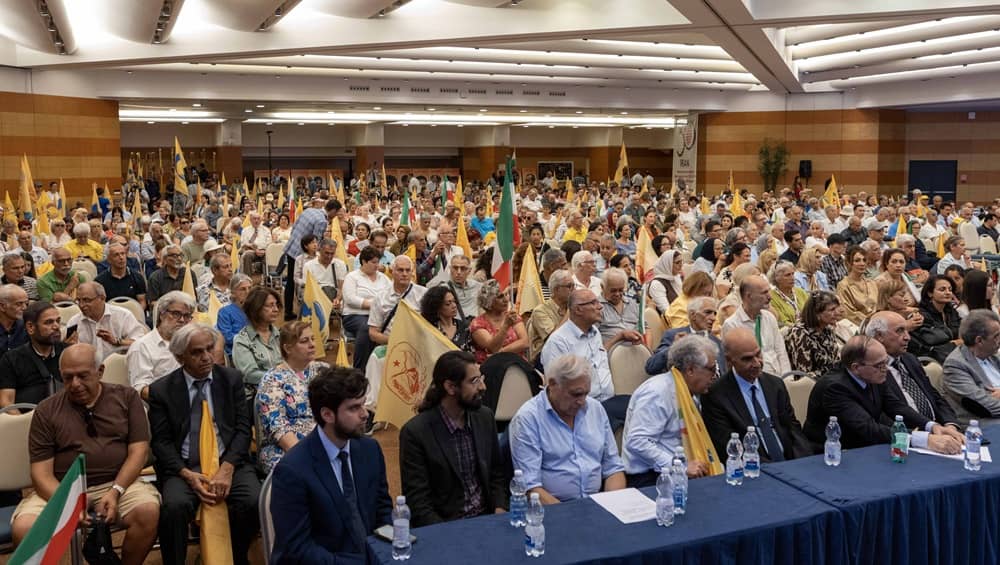
THIS PAGE WILL BE UPDATED WITH THE LATEST NEWS
UPDATE: 10:00 PM CEST
Bessent Says Treasury Tracked Down Ayatollah’s ‘Money Man,’ Plans to Expose Linked Properties

The Trump administration has successfully tracked down the ayatollah’s “money man,” Treasury Secretary Scott Bessent revealed to FOX Business on Tuesday, detailing plans to publicly expose more than $100 million in properties linked to Iran’s supreme leader around the world.
“We have found the money man for the ayatollah. We are tracking the ayatollah’s properties around the world,” Bessent told “Mornings With Maria.”
“We hope to soon be able to print his $100 million-plus properties and show the addresses, and we’re preserving this money for the American people.”
The Trump Treasury chief said the effort is part of the administration’s broader “Economic Fury” campaign against Iran, a “one-two punch” combined with the military “Epic Fury” campaign that rattled the region.
UPDATE: 7:30 PM CEST
The Iran Crisis Is Bigger Than the Nuclear Program

As the United States and Iran exchange military strikes across the Persian Gulf, one lesson should already be clear: Tehran’s nuclear ambitions are only one part of a much broader strategy for preserving the Iranian regime’s grip on power.
Recent attacks on military installations, commercial shipping, and regional infrastructure demonstrate that the regime’s nuclear ambitions are only one component of a broader system of coercion. Ballistic missiles, proxy militias, maritime intimidation, cyber operations, and domestic repression all serve the same strategic objective: preserving a regime whose greatest vulnerability lies not abroad, but at home.
Preventing Iran from acquiring a nuclear weapon remains an essential American objective. But focusing primarily on uranium enrichment risks misunderstanding the nature of the challenge. The nuclear program is not an isolated threat. It is one component of a broader strategy through which the Iranian regime compensates for declining legitimacy at home by expanding coercion abroad.
UPDATE: 5:30 PM CEST
Brexit’s Arch-Critic Guy Verhofstadt Turns on EU’s Weakness Over Iran

One of the biggest opponents to Britain’s Brexit has savaged the EU for its spineless appeasing of Iran’s murderous dictatorship, which has slaughtered tens of thousands of its own citizens this year alone. As US bombs continued to rain down on the Strait of Hormuz and strategic targets in Iran today Guy Verhofstadt led the charge against Europe and the West’s continued political recognition of the Ayatollah’s brutal “illegitimate” regime. The former Belgian Prime Minister – long a thorn in the side of UK Brexit negotiators – launched an extraordinary broadside at European leaders, accusing them of “talking to people who so clearly do not represent the Iranian people”.
At a high-profile meeting aimed at ending Iran’s Ayatollah-led Iranian dictatorship and replacing it with a modern democracy he said: “In the last few months I have heard a lot about the mullahs and a lot about US leadership on the battlefield – but I have not heard much about European leadership. Why do we continue to talk to these people who so clearly do not represent the Iranian people? European leaders must stop their appeasement and silence policy and start taking an active role in this conflict.”
As US Bombs Fall in Iran Ayatollah Continues to Murder His Own People
As the eyes of the world look to the ongoing US bombardment of Iran, Ayatollah Mojtaba Khamenei’s Islamic dictatorship continues to torture and kill its own people with impunity.
Early today the Iranian regime carried out yet another brutal killing — executing 26‑year‑old law graduate and PMOI member Mehdi Khanaki, who had already endured months of savage physical and psychological torture. Khanaki, arrested on February 10 for taking part in the January 2026 nationwide uprising in Karaj, was hanged solely for his membership in the People’s Mojahedin Organization of Iran (PMOI/MEK) which opposes the Ayatollah and the Revolutionary Guard (IRGC). His death marks the latest escalation in a campaign of terror aimed at crushing organised resistance in Iran.
UPDATE: 8:00 AM CEST
Echoes Of 1952: How PMOI Resistance Units Keep Mossadegh’s Uncompromising Spirit Alive
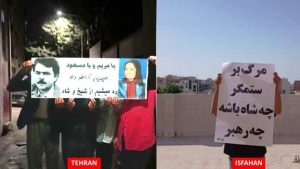
Coinciding with the anniversary of the historic July 21, 1952 uprising, rebellious youth and Resistance Units of the People’s Mojahedin Organization of Iran (PMOI) launched a widespread campaign across various Iranian cities to commemorate the legacy of Dr. Mohammad Mossadegh and the martyrs of the uprising. Through a series of coordinated actions, these units underscored the Iranian people’s enduring quest for freedom, independence, and steadfast resistance against dictatorship. To understand the significance of these modern acts of defiance, one must look back to the roots of Iran’s anti-colonial struggles. Dr. Mohammad Mossadegh led a decisive battle to nationalize Iran’s oil industry, successfully passing the nationalization law on March 20, 1951.
Following his appointment as Prime Minister, Mossadegh bravely countered domestic and foreign plots. In an effort to curb the Shah’s dictatorial influence, he demanded control over the Ministry of War. When the Shah refused, Mossadegh resigned on July 16, 1952, prompting the Shah to appoint Qavam-os-Saltaneh, a puppet who threatened the public with severe crackdowns.
However, the threats failed to break the people’s will. On the morning of July 21, 1952, major cities including Tehran shut down. Workers, bazaar merchants, and people from all walks of life flooded the streets chanting, “Death or Mossadegh” and “Death to Qavam.” The Shah ordered his military to open fire on the defenseless crowds, leaving nearly 800 people dead or wounded. Ultimately, the Shah was forced to retreat, bowing to the nation’s demands and reinstating Mossadegh.
Iran: Evin Prison Denies In-Person Family Visits to Women Political Prisoners

Women political prisoners held in the women’s ward of Evin Prison were denied in-person family visits on Sunday, July 19. Instead, they were only permitted to communicate with their families through booth-separated visits.
The restriction was imposed following tensions in the women’s ward last week. Meanwhile, non-political prisoners continued to receive in-person family visits.
On July 12, at least 40 women prisoners were transferred from Qarchak Prison to the women’s ward of Evin Prison. The transfer took place despite the ward already facing severe overcrowding and limited capacity.
The arrival of the additional prisoners prompted protests by women political prisoners, who objected to the worsening overcrowding and deteriorating detention conditions. The protests ended after prison guards raided the ward, creating a highly tense atmosphere.
Ejei’s Warning Reveals Regime’s Fear of PMOI and a New Wave of Public Protests

The latest remarks by Iran’s judiciary chief, Gholamhossein Mohseni Ejei, offer a revealing glimpse into the regime’s growing anxiety over the possibility of renewed nationwide protests and the expanding influence of the People’s Mojahedin Organization of Iran (PMOI/MEK).
Speaking on Monday, July 20, during a meeting of the Supreme Judicial Council attended by President Masoud Pezeshkian, Ejei repeatedly stressed the need for tighter security measures, broader emergency powers for officials, and greater vigilance against what he described as the PMOI, “infiltrators,” and individuals allegedly seeking to undermine the regime from within.
His remarks reflected concerns that extend far beyond external threats. Instead, they exposed a leadership increasingly preoccupied with internal instability and public dissatisfaction.
One of the most striking aspects of Ejei’s speech was his insistence that officials should be empowered to act without delay during what he described as wartime conditions.
Iran’s Forest Fire Crisis: How Mismanagement and Corruption Are Fueling Environmental Destruction
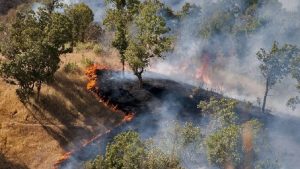
Although the summer of 2026 has not yet reached its midpoint, vast areas of Iran are once again engulfed in flames.
From the forests and rangelands of Morki village in Mamasani County, Fars Province, to the woodlands of Baneh in Kurdistan Province and the forests of Kuh Mareh Sorkhi, wildfires have erupted across multiple regions, destroying some of Iran’s most valuable natural ecosystems. In Baneh alone, three separate fires broke out within a single day. Environmental activists note that such patterns have become increasingly common in recent years, with many incidents showing signs of deliberate human involvement. Meanwhile, aerial footage from Kuh Mareh Sorkhi reveals extensive destruction, with large sections of forest reduced to ash within hours.
While extreme heat, prolonged drought, and strong winds have accelerated the spread of the fires, experts argue that climate alone cannot explain why the crisis returns year after year.
Specialists in natural resource management have long warned that Iran’s recurring wildfire disasters are rooted in structural failures rather than seasonal weather alone.
30 Tir Uprising: Iran’s Historic Rejection of Monarchy and the Enduring Fight for Democracy
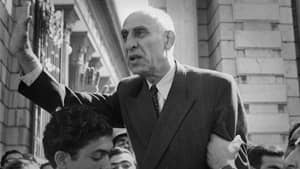
The 30 Tir Uprising of July 21, 1952, stands as one of the defining moments in Iran’s modern history. On that day, hundreds of thousands of Iranians took to the streets under the slogan “Either Death or Mosaddeq”, confronting the armed forces of the Pahlavi monarchy in defense of constitutional government, national sovereignty, and democratic rule.
The uprising was more than a protest against a change of government. It represented a national rejection of royal absolutism and foreign interference, proving that the Iranian people were prepared to pay the highest price to defend their right to determine their own future.
Today, more than seven decades later, the events of 30 Tir remain a powerful reminder that Iran’s struggle has never been between one ruling elite and another. It has been a struggle against dictatorship itself.
The roots of the uprising lay in Iran’s long campaign to reclaim control over its natural resources and political independence.
For decades, Iran’s oil wealth had been dominated by unequal agreements with foreign powers. The concessions granted under the 1901 D’Arcy Agreement and later reinforced during the reign of Reza Shah left Iran’s vast petroleum resources largely under foreign control while much of the population lived in poverty.
Iranian Regime Transfers Thousands of Centrifuges to Underground Mount Kolang Tunnel Complex

The Iranian regime has transferred thousands of uranium enrichment centrifuges to tunnels beneath “Mount Kolang,” also known as “Pickaxe Mountain.”
The Wall Street Journal, citing Israeli and U.S. officials, reported that Israeli intelligence assessments indicate the Iranian regime transferred thousands of uranium enrichment centrifuges to deep tunnels beneath “Mount Kolang” last autumn after its main nuclear facilities were damaged in U.S. and Israeli strikes. The underground complex is also known as “Pickaxe Mountain.”
According to the report, Israel has shared its intelligence with Washington and has urged the U.S. government to intensify military operations against the Iranian regime’s nuclear infrastructure. U.S. President Donald Trump had previously identified the underground complex as one of the potential targets for U.S. strikes.
The Wall Street Journal also wrote that Israeli Prime Minister Benjamin Netanyahu is seeking to persuade Trump to resume broader attacks against the Iranian regime, with the aim of further weakening the nuclear program and the reconstruction of damaged facilities.