

Three-minute read
Mojtaba Khamenei is trying to prevent the Iranian regime’s factional struggle from becoming a public spectacle. In a message published by the state-aligned Tasnim news agency on August 28, 2026, he declared that “anything that harms social cohesion is forbidden,” specifically warning against “discouraging” statements and polarizing arguments over “war or negotiation” and “compromise or warmongering.”
The irony is that neither Ruhollah Khomeini nor Ali Khamenei ever succeeded in eliminating factional warfare; at critical moments they merely forced it back behind closed doors. Mojtaba appears to be attempting the same containment. But his call for “social cohesion” immediately gave political cover to the very camp under attack from the regime’s harder-line forces: the regime’s president Masoud Pezeshkian, parliament speaker Mohammad-Bagher Ghalibaf and Foreign Minister Abbas Araghchi, all associated with the push for negotiations. Ghalibaf quickly embraced Mojtaba’s statement, declaring that any action damaging cohesion was “nationally and religiously forbidden.” For this camp, the directive is more than a call for discipline: it is a weapon against opponents accusing them of capitulation, allowing them to portray attacks on their negotiating course as defiance of the supreme leader’s own demand for unity.
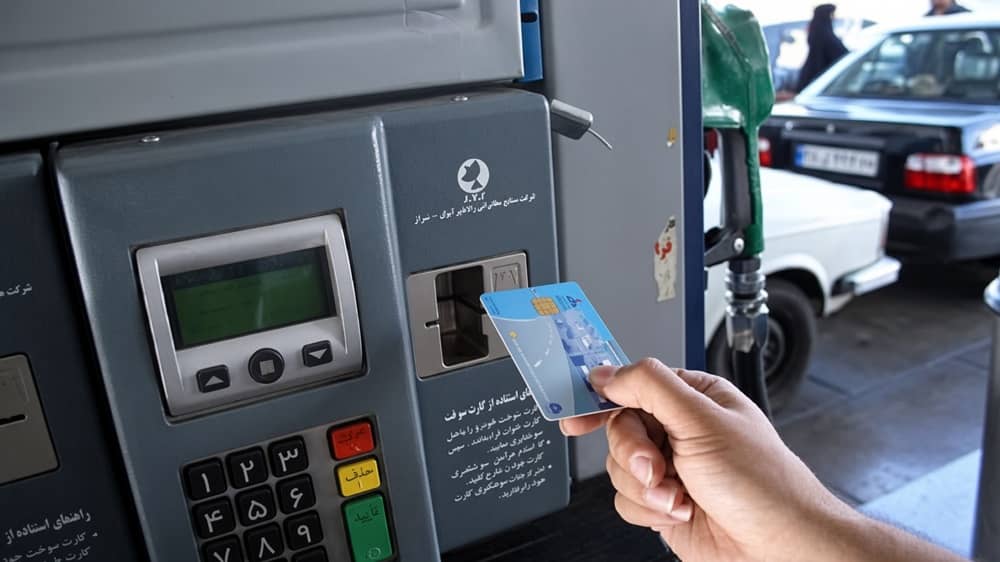
Pezeshkian also tried to appropriate that unity message for himself, stressing that consensus has always been his policy. But he is simultaneously reopening the argument Mojtaba wants suppressed. In a televised interview reported by IRNA on August 28, Pezeshkian defended the Islamabad understanding as an “exceptional achievement,” insisted Iran had been its winner, and said the third gasoline tier would rise to around 10,000 tomans per liter.
"State-affiliated media in Iran have recently acknowledged what ordinary Iranians have experienced for years: the country’s #economic resilience is weakening," Farid Mahoutchi writes.https://t.co/fZKKlfQMkn
— NCRI-FAC (@iran_policy) August 27, 2026
The Economy Fuels the Political Fight
Pezeshkian’s political case for negotiations rests increasingly on describing the cost of the present course. He said imports and exports had fallen by 25 to 35 percent, that gasoline imports had become difficult, and that Iran had previously sold nearly 90 million barrels of oil during the short period when the agreement was being implemented. His message is unmistakable: economic relief requires an external accommodation. That argument inevitably challenges the anti-negotiation camp, however carefully it is presented as loyalty to the leadership.
The economic numbers provide ample reason. Tasnim reported on August 28, citing the Statistical Center, that point-to-point inflation had reached 89 percent, while annual inflation stood at 69.9 percent. Lower-income households were being hit harder still.
Another Tasnim report the same day showed the severity at the supermarket level: liquid cooking oil was up about 340 percent from a year earlier, solid oil 380 percent, imported rice 201 percent, eggs 293 percent and chicken 176 percent. These are increases in staples, not discretionary goods, meaning inflation is striking directly at household consumption.
Empirical Data and Street Riots Expose Iran Regime’s Misplaced Priorities as the True Engine of #Economic Devastationhttps://t.co/297ujYv7EX
— NCRI-FAC (@iran_policy) August 27, 2026
From Food to Medicine
The health sector is under similar pressure. On August 27, Tasnim quoted the head of Iran’s pharmacists’ association saying around 70 vital medicines were in shortage; counted by formulation, the figure reached approximately 400, and could approach 800 when individual brands were included. He added that roughly two-thirds of medicines had undergone price increases in 2026 while insurance systems had failed to keep pace.
The argument over how to escape this pressure has already burst back into the open. Pezeshkian’s executive deputy Mohammad Jafar Ghaempanah said he would have abandoned enrichment had he known its consequences would include the killing of the previous leader and attacks on infrastructure, concluding: “We are not all supposed to be martyred; Iran is supposed to remain.” Hard-line reactions followed immediately. On August 29, Kayhan attacked his reasoning as the revival of a “Turkmenchay logic” of concessions and demanded that Pezeshkian clarify his position.
That is the contradiction at the center of Mojtaba Khamenei’s unity order. He wants officials to stop damaging morale by attacking one another publicly, but the convergence of crises is forcing a strategic argument into the open. Pezeshkian cannot make the case for negotiations without emphasizing the scale of Iran’s losses; hard-liners cannot accept that case without questioning the regime’s survival strategy they defend. Inflation, food prices, medicine shortages, fuel costs and energy deficits are therefore doing more than impoverishing society—they are continuously reproducing the very factional conflict Mojtaba is trying to prohibit.