
THIS PAGE WILL BE UPDATED WITH THE LATEST NEWS
UPDATE: 7:00 AM CET
Iranian Political Prisoner Loghman Aminpour Speaks Out from Ghezel Hesar Despite Years of Repression

In a letter published by Simay Azadi (Iran National Television) on November 24, 2026, Iranian political prisoner Loghman Aminpour, a supporter of the People’s Mojahedin Organization of Iran (PMOI/MEK) incarcerated in Ghezel Hesar Prison, reaffirmed his political convictions despite nearly a decade of imprisonment and persecution.
Addressed to Iranian Resistance leader Massoud Rajavi, the letter was written in response to his November 21 message concerning the activities and economic hardships of PMOI Resistance Units inside Iran.
Importantly, Aminpour insisted on having his message made public despite the risks associated with openly expressing his support for the Iranian Resistance from inside the regime’s prisons.
In his November 21 message, Massoud Rajavi addressed the activities of the Resistance Units marking the seventh anniversary of the November 2019 nationwide uprising. He also drew attention to the extreme poverty that some members of the Resistance Units endure, reflecting the broader economic crisis confronting millions of Iranians.
Women Political Prisoners in Evin Prison Foil Regime’s “Pardon” and “Remorse” Charade
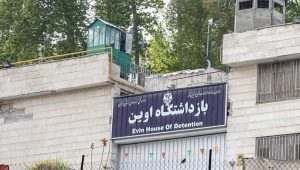
Women political prisoners in Evin Prison have firmly rejected repeated efforts by the Iranian regime’s judiciary and Prisons Organization to coerce them into signing so-called “pardon” forms and expressing remorse.
According to a report by the Secretariat of the National Council of Resistance of Iran (NCRI), over recent weeks the regime’s judiciary and Prisons Organization have circulated forms requesting “pardon,” “conditional release,” “release with an ankle monitor,” and “open-prison sentencing” (day-release/open-ward placement) inside Evin Prison, including in the women’s ward, in an attempt to force political prisoners into submission and declarations of remorse. To advance this effort, operatives posing as “social workers” have repeatedly been dispatched to various wards to press detainees to fill out the forms.
During the Iranian month of Aban (October 23–November 21, 2026), judicial officials visited the women’s ward and ward 7 of Evin Prison on four occasions to push the scheme forward. Each time, however, they were met with resistance and defiance from women political prisoners—particularly supporters of the People’s Mojahedin Organization of Iran (PMOI/MEK).
Violence Against Women in Iran Claims Two More Victims

Helia Fattahi, a 19-year-old woman from Sanandaj in Kurdistan Province, was killed by her parents. According to a report by Asr Iran, the so-called “honor killing” took place on November 21, 2026. (Asr Iran, November 24, 2026)
Helia’s parents allegedly forced her to ingest 30 anti-seizure pills, severely beat her, and then suffocated her by placing a pillow over her face. Reports indicate that Helia Fattahi was two months pregnant. She had informed her family of her pregnancy a week earlier.
In another tragedy, Zahra Jadidi, a 16-year-old girl from Miandoab in West Azerbaijan Province, was stabbed to death after rejecting a marriage proposal and ending her engagement to her 21-year-old fiancé. The 21-year-old man stabbed Zahra to death in a public park in the city. Zahra had been engaged to him since childhood.
Child marriage in Iran is an organized and state-sponsored crime. This phenomenon has expanded under the regime’s religious laws and the system of Velayat-e Faqih, functioning as part of a broader mechanism for the oppression of women and social control.
Iran-Based Influence Network Used AI to Impersonate Western Journalists and Target Public Opinion in Australia

An investigation published by Australia’s ABC News on November 24 revealed that the operation specifically targeted Australian public opinion, using a fabricated journalist named Alice Johnson to publish articles and social media content criticizing Australia’s position on the conflict.
The revelations expose how the regime’s influence networks are adapting to artificial intelligence, combining fabricated identities, seemingly legitimate media publications, and social media engagement to amplify political narratives and deepen divisions among Western governments and societies.
The investigation also adds to growing concerns about the regime’s use of cyber capabilities and covert influence operations beyond the Middle East.
Iran’s 2027 Budget Faces Oil Revenue Crisis as Regime Turns to Taxes, Inflation, and Public Assets

On November 20, a deputy head of the regime’s Planning and Budget Organization announced that the draft budget for the next Iranian calendar year (1406) would be submitted to the government within two weeks. The announcement comes as the regime faces the challenge of covering a widening budget gap amid declining economic activity and limited access to foreign currency.
The scale of the problem is evident in recent budget figures. Iran’s 2025 budget was approximately $77 billion, while the 2026 budget fell to an estimated $45–48 billion. Including allocations for state-owned companies, banks, and other government-controlled institutions, however, the overall public-sector budget reaches approximately $111 billion.
Continued restrictions on oil exports could reduce national income by an estimated 7 to 8 percent, further weakening the government’s revenue base.
The regime has several possible ways to compensate for the shortfall. None, however, offers a sustainable solution. Most would simply transfer the financial burden to households, employees, businesses, and already impoverished sections of society.
At Least 104 Femicides Recorded in Iran Over the Past Year

The Human Rights Activists News Agency (HRANA) reported that over the past year, it documented at least 104 cases of femicide, 178 cases of domestic violence, and 63 cases of rape and sexual abuse against women in Iran. State-sponsored violence, compulsory hijab, child marriage, and legal discrimination are also among the other forms of violence against women in Iran. The report, published on Wednesday, November 25, marking the International Day for the Elimination of Violence Against Women and the beginning of the global 16 Days of Activism Against Gender-Based Violence campaign, examines various forms of violence against women between November 25, 2025, and November 25, 2026.
According to the report’s findings, at least 104 cases of femicide were recorded in Iran over the past year, averaging one case every three and a half days.
The killing of women by their husbands or other family members, so-called “honor killings,” and murders stemming from domestic violence and family disputes are among the forms of lethal violence against women.
Prices in Iran Are Rising Every Day
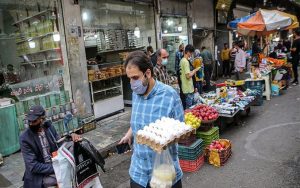
These days, all you have to do is ask a seller about the price of a product next month. You probably won’t get a clear answer. They may tell you that they can only quote a price for the current week or that they need to check with their supplier again. A manufacturer who accepts a three-month order faces the same problem. They don’t know how much they will have to pay for raw materials or whether they will make a profit or incur a loss when delivering the goods if they commit to a price today.
When prices change this rapidly, even financially responsible and committed business operators struggle to make decisions. Beyond a certain point, inflation does more than increase the cost of goods. It also undermines the ability to calculate and plan for the future.
According to a report by Iran’s Statistical Center, year-on-year inflation reached 88.7% in October 2026. This means that the same basket of goods and services that cost 100 units in October last year now costs an average of nearly 189 units. Behind this figure lies a reality that is rarely discussed: the value of many economic agreements changes before they are even due to be fulfilled.
CENTCOM Reports Seizure of Weapons Shipment in Syria Linked to IRGC

The commander of the U.S. Central Command (CENTCOM) announced that Syrian forces seized a weapons shipment several weeks ago that, according to him, Iran’s Islamic Revolutionary Guard Corps (IRGC) was smuggling to Lebanon. Syrian state media also reported the discovery of more than three million Captagon pills in two separate operations.
On Wednesday, November 25, Admiral Brad Cooper, commander of CENTCOM, announced in a statement that Syrian Internal Security Forces had seized a weapons shipment several weeks earlier that, according to CENTCOM, Iran’s IRGC was smuggling to Lebanon.
During Bashar al-Assad’s rule, Syria was one of the main routes used by the Iranian regime to transfer weapons to Hezbollah in Lebanon. Following Assad’s ouster, reports emerged about Tehran’s efforts to find alternative routes.
Tehran’s Housing Crisis Deepens as Construction Costs Rise 133% and Sales Collapse
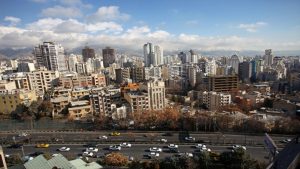
Construction-input prices in Tehran rose 132.6% year-on-year in the summer of 2026, according to the latest figures from the Statistical Center of Iran, intensifying a housing affordability crisis in which property prices continue to climb despite a sharp decline in transactions.
The number of registered housing transactions in the Iranian capital has fallen from a historical monthly average of about 8,000 to fewer than 400 in some months, the newspaper Nobonyad reported on Wednesday, citing the Ministry of Roads and Urban Development.
The simultaneous surge in construction costs and collapse in sales underscores a growing disconnect between property valuations and household purchasing power. Families increasingly struggle to enter the housing market, while developers face rising costs that threaten the viability of new residential projects.
The crisis comes as President Masoud Pezeshkian’s administration grapples with the economic consequences of war, currency depreciation and longstanding difficulties in financing affordable housing. New government restrictions on urban development in Tehran and neighboring Alborz province have added to concerns about the future supply of residential property.
Copenhagen Rally Marks Week 148 of ‘No to Execution Tuesdays,’ Demands End to Executions in Iran
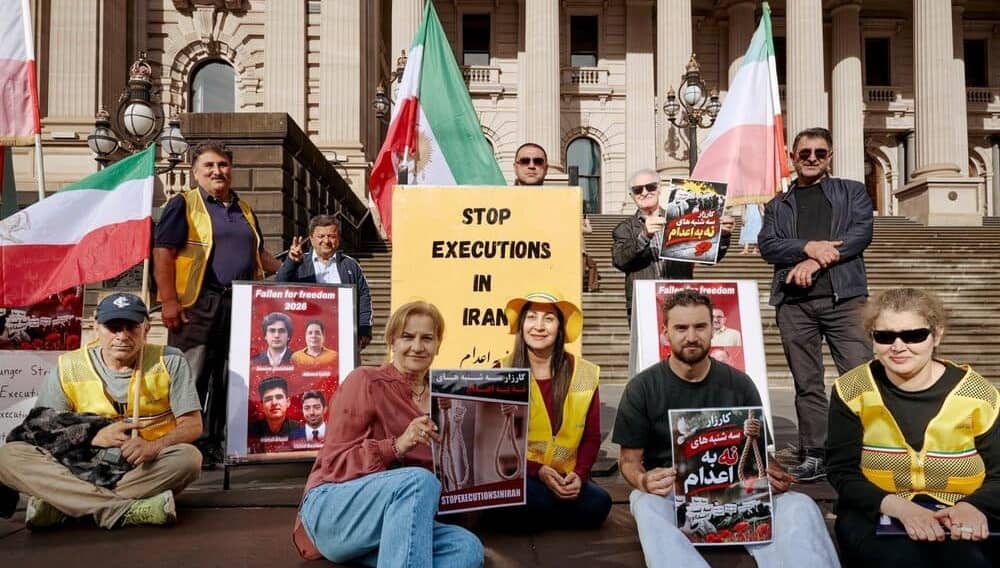
Copenhagen, Denmark – November 24, 2026 — Supporters of the People’s Mojahedin Organization of Iran (PMOI/MEK) held a rally in Copenhagen to mark the 148th week of the “No to Execution Tuesdays” campaign. They called for an end to executions in Iran, the release of political prisoners, and the establishment of a democratic republic.
The demonstrators also voiced support for Iranian political prisoner and boxing champion Mohammad Javad Vafaei Sani, recipient of the 2026 Magnitsky Award, and demanded the cancellation of his death sentence and his immediate release.

Protesters called for regime change and urged the Danish government to adopt a firm stance against the Iranian regime’s ongoing human rights violations. They also called for the closure of the Iranian regime’s embassy in Denmark as a center for espionage and terrorism.
PMOI Supporters in Paris Condemn Executions and Human Rights Abuses in Iran
Paris, November 25, 2026 — Supporters of the People’s Mojahedin Organization of Iran (PMOI/MEK) held a book table and photo exhibition in Paris to raise awareness of Iran’s worsening human rights crisis and the regime’s systematic execution of political prisoners and protesters arrested during nationwide uprisings.
Participants urged the French public and the international community to acknowledge the suffering of the Iranian people and their rejection of dictatorship in both its monarchical and theocratic forms.

The exhibition featured photographs, personal testimonies, and other materials documenting the courage and sacrifices of those who participated in Iran’s nationwide uprisings.
It also highlighted the regime’s ongoing human rights violations, including the execution of political prisoners and the prolonged imprisonment of protesters.
Gothenburg Rally Supports 148th Week of “No to Execution Tuesdays” in 67 Prisons Across Iran
Gothenburg, Sweden — November 24, 2026: Supporters of the People’s Mojahedin Organization of Iran (PMOI/MEK) held a rally in solidarity with the 148th consecutive week of the “No to Execution Tuesdays” campaign, a movement protesting the Iranian regime’s escalating executions and systematic repression.
Participants also highlighted the regime’s intensifying crackdown, the rising number of executions, and broader repressive measures. They chanted slogans such as “Down with the executioner regime” and called for the immediate release of all political prisoners.
Freedom-loving Iranians in Gothenburg expressed support for Mrs. Maryam Rajavi, President-elect of the National Council of Resistance of Iran (NCRI), and her call to expand the “No to Executions” campaign globally.

At the Gothenburg gathering held in solidarity with the “No to Execution Tuesdays” campaign, protesters warned that political prisoners in Iran face an increasingly grave risk of execution amid an escalating wave of repression. They expressed deep concern over the growing number of death sentences against political detainees and protesters, arguing that the Iranian authorities are using executions to silence dissent and spread fear across society. Calling for urgent international action, the demonstrators urged the global community to help prevent further executions and protect the lives of prisoners facing death sentences.