

THIS PAGE WILL BE UPDATED WITH THE LATEST NEWS
UPDATE: 07:00 PM CEST
Rajavi: “The Solution for Iran Is Regime Change through the Will of the People”

“The only solution for Iran is regime change brought about by the people.”
This was stated by Maryam Rajavi, President-elect of the National Council of Resistance of Iran (NCRI), during her video message to today’s session of the Regional Council of Marche.
“The Resistance Council presents a credible alternative,” Rajavi added. “We have a ten-point program based on principles such as the separation of religion and state, gender equality, autonomy for nationalities, a non-nuclear Iran, the abolition of the death penalty, and we have announced the formation of a provisional government.”
In her video message, Rajavi repeatedly referred to the Resistance in Marche and in Italy against Nazi-fascist occupation, and issued an appeal to “recognize the provisional government.” “No system based on fear can endure over time,” she continued. “Legislators in Marche should support the struggle to overthrow the regime and encourage the government to close diplomatic missions and exert pressure on Iran.”
The Solution Comes from Within Iran

Javad Zarif, former Foreign Minister of the Islamic Republic, writes in an article published in the American journal Foreign Affairs that “Americans and Israelis find themselves in a quagmire with no exit strategy.” Yet war has never been a solution—neither to the Iranian issue nor to that of the Middle East. Zarif is fully aware that resolving the Iranian crisis—and, by extension, that of the region—depends on the Iranian people and must emerge from within society itself.
One of the most telling signs of this is the recent wave of executions in Iran: within just ten days, at least ten political prisoners have been executed, including six members of the People’s Mojahedin Organization of Iran (PMOI) and four young protesters involved in the struggle to overthrow the regime (see Le Monde, April 10 edition).
In a context of war and destruction, Iranian cities—particularly Tehran—are subjected to repression of extreme intensity. This is reflected in a continuous internet shutdown, the labeling of protesters as “enemy agents,” the deployment of heavily armed forces in public spaces, shoot-to-kill orders against demonstrators, a significant increase in security patrols, the organization of urban maneuvers aimed at instilling fear, and the use of foreign auxiliary forces linked to the Revolutionary Guard.
UPDATE: 11:00 AM CEST

UPDATE: 09:00 AM CEST
Why Organized Resistance Is the Only Path to a Free Iran

On April 8, 2026, a 15-day ceasefire temporarily halted a devastating 39-day regional war that erupted on February 28. While the conflict dealt severe blows to the Iranian regime—most notably the death of Supreme Leader Ali Khamenei in a February 28 airstrike—it has become unequivocally clear that external military intervention is not a viable strategy for liberating Iran.
It has become evident that bombings and airstrikes alone cannot dismantle the regime’s vast repressive apparatus or topple the religious dictatorship. Furthermore, the global policy of appeasing the mullahs for the past four decades has ended in utter failure, directly paving the way for the current regional crisis. The solution to the threats posed by Tehran lies neither in foreign wars nor in diplomatic appeasement, but in the people and their organized resistance.
Executions In Iran Doubled In 2025 — Marking A 36-Year High: Report

The Iranian regime executed more than 1,600 people last year — marking a three decade high not seen since the end of the Islamic Republic’s war against Iraq in 1989. The shocking figures were included in a joint report released by the nonprofit Iran Human Rights and Together Against the Death Penalty, which estimated that in 2025 at least four people were put to death each day in Iran.
In total, at least 1,639 were executed in Iran last year, the highest reported number since the post-war bloodbath in 1989, where an estimated 1,700 political prisoners were executed, according to the report.
Seven of the known hangings linked to protest activity took place after Operation Epic Fury launched in late February. Six other victims were convicted of membership with the exiled opposition group Mujahideen-e Khalq (MEK), and one was accused of spying for Israel, the report said.
Iran Regime’s Delegation to Pakistan Sparks Outrage over Presence of Esmail Ahmadi-Moghaddam
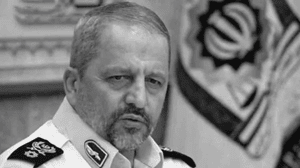
Following the latest round of talks between the Iran regime and U.S. officials in Islamabad, attention quickly turned to one controversial member of the Iranian delegation: Esmail Ahmadi-Moghaddam, the regime’s former police commander.
The trip, led by parliamentary speaker Mohammad-Bagher Ghalibaf, drew immediate public criticism—not for the talks themselves, but for who represented the regime. Ahmadi-Moghaddam’s long record of violent repression, systemic corruption, and loyalty to the regime’s most hardline institutions has made his inclusion a stark symbol of Tehran’s true face on the international stage.
Ahmadi-Moghaddam served as the regime’s police chief during the 2009 protests, overseeing one of the most violent state-led crackdowns in Iran’s modern history. Under his command, security forces opened fire on peaceful demonstrators, arrested thousands, and carried out brutal assaults across multiple cities.
Beyond War and Appeasement: Iran’s Third Path to Freedom

These days, the final outcome of the war dominates Iranian minds—and rightfully so when it comes to securing the nation’s future. Yet if we position Iran’s destiny as the top priority of this critical moment, we must first understand our current reality. Only then can we navigate it strategically—using military terminology—for a guaranteed future aligned with our national interests.
The war’s origins lie in the Iranian regime’s deliberate provocations: decades of regional terrorism, missile proliferation, and nuclear brinkmanship. The regime’s endless “Death to…” chants at official rallies didn’t just inflame rhetoric—they actively paved the way for foreign intervention.
The war has spawned countless narratives, interpretations, and projections. Each grapples with fundamental questions: Where is this conflict taking our country? Will it deliver Iran’s salvation through freedom and democracy? Or is this a false hope masking deeper peril?
Monarchy: A Dead Past That Cannot Shape Iran’s Future
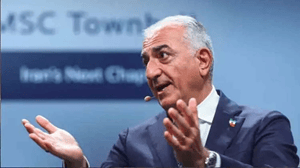
“Monarchy: a past that has no future.” These words aren’t the invention of regime apologists or protest slogans—they represent a damning consensus emerging from credible international media assessing the push to restore Iran’s monarchy.
As certain exile groups desperately promote the Pahlavi crown as Iran’s salvation, the world’s response is clear and unforgiving: this project lacks any historical foundation, political legitimacy, or relevance to today’s Iran. It’s a relic peddled to the uninformed, and global observers aren’t buying it.
The authoritative Swedish newspaper Dagens Nyheter—boasting 1.5 to 2 million daily online readers—delivered a searing editorial on April 11 that left no room for delusion. Reminding readers of the Shah’s police state built on torture and repression, the paper linked those very failures to the 1979 Revolution that toppled the dynasty.
Mass Worker Layoffs in Iran’s Industries Under the Shadow of War
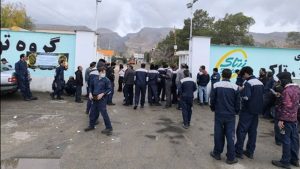
As tensions escalate and the heavy shadow of foreign war falls over Iran’s economy, signs of collapse in the country’s key industries have become more visible. Reports of mass layoffs at one of the country’s largest automotive holding companies reveal new dimensions of the consequences of foreign war. This is happening while workers, as the most vulnerable social group, are bearing the greatest pressure from the consequences of the foreign war. According to Farshad Esmaeili, a legal expert and labor law adviser, one of the country’s major automotive mega-holdings began large-scale layoffs of its workforce in mid-March. This move has taken place in the heart of the crisis caused by the foreign war, and according to him, about 70% of the company’s employees have been dismissed. These layoffs span a wide range of staff, from production-line workers to specialists and even middle managers.
U.S. Naval Blockade of Iran Begins on Monday

U.S. Central Command (CENTCOM) announced that starting Monday, April 13, it will begin enforcing a broad naval blockade against Iran’s ports, a move that comes after the collapse of recent negotiations between the United States and Iran’s regime and rising tensions in the region. According to the statement by the U.S. Central Command (CENTCOM), this blockade will include all ships traveling to Iranian ports or departing from them.
CENTCOM stated that this operation will begin at 10 a.m. U.S. Eastern Time and will cover all maritime traffic to Iranian ports in the Persian Gulf and the Gulf of Oman. The statement emphasized that the blockade will be enforced without discrimination regarding the flag or nationality of the ships, while at the same time the passage of vessels whose destination is not Iranian ports through the Strait of Hormuz will not be restricted.
Iran’s Economy Beneath the Rubble of War and Structural Collapse

The recent war between the United States, Israel, and Iran’s regime was not merely a military confrontation; rather, it acted as a structural blow to an already exhausted economy. This war made the deep fractures within the economy under the regime’s control more visible and accelerated the process of collapse. Severe economic contraction, rising poverty, and setbacks in human development are only part of the consequences of this situation. The war directly targeted the economy’s vital infrastructure. The destruction of power plants, disruption of trade routes, and stoppage of industrial production were the three main channels through which the crisis was transmitted into the economy. As a result, gross domestic product faced an unprecedented decline, one that according to estimates could exceed a 10 percentage-point drop.
This decline is not merely a number; it means a collapse in the living standards of millions of people. In conditions where chronic inflation and the devaluation of the national currency had already weakened the economy before the war, the wartime shock further intensified this trend. The inflation rate, which had remained above 40% for years, has now reached levels close to 55%.
Digital Apartheid & State Killing in Iran

Once again, upon opening social media, we were immediately confronted with new threats from officials and elements associated with the Islamic Republic on their television screens. This is a new method of threatening and intimidating society by these individuals to ensure their threats reach all opponents within Iran, lest anyone again harbor the thought of taking to the streets for freedom and to obtain their and their compatriots’ basic human rights. On April 11, Abdollahi stated on the Noor Network: “Look, the first thing a government must do is take away the media tools and weaponry from the enemy. Instagram was the enemy’s weapon; it had ceased to be a mere media tool. Telegram had become a weapon. We have managed to turn off the weaponry for now; this machine gun has been silenced. After all, we do not know in which direction the country’s conditions are heading; we must prepare ourselves for the worst-case scenario.”
Judiciary in Iran; The Legal Instrument of Repression under the Supreme Leader – Part 2
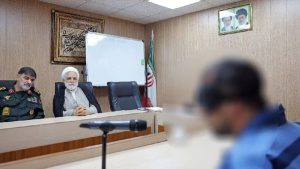
In any judicial system, a judge must serve as a guarantor of impartiality, independence of judgment, and the rule of law. Judicial independence does not simply mean that a judge is outwardly shielded from direct pressure. It also requires that the path to appointment, training, promotion, and continued tenure be structured on professional, legal, and independent criteria. Without such a foundation, fair trial guarantees are hollowed out from within, and the judiciary, rather than serving as a refuge for rights, becomes part of the machinery of power. In the judicial structure of the ruling regime in Iran, this condition is not an occasional deviation. It is an institutional feature, built into the system from the outset.
The central issue in this chapter is not merely how judges in Iran are recruited. It is what kind of judge this model of selection, training, and control produces, and what purpose that judge ultimately serves in practice. Within the judicial structure of the ruling regime in Iran, a judge passes from the outset through ideological, political, and religious filters. He is then shaped through formal judicial training and ideological commitment, and remains subject thereafter to disciplinary, administrative, and security oversight. The consequence of this model is not only the weakening of judicial independence. It is the creation of a judicial body in which “preservation of the system” takes precedence over justice, the right to defense, and judicial impartiality. This logic is one of the structural foundations of the repressive performance of Iran’s judiciary.
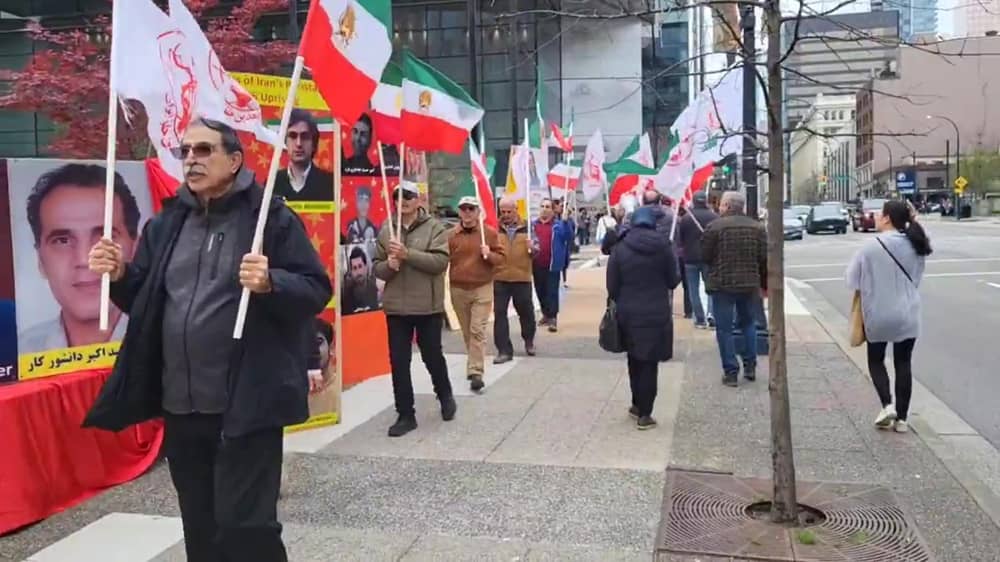
Vancouver Rally Supports Democratic Republic, Condemns Political Prisoners’ Executions in Iran

Vancouver, Canada – April 11, 2026: Supporters of the Iranian Resistance held a rally to protest the execution of six political prisoners affiliated with the People’s Mojahedin Organization of Iran (PMOI/MEK)—Mohammad Taghavi, Akbar Daneshvar Kar, Babak Alipour, Pouya Ghobadi, Vahid Bani-Amerian, and Abolhassan Montazer—as well as protesters arrested during the January 2026 uprising.
Berlin Protest Marks 44th Day as Iranian Resistance Supporters Condemn Executions and Urge Decisive Action

Toronto Rally Supports Democratic Republic, Condemns Political Prisoners’ Executions in Iran

Toronto, Canada – April 11, 2026: Supporters of the Iranian Resistance held a rally to protest the execution of six political prisoners affiliated with the People’s Mojahedin Organization of Iran (PMOI/MEK)—Mohammad Taghavi, Akbar Daneshvar Kar, Babak Alipour, Pouya Ghobadi, Vahid Bani-Amerian, and Abolhassan Montazer—as well as protesters arrested during the January 2026 uprising.