


THIS PAGE WILL BE UPDATED WITH THE LATEST NEWS
UPDATE: 09:30 PM CEST
Mass U.S.–Israeli Strikes Across Iran as Hormuz Deadline Looms; Kharg Island Hit in Large-Scale Campaign
On April 7, 2026, the 39th day of the war, the conflict escalated sharply with coordinated U.S. and Israeli strikes across Iran targeting military infrastructure, transport networks, and energy-linked facilities, alongside a large-scale operation on Kharg Island involving dozens of targets. Iran responded with sustained missile and drone attacks against Israel and regional actors, while expanding pressure across the Gulf. The escalation unfolded under a U.S. ultimatum tied to reopening the Strait of Hormuz, with diplomatic efforts ongoing but unresolved, placing the conflict at a critical threshold between controlled escalation and wider regional war.
Regime Losses and Targets Hit
The most significant military development of the day was a large-scale strike campaign on Kharg Island, where U.S. forces conducted repeated airstrikes on military installations, including hardened sites, ammunition depots, and radar systems. The operation targeted dozens of targets, with some restrikes on previously hit positions, indicating a sustained degradation effort. Oil export infrastructure—despite the island’s central role in Iran’s energy economy—was deliberately avoided, reflecting a calibrated escalation strategy tied to ongoing negotiations over the Strait of Hormuz.
Across mainland Iran, strikes were geographically widespread and operationally coordinated.
Transportation infrastructure was heavily targeted. Railway bridges and lines were struck in multiple locations, including Kashan and areas linked to major corridors, with at least one rail bridge strike reported to have caused fatalities.
Oil prices remained volatile as US President Trump threatened Iran to open the Strait of Hormuz or face attacks on power plants and other critical energy infrastructure https://t.co/6xH97w5gbm pic.twitter.com/69ciNjMlgx
— Reuters (@Reuters) April 7, 2026
Airstrikes extended across major urban and strategic areas. Explosions were reported in Tehran, Ahvaz, Shiraz, Yazd, Chabahar, and other cities, as well as in port and coastal infrastructure zones including Jask, Bandar Lengeh, Kong, Tis port, and areas near Shahid Kalantari port.
Aviation infrastructure was also targeted. Israeli strikes hit multiple airports, including sites in Tehran and Khorramabad, damaging aircraft and aviation assets on the ground.
Energy-linked infrastructure sustained additional damage. Facilities connected to the South Pars gas field—including power generation units—were struck, marking an escalation toward targeting systems critical to energy production and distribution.
🇮🇷 🇺🇸 🇮🇱 Iran said critical infrastructure, including two bridges, was struck on Tuesday by the United States and Israel, with US President Donald Trump warning "a whole civilisation will die" if a midnight deadline for a deal to open the Strait of Hormuz was not met ➡️… pic.twitter.com/8oVxWlua3T
— AFP News Agency (@AFP) April 7, 2026
Residential areas were also affected. In central Iran and areas near Tehran, strikes on populated areas caused civilian casualties, including reports of at least 18 deaths in a single province and additional fatalities in residential neighborhoods.
A strike also destroyed a synagogue in central Tehran; attribution remains disputed but the site was confirmed hit in multiple reports.
U.S. and Israeli Losses
No new confirmed U.S. aircraft losses or personnel casualties were reported within the April 7 cycle.
Israel sustained continued impact from Iranian missile fire. Multiple strikes were recorded across southern and central areas, including near strategic zones such as the Negev. Air defenses intercepted a portion of incoming missiles, but several penetrated defenses, causing structural damage and civilian injuries.
⚠️ Update: Metrics show #Iran has entered the 39th day of an internet blackout that has been in place for over 912 hours. The measure leaves most Iranians isolated from the global network known as the internet, with only a domestic digital service, or intranet, now available. pic.twitter.com/TEHcIFSOBf
— NetBlocks (@netblocks) April 7, 2026
Iranian Retaliation
Iran launched multiple waves of ballistic missiles toward Israel over a short period, triggering nationwide alerts and widespread civilian sheltering.
Regionally, Iranian-linked operations expanded:
- A drone strike hit a major petrochemical facility in Jubail, Saudi Arabia, causing a fire
- Drone and missile threats continued against Gulf infrastructure and U.S.-linked positions
- Iranian messaging indicated that restraint—particularly regarding energy infrastructure—could end, signaling potential escalation in targeting strategy
Iranian official and state-aligned rhetoric framed the escalation as a response to attacks on civilian and economic targets, while signaling readiness to expand the conflict geographically and economically.
Labour says graduates will ‘not pay the price’ for the Iran war as pressure mounts on ministers to change the Plan 2 system 👇 https://t.co/Yl8RVGnxQO
— The Times and The Sunday Times (@thetimes) April 7, 2026
Regional Spillover
The conflict’s regional dimension intensified further.
Drone and missile activity affected Gulf infrastructure, including Saudi industrial sites and broader air defense operations. The risk to civilian aviation and energy facilities across the region remained elevated.
In Iraq and surrounding regions, continued instability linked to militia activity and cross-border strikes reinforced the multi-front nature of the conflict.
At sea, tensions remained high, with the Iranian regime maintaining operational pressure in and around the Strait of Hormuz—continuing to disrupt shipping flows and reshape maritime risk calculations.
BREAKING: Senior US official tells [hemmer] this morning, "We are absolutely in touch with (Iran). Absolutely. (The talks) have been positive. If we get lucky, we will have something by the end of the day." https://t.co/g6gXkdR8sQ pic.twitter.com/qS8Z1vsKqI
— Fox News (@FoxNews) April 7, 2026
Maritime and Hormuz Developments
The Strait of Hormuz remained central to the conflict.
The regime in Iran continued to exert control over maritime traffic, significantly reducing throughput and contributing to volatility in global energy markets. Oil prices rose sharply amid fears of further escalation and potential disruption to supply chains.
The United States maintained its deadline for reopening the strait, linking compliance to the avoidance of broader infrastructure strikes, including potential attacks on power and transport systems.
Trump threatens "a whole civilization will die tonight" as his deadline for Iran to open the Strait of Hormuz approaches. Follow live updates. https://t.co/JOsueCGo1w pic.twitter.com/bKnreGG3v4
— CNN (@CNN) April 7, 2026
Internal Conditions in Iran
Internal conditions reflected tightening state control and increasing wartime mobilization.
Civilian life was further disrupted by infrastructure damage. Transportation systems were partially disabled, and localized power outages were reported following strikes on energy-related facilities.
Iran remained under a severe nationwide internet shutdown. Access to global networks was heavily restricted, with domestic connectivity operating under state-controlled conditions. The blackout significantly limited information flow and appears aimed at controlling public communication during intensified military operations.
UPDATE: 07:00 AM CEST
Iran: Six Men, One Testament from Death Row
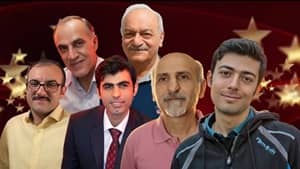
Between March 30 and April 4, 2026, six imprisoned PMOI/MEK members—Vahid Bani Amerian, Mohammad Taghavi, Babak Alipour, Pouya Ghabadi, Akbar Daneshvarkar, and Abolhassan Montazer—were executed in Ghezel Hesar Prison. More than a year earlier, on March 3, 2025, after receiving their death sentences, they wrote the statement below and sent it from prison. Today, that text stands not only as their final political message, but as a testament of courage, conviction, and defiance in the face of death.
This is not an ordinary political statement. It is the voice of six men writing from death row, fully aware that the regime could carry out their executions at any moment. They wrote with clarity, dignity, and unwavering resolve. In the end, the Iranian regime did execute all six. Their case drew particular attention because of serious concerns over the injustice of the proceedings, including torture and forced confessions.
Execution Of 23-Year-Old Protester Ali Fahim Exposes Mullahs’ Deep Fear of Iran’s Rebellious Youth

At dawn on Monday, April 6, 2026, the Iranian regime committed yet another heinous crime by executing 23-year-old Ali Fahim, a courageous youth who had participated in the massive December 2025–January 2026 nationwide uprisings. Fahim’s death marks the 10th political execution carried out by the regime’s machinery of death in the past week, signaling a drastic escalation in state-sanctioned murder. Reeling from the monumental uprisings that recently brought the clerical establishment to its knees, the paralyzed regime is systematically using executions to spread terror among the public and stave off an inevitable future revolt.
The Judiciary’s news agency, Mizan, labeled the 23-year-old protester an “enemy element” and stated he was executed for his alleged “participation in an attack on a prohibited military location to capture the armory and steal military weapons” during the January uprisings.
Executions of Three Young Protesters Expose Regime’s Deepening Crisis and Fear of Armed Resistance
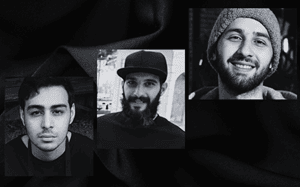
The Iranian regime has once again resorted to executions as a tool of survival. Following the killing of six members of the People’s Mojahedin Organization of Iran (PMOI/MEK), the regime has now executed three young men—Mohammadamin Biglari, Shahin Vahedparast, and Ali Fahim—continuing its campaign of systematic repression.
These three individuals, along with Amirhossein Hatami and Abolfazl Salehi, had been transferred to solitary confinement on Tuesday, March 31—a well-established precursor within the regime’s judicial apparatus before the implementation of severe sentences. In these isolation cells, prisoners are subjected to complete psychological and physical deprivation designed to break their resistance. Shortly thereafter, Branch 15 of the Tehran Revolutionary Court, presided over by the notorious judge Abolqasem Salavati, sentenced them to death.
Family Detained and Body Withheld: New Details Emerge in Case of Executed Prisoner Babak Alipour
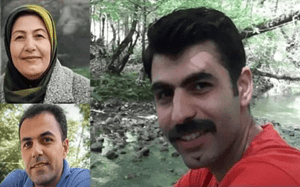
The continued detention of family members and the refusal to release the body of executed political prisoner Babak Alipour have revealed a deeper pattern of coordinated pressure and enforced silence against his relatives.
Nearly one week after his execution, reports indicate that three close family members remain in custody. Babak Alipour was executed on March 31, yet his family was not only denied a final visit before his death, but has also been prevented from retrieving his body for burial—an act widely seen as an additional layer of psychological punishment.
According to available information, his mother, Ommolbanin Dehghan, his brother, Roozbeh Alipour, and his sister, Maryam Alipour, have been detained since late January. They were arrested in Tehran by the regime’s security forces while returning from a visit with him, in what appears to have been a deliberate effort to isolate the prisoner and silence his immediate support network.
Iranian Regime Rejects U.S. Ceasefire Proposal, Major Attack on Asaluyeh Petrochemical Facilities
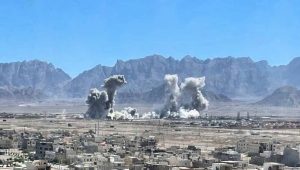
On Monday, the official IRNA news agency reported that Iran had conveyed its position on the ceasefire proposal to the United States via Pakistan in the form of a 10-point response. In this way, the Iranian regime gave a negative response to the U.S. proposal.
According to the report, Tehran has opposed a temporary ceasefire and instead emphasized the necessity of a full and permanent end to the war. In this response, a set of demands was raised, including halting regional hostilities, establishing a mechanism for safe passage through the Strait of Hormuz, reconstruction of damages, and the lifting of sanctions.
Meanwhile, some Western media outlets, including Axios, described this position as maximalist and assessed the likelihood of its acceptance by the Trump administration as low.
Execution in Iran: Oxygen for the Survival of the Islamic Republic, 13 Political Executions in 18 Days
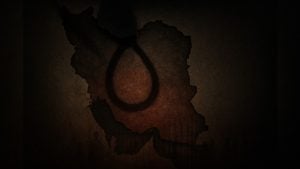
For Iran, execution is not a legal punishment; it is the primary language through which the sovereignty communicates with the people. It is the language of intimidation, designed to paralyze the will of a nation that has risen for its freedom. For this regime, execution acts as oxygen for a dying patient—one who feels the suffocation of an impending popular uprising. For this reason, over the past week—amidst a foreign war—the regime has executed nine political prisoners, including six members of the Mojahedin-e Khalq (MEK/PMOI) Resistance Units: Mohammad Taghavi, Akbar Daneshvarkar, Babak Alipour, Pouya Ghobadi, Abolhassan Montazar, and Vahid Bani-Amerian. Additionally, three detained protesters from the January 2026 uprising—Amir-Hossein Hatami (18), Mohammad-Amin Biglari (19), and Shahin Vahedparast—were sent to the gallows.
Today, Monday, April 6, 2026—the first day of the current week—the Mizan News Agency (the official mouthpiece of the Judiciary) announced that Ali Fahim (30), a co-defendant of the aforementioned protesters and the fourth individual from that group of five, has also been executed. In this same case, Abolfazl Salehi Siavashani remains in imminent danger of execution.
London Protest Outside the Iranian Regime’s Embassy Denounces Executions of PMOI Political Prisoners

London – April 4, 2026: Supporters of the Iranian Resistance held a protest outside the Iranian regime’s embassy in London to protest the executions of six political prisoners: Mohammad Taghavi, Akbar Daneshvar Kar, Babak Alipour, Pouya Ghobadi, Vahid Bani-Amerian, and Abolhassan Montazer, who were affiliated with the People’s Mojahedin Organization of Iran (PMOI/MEK). Demonstrators denounced the actions of Iran’s ruling establishment, describing the executions as a grave violation of human rights.
Cologne: Iranian Resistance Supporters Rally Against Execution of PMOI Political Prisoners

Cologne – April 4, 2026: Supporters of the Iranian Resistance gathered in Cologne to protest the executions of six political prisoners: Mohammad Taghavi, Akbar Daneshvar Kar, Babak Alipour, Pouya Ghobadi, Vahid Bani-Amerian, and Abolhassan Montazer, who were affiliated with the People’s Mojahedin Organization of Iran (PMOI/MEK). Demonstrators denounced the actions of Iran’s ruling establishment, describing the executions as a grave violation of human rights.
Zurich Rally Highlights Executions of Iranian Political Prisoners

Zurich – April 4, 2026: Supporters of the Iranian Resistance gathered to protest the executions of six political prisoners: Mohammad Taghavi, Akbar Daneshvar Kar, Babak Alipour, Pouya Ghobadi, Vahid Bani-Amerian, and Abolhassan Montazer, who were affiliated with the People’s Mojahedin Organization of Iran (PMOI/MEK). Demonstrators denounced the actions of Iran’s ruling establishment, describing the executions as a grave violation of human rights.