


THIS PAGE WILL BE UPDATED WITH THE LATEST NEWS
UPDATE: 09:00 PM CET
Friends Executed & 10-Hour Torture Interrogations – My Horror Five Years in Iran Prison Where Brits Are Jailed

A BRAVE political prisoner has opened up about the torture and abuse she suffered for years at the hands of brutal Iranian prison guards.
Shabnam Madadzadeh, 37, was thrown behind bars at the rogue nation’s most notorious prison for simply opposing the regime. Solitary confinement, hour upon hour of intense interrogation, and torture became normality for Shabnam at the barbaric Evin Prison. The nightmare jail is where British couple Lindsay and Craig Foreman are being held after being sentenced to ten years behind bars on trumped-up spy charges.
During her own five years of hell, student activist Shabnam was moved between vile jails – including Evin, Gohardasht and Qarchak Varamin. But she said the worst part of her ordeal was when her friend and fellow inmate was dragged away to the gallows.
UPDATE: 08:00 PM CET
Speech on International Women’s Day 2026
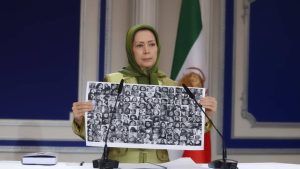
International Women’s Day this year, fueled by the warmth and vitality of Iran’s monumental and blood-soaked uprising, belongs to the rebellious women and youth of Iran. It belongs to those who shattered the chains of repression and stormed the foremost bastion of oppression and misogyny in the world today. Amid the deluge of blood that has stained the streets of Iran crimson, the Iranian woman is consumed by grief for those withered lives and fallen roses, yet she is radiant with hope; for she sees that the distant dream is no longer an impossibility, and that a brilliant horizon stretches before her. Indeed, dawn is near. In this uprising, women have once again proven that they are not powerless victims, but the very force of change. From the rebellious young women who galvanized the people, rushing to aid the detained and the wounded, and sacrificing themselves, like Kimia, Zahra, Sara, Melika, Arezou, Akram, and dozens of other heroic women, to the mothers and sisters who despite harboring immense grief and sorrow in their hearts became the strength of hope.
PMOI Resistance Units in Zahedan Reject All Dictatorships Following Iran’s January Uprising
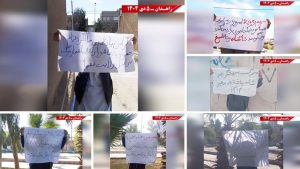
On February 20, 2026, PMOI Resistance Units in Zahedan, southeast Iran, resumed their weekly public activities. Against the backdrop of the regime’s recent suppressions, these activists took to the streets to reiterate their unwavering commitment to the struggle for regime change and the establishment of a free and democratic republic. Holding placards and banners in public spaces, the Resistance Units emphasized that the Iranian people reject all forms of dictatorship and will not accept a return to the past.
Their messages included clear declarations such as, “Down with the oppressor, be it the shah or the supreme leader,” and “No to monarchy, no to the supreme leader, yes to freedom and equality.” The activists highlighted the historical continuity of tyranny in Iran, declaring, “Monarchy, mullahs’ rule, one hundred years of crimes,” and asserting that “The people of Iran throw the shah and mullahs’ regimes to the dustbin of history.”
University Students Hold Protests and Clash with Basij Forces

On Saturday, February 21, 2026, coinciding with the fortieth day since the killing of women and youth by agents of Khamenei during the nationwide protests, universities turned into a scene of protest and confrontation between students and regime forces. Students at Sharif University of Technology and Amir Kabir University of Technology staged protests. They chanted: “This is the last message; the target is the entire regime”, “This year is the year of sacrifice; Seyyed Ali will be overthrown.” “We will fight, we will die, we will take Iran. back.” During the protest by students at Sharif University of Technology, which took shape on the university campus, Basij mercenaries attacked the student gathering and chanted the fascist slogan “Javid Shah” (Long live the Shah). Brave students responded to this slogan by shouting “Shameless, shameless” and clashed with the Basij forces.
Children Among 30 at Risk of Execution in Iran, Amnesty and UNICEF Warn

Amnesty International and UNICEF are raising alarm over reports that children are among 30 people facing possible execution in Iran following expedited trials linked to the 2026 uprising. The warnings intensify scrutiny of Tehran’s handling of protest-related cases and the treatment of minors in its judicial system. At least 30 people in Iran are currently at risk of execution in connection with the 2026 uprising, according to Amnesty International USA. The organization says several of those sentenced were under 18 at the time of the alleged offenses.
In a separate statement, UNICEF called for the immediate release of all children detained during the latest public unrest, urging Iranian authorities to uphold international standards protecting minors.
Washington, D.C. – Iranian Resistance Supporters Hold Capitol Vigil Backing Iran’s Uprising
Washington, D.C. – February 20, 2026: On Friday night, Iranian Americans and supporters of the Iranian Resistance (NCRI and PMOI/MEK) gathered in front of the U.S. Capitol to express solidarity with the ongoing nationwide uprising in Iran. The event, held on the 40th day after the killings of protesters, included a vigil to honor the fallen and demand justice. Participants chanted anti-regime slogans and called for an end to dictatorship in all its forms.
Washington, D.C. – Iranian Resistance Supporters Hold Capitol Vigil Backing Iran’s Uprising #IranRevolution2026 #No2ShahNo2Mullahs #NCRIAlternative https://t.co/hwNjXx3dzZ
— Iran Freedom (@4FreedominIran) February 21, 2026
They demanded the immediate release of political prisoners and detainees. Demonstrators carried banners and portraits of those killed in recent uprisings, echoing protesters inside Iran with chants such as “Regime change in Iran by the people of Iran,” and “No to the Shah! No to the Mullahs!” They called for the establishment of a free and democratic republic in Iran, rejecting both monarchical and theocratic rule.
The Iranian Regime’s Clandestine Influence and Infiltration Networks in Europe

Based on a comprehensive investigative report published by the French outlet “Le Diplomate” a sprawling and highly structured network of clandestine influence operated by the Iranian regime has deeply penetrated European societies, elites, and decision-making centers. The detailed exposé reveals how Tehran, particularly since the 2013–2015 nuclear negotiations, has seamlessly blended traditional diplomacy with covert infiltration tactics, utilizing academic circles, think tanks, cultural associations, and parliamentary friendship groups to shape Western policy. This strategic maneuvering comes at a critical juncture; with Iran’s regional proxies severely weakened following the geopolitical shifts of the summer of 2025, and the regime facing unprecedented internal isolation following the bloody massacre of protesters during the massive nationwide uprisings of December 2025 and January 2026, Tehran is increasingly relying on its European networks to break its diplomatic isolation, circumvent sanctions, and legitimize its grip on power.
How Smear Campaigns Silence Iran’s Opposition

Weaponized language, forced polarization, and the strategy of isolating the regime’s most persistent challengers. In a healthy political environment, identifying someone as a supporter of a political movement is simple: people define themselves. If an individual publicly says, “I support this movement,” that statement is the basis for judgment. Political identity, in principle, is rooted in self-declaration. But authoritarian systems do not operate on principle. They operate on control. When a ruling structure fears that society might gravitate toward a political alternative capable of overturning the existing order, it often changes the rules of the game. Instead of allowing individuals to define their own positions, it manipulates public discourse to redefine what “support” means. The result is confusion, fear, and forced distancing.