

THIS PAGE WILL BE UPDATED WITH THE LATEST NEWS
UPDATE: 7:00 AM CEST
France Bans Iran Opposition Rally After Rival Monarchist Threats: Report

Police in Paris canceled a June 20 protest by the NCRI Iranian opposition following a warning from security services of a heightened threat from rival monarchist activists. Past NCRI rallies, organized by the political arm of the People’s Mujahideen Organisation of Iran (PMOI), which people from around the world come to attend, have passed without incident, Reuters reported.
The intelligence assessment pointed to growing tension between the PMOI and Iranian monarchists who are backing Reza Pahlavi, who is the exiled son of the toppled shah. Both groups are in a rivalry to be the sole legitimate Iranian opposition.
The protest was canceled hours before it was to begin.
Iran Regime’s Only Consistent Policy: Escalating Executions and Institutionalized Repression
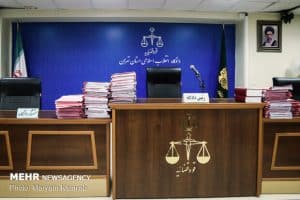
Political uncertainty has become the defining characteristic of Iran’ regime. Internal power struggles, conflicting signals over negotiations with the West, mounting economic crises, and growing public dissatisfaction have created a political system that appears increasingly unstable. Yet amid this volatility, one state policy has remained remarkably consistent: the systematic use of executions, judicial intimidation, and repression to preserve the regime’s survival. The recent message issued by Mojtaba Khamenei, the regime’s new supreme leader, to mark the regime’s “Judiciary Week,” followed almost immediately by Judiciary Chief Gholamhossein Mohseni Ejei’s pledge of complete loyalty, offered another reminder that the regime’s leadership views repression not as a temporary response to crisis but as the central pillar of its governing strategy.
Even during the holy month of Muharram—a period in which regime officials publicly invoke themes of mourning and justice—the machinery of execution has shown no sign of slowing.
According to recent reports, prisoners were executed in Sari, Ahvaz, Qom, Kermanshah, Semnan, Yasuj, and Gorgan in just a matter of days. Behind each execution lies another family forced into grief, adding to the thousands already devastated by decades of state violence.
Iran’s Summer Blackouts Expose Regime’s Infrastructure Failure

Every summer, the Iranian regime offers familiar explanations for the country’s electricity shortages: unusually high temperatures, rising consumption, or excessive demand for air conditioning. Yet every summer also reinforces the same uncomfortable truth. Iran’s recurring power crisis is no longer a seasonal inconvenience—it is the product of decades of structural mismanagement, chronic underinvestment, and governance that has consistently prioritized political ambitions over public infrastructure. As another scorching summer begins, millions of Iranians are once again living through a predictable cycle of blackouts, water shortages, economic disruption, and declining quality of life. The crisis has become so routine that it is no longer perceived as an emergency but as an expected feature of life under the regime.
The latest wave of blackouts comes as temperatures climb across nearly every region of Iran.
Ahvaz recently recorded temperatures of 43 degrees Celsius, ranking among the hottest locations in the world. Tehran reached 35 degrees, Isfahan and Shiraz climbed to 36 degrees, Bandar Abbas and Zahedan reached 38 degrees, Kerman recorded 37 degrees, while even the traditionally cooler city of Hamedan experienced temperatures exceeding 32 degrees.
Iran Deserves Neither Theocracy nor Monarchy: Why Both Extremes Have Failed the People
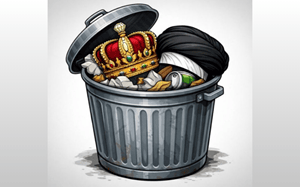
Recent remarks from two very different corners of Iranian politics have reinforced an uncomfortable truth: Iran’s future cannot be secured by forces that view national crises primarily through the lens of political opportunity. Whether expressed by representatives of the ruling establishment or by leading voices in the monarchist movement, rhetoric that welcomes or encourages prolonged conflict reveals a dangerous willingness to subordinate the interests of ordinary Iranians to political ambitions.
The issue is not simply what was said, but what such statements suggest about the political cultures behind them.
Former regime parliamentarian Mostafa Kavakebian recently recounted an alleged conversation with a government official who, according to his account, dismissed concerns about declining public participation by saying, “Don’t worry. We know what to do. We need another war so people rally behind the system.”
When asked whether such a scenario depended on an external decision, Kavakebian claimed the response was that the authorities would create circumstances that would provoke an attack.
Iranian Regime Leaves War-Affected Workers Homeless as Inequality Deepens

A remarkable report published by the Iranian regime’s own state-run ILNA news agency has exposed the severe hardships facing working-class families in the aftermath of the recent war. Far from receiving meaningful government assistance, many workers whose homes were damaged or destroyed remain homeless months later, while authorities have offered what even state media describes as unequal and discriminatory treatment. The report provides a rare public admission that the consequences of the conflict have fallen disproportionately on Iran’s working class, highlighting not only widespread economic hardship but also the regime’s failure to provide basic relief to some of the country’s most vulnerable citizens.
According to ILNA, while some war-affected families were temporarily accommodated in hotels, many working-class families were told to seek shelter in sports halls, mosques, or even public libraries.
The report argues that this disparity reflects a class-based approach to emergency assistance, in which citizens are treated differently depending on where they live and their economic status.
Drug Crisis: Chemotherapy Costs in Iran Have Increased Tenfold

A new wave of drug price increases in Iran has catastrophically raised the cost of medical treatment. In one example alone, the cost of each chemotherapy cycle has risen from about 70 million rials two years ago to nearly 700 million rials. The increases affect everything from widely used generic medications to specialized drugs for patients with rare and chronic illnesses. Insurance providers have not increased their coverage in line with rising prices, forcing patients to pay the difference out of pocket. Inflation in the healthcare sector has been significantly higher than overall inflation, reaching 15.6% in April, 23.1% in May, and 8.6% in June. In addition, the foreign currency allocation for medicines and medical equipment has been reduced from $3.5 billion to $3 billion.
Other factors behind rising healthcare costs include severe liquidity shortages, government-imposed price controls, delays in insurance reimbursements, fragile supply chains, and the forced shift in transporting medicines and raw materials from sea routes to land routes due to regional tensions resulting from the Iranian regime’s foreign policies, which has sharply increased transportation costs.
Sexual Violence Against Women: Covert Detention & Impunity of Perpetrators in Shiraz (2009)
Amid numerous reports regarding the suppression of the 2009 popular protests in Iran, the case of covert detention centers in Shiraz reveals a horrific, organized, and targeted pattern of sexual violence and rape against detained women used as a mechanism for containment and intimidation. What renders this tragedy a living and critically urgent case today is its legal classification as a “Crime Against Humanity.” Under peremptory international norms, such systematic atrocities are never subject to any statute of limitations, meaning the passage of time does not diminish the legal validity of prosecuting its perpetrators. By exposing the role of paramilitary thugs led by Houshang Fahandaj Saadi and the judicial collusion that facilitated their escape, this report is not merely a narrative of the past, but concrete evidence of the ongoing structural cycle of impunity (exemption from punishment) in Iran.
During the 2009 gatherings in Shiraz, Mullah Sadra Street, Golestan Boulevard, the Hafezieh area, and districts adjacent to Shiraz University witnessed a prominent and leading presence of women, particularly female college students (especially from the Faculty of Literature and Human Sciences). The pivotal role of women on the frontlines of these protests prompted the repressive apparatus to base its punitive mechanism on gender, directly targeting their dignity and psychological-physical security.
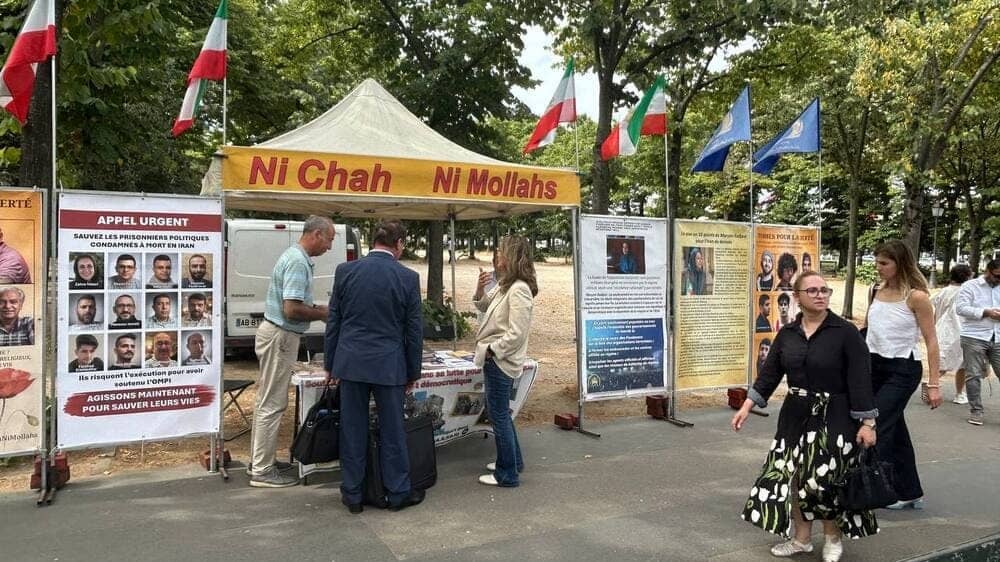
Iranian Resistance Supporters Hold Paris Exhibition Against Executions, Demand Democratic Republic
Paris, France – June 30, 2026 – Coinciding with the 9th World Congress Against the Death Penalty in Paris, supporters of the Iranian Resistance gathered in front of the National Assembly to amplify the voices of those sentenced to death in Iran.

They held a book table and photo exhibition to condemn the executions of PMOI political prisoners and protesters from the January 2026 uprising carried out by the Iranian regime. The event highlighted the Iranian people’s demand for a democratic republic led by the Iranian Resistance as a path toward peace and freedom.