

Three-minute read
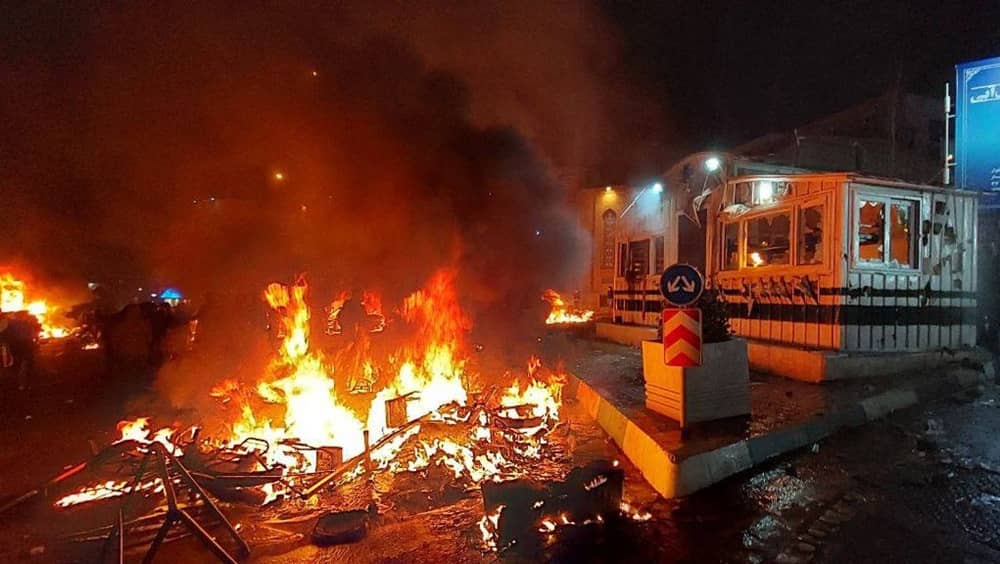
On January 8, 2026, Iran entered a new and more perilous chapter. Across all 31 provinces and more than 130 cities, millions of citizens—beyond the usual protest hubs—flooded streets, bazaars, and intersections in an extraordinary, decentralized uprising against the clerical dictatorship. What began as economic discontent has metastasized into political rebellion: chants of “Death to the dictator” and “Freedom” rang out in Tehran, Isfahan, Shiraz, and Mashhad as markets emptied and workers walked off their jobs. Eyewitness accounts and video evidence from inside the country documented relentless clashes with security forces, burning barricades, and an atmosphere more explosive than anything seen since the 2022–23 uprising.
Almost immediately, the regime did what it always does when it feels cornered: it tried to erase the moment. On the same day, the authorities imposed a complete nationwide internet blackout—a move confirmed by multiple monitoring groups and observers as a deliberate, state-enforced communication shutdown. National mobile and fixed networks were disrupted, throttled, and in many cases rendered unusable. The intent was unmistakable: cut off Iranians from each other and the world, stifle documentation of violence, and prevent the optics of resistance from reaching outside observers. But the blackout also betrayed the regime’s panic. It was a confession that the state could no longer control the narrative, let alone the streets.
The protests did not arise in a vacuum. They are rooted in a deep economic collapse that has dominated everyday life for years and now threatens to break the country entirely. Inflation has soared past 40 percent, household budgets have been crushed, and the Iranian rial has repeatedly plunged to record lows against the dollar. Official growth has stalled, poverty has surged, and staples such as food and fuel have become unaffordable for vast swaths of the population. On December 28, 2025, Bazari merchants—the backbone of small business in Iran—shut their shops in protest, catalyzing broader unrest that quickly spanned generations and regions.
January 9—Tehran, Iran
Photos and footage from nightly protests in Punak district. Protesters are chanting, "Down with the dictator!"#IranProtests pic.twitter.com/2pvuk7GJyF— People's Mojahedin Organization of Iran (PMOI/MEK) (@Mojahedineng) January 10, 2026
Into this raging national crisis stepped Ali Khamenei, not with concession, not with empathy, but with the brittle rhetoric of a regime in free fall. In his televised remarks on January 9, the regime’s supreme leader made two declarations that revealed both his strategy and his desperation. First, he insisted that Tehran “will not back down” in the face of the protests, dismissing dissent as the work of “vandals” and “saboteurs” with foreign backing. Later, in a striking appeal to nationalist grievance and global antagonism, he accused the United States—specifically its president—of being “arrogant” and having “hands stained with the blood of Iranians”, even going so far as to predict that the U.S. leader would eventually be “overthrown.” The message was unmistakable: the regime now sees no survival strategy short of all-out confrontation.
Complicating the moment is the reappearance of Reza Pahlavi, the son of Iran’s deposed shah, who resurfaced after a conspicuous absence to capitalize on an uprising already well underway. By the time he returned from holiday seclusion and launched a polished public-relations campaign calling for “civil resistance,” protests had been raging for nearly twelve days, driven by local networks and Resistance Units organizing hour-to-hour actions across the country. Nonetheless, amplified by foreign-funded Persian-language outlets, fake video clips, fake social media accounts and Instagram personalities newly recast as political actors, Pahlavi moved quickly to claim ownership of the momentum. For many inside Iran, this attempt to retroactively brand a decentralized revolt—built through sustained confrontation and real risk—felt less like leadership than appropriation.
I would encourage you to watch this short five-minute video, which exposes the propaganda techniques being used to promote the son of Iran’s former Shah.
It clearly demonstrates how unrelated footage is manipulated through added audio and selective editing to falsely suggest that… pic.twitter.com/TKJs7hqvdQ— Firouz Mahvi (@FirouzMahvi) January 8, 2026
For many Iranians inside the country—enduring a brutal crackdown, nightly street battles, and daily confrontations with security forces—this narrative rings hollow. The reality of live fire, mass arrests, and sustained urban skirmishes stands in stark contradiction to Pahlavi’s claims of commanding a notional 50,000-strong force of defectors and his abstract calls for civil disobedience from afar. What is unfolding on the ground is not a managed transition or a disciplined campaign awaiting direction, but an organic, decentralized revolt forged in direct confrontation with state violence—not exile choreography or speculative power counts.
For the international community, the stakes are not abstract. Silence or equivocation in the face of mass repression can only be read by the regime as acquiescence. If global leaders genuinely prioritize human rights and political freedom, their response must match the urgency of the moment: cut diplomatic ties with the clerical dictatorship, expel its envoys, impose non-grata status on its officials, and affirm the Iranian people’s undeniable right to self-defense and resistance against oppression. Pahlavi’s hollow propaganda and his attempts to hijack the people’s protests have undermined the movement and served the interests of the clerical regime.
“And every crimson flower that blooms from the blood of the fallen today carries the promise of freedom tomorrow.”
The deepest respect of the risen people of Iran goes to the eight vanguard protesters who were killed last night after hours of confrontation with the regime’s Basij…— Maryam Rajavi (@Maryam_Rajavi) January 8, 2026
Inside Iran, despite the blackout and brutal crackdowns, the protests have not—and will not—die. Citizens continue to use every available tool—VPNs, satellite internet, bursts of connectivity, trusted networks—to send their stories, their images, their suffering and defiance to the outside world, including to organized resistance channels monitoring developments in real time. The voices of the streets, though battered, remain audible beyond the regime’s silencing.
Iran is no longer merely resisting repression. It is demanding its future. Whether the world listens in time will be one of the defining tests of this moment.