

Three-minute read
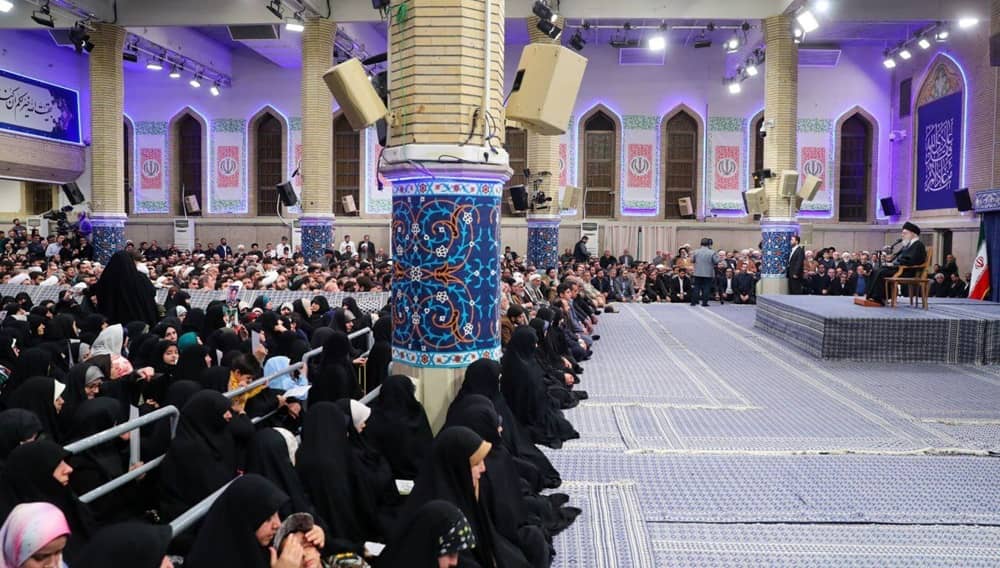
With indirect talks between the clerical regime in Iran and the United States underway in Geneva under Oman’s mediation, Ali Khamenei used a carefully stage-managed appearance to do what he does when the regime feels exposed: intimidate the public, reassure the security apparatus, and pre-emptively frame any diplomatic movement as “steadfastness,” not retreat.
The speech, delivered to a handpicked crowd brought in under the label of “people of Tabriz and East Azerbaijan,” was never primarily aimed at foreign negotiators. It was aimed inward, at an exhausted apparatus that has taken reputational hits, battlefield losses, and a nationwide uprising that shattered the regime’s claim to social consent. In Iran’s power structure, the Supreme Leader is the final authority over core security and strategic files, including the nuclear track and the coercive institutions that keep the system alive; the diplomats operate within limits he sets.
Khamenei’s loudest lines were also his emptiest. He revived the familiar theater of deterrence, warning that while a U.S. aircraft carrier is “a dangerous device,” “more dangerous than the carrier is the weapon that can send it to the bottom of the sea,” and sneering that even the “strongest army in the world” can be hit so hard it “cannot get up.” This is not strength; it is performative bravado designed to anesthetize fear inside the regime’s ranks. The irony is hard to miss: the same leadership that boasts of “special” capabilities presided over a 12-day war in which senior commanders and nuclear scientists were killed and key military and industrial targets were hit, exposing vulnerabilities the propaganda cannot erase.
#Khamenei Rejects U.S. Talks, Vows Enrichment Will Continue as Snapback Deadline Nearshttps://t.co/Q0Ug6uBUgs
— NCRI-FAC (@iran_policy) September 23, 2025
On the uprising, Khamenei repeated the regime’s security-scripted fiction: the protests and the ensuing bloodshed were not a domestic revolt but a “planned coup.” He claimed U.S. and Israeli intelligence recruited and trained “thugs,” supplied “money and weapons,” and sent them into Iran to sabotage military and state sites. He then portrayed the crackdown as a popular-security victory, insisting that security forces and “many people” crushed the plot. The goal here is not explanation; it is absolution—moving responsibility away from the chain of command and onto external enemies.
The most cynical section was his attempt to re-label the dead. Khamenei split those killed into “ringleaders” who “went to hell,” versus three other categories he called “our children,” including bystanders and those he described as “deceived” and “inexperienced.” He even claimed some wrote to him to ask forgiveness. This is not reconciliation. It is a sorting mechanism: build a propaganda off-ramp for detainees who will publicly “repent,” while justifying harsher punishment for anyone tied to organized resistance or anyone who refuses humiliation.
He underlined that logic by demanding prosecutions, saying “people want” the main “corrupt rioters” pursued and punished, and that the judiciary and security bodies are “obliged” to act—expanding the threat to those who align with the “enemy” through “speech, analysis, and action.” It is an explicit warning to society that the regime intends to criminalize even interpretation and commentary, not just street protest.
Khamenei Claims the West Fears #Iran’s “Islamic Order” As He Tries to Steady a Shaken Base https://t.co/yr5XzminXo
— Iran Freedom (@4FreedominIran) December 28, 2025
Khamenei also tried to sell street theater as “social capital,” calling the regime’s recent anniversary marches “divine signs” and proof of national vitality. But the credibility gap is widening. A Reuters video report described the main Tehran rally as drawing “thousands,” even as pro-regime outlets claimed fantastical totals in the tens of millions—an inflationary politics that mirrors the regime’s inflationary economy.
His message to “insiders” was just as important as his threats to outsiders. The regime is struggling to project elite cohesion after the January bloodletting was stamped onto Khamenei and the coercive organs he commands. Signs of clerical distance have surfaced as well: even in Qom—normally a controlled stage for religious legitimacy—he recently met residents without senior clerics present or cooperating, reinforcing the picture of a leadership increasingly dependent on force rather than consensus within its own establishment.
Khamenei Rejects Talks—But His Advisors Say Otherwise. Why?https://t.co/3qvPRGr2Pw
— NCRI-FAC (@iran_policy) March 28, 2025
On negotiations, Khamenei’s tough talk was calibrated for domestic consumption, not as a literal readout of bargaining intent. He again declared missile capability off-limits, calling “deterrent weapons” “necessary and obligatory,” and mocked U.S. calls for talks that predetermine outcomes: “They say negotiate on nuclear energy, but the result must be that you must not have it.” The posture is familiar: posture publicly, leave maneuvering space privately, and blame the other side for any deadlock. When tactical necessity demands it, Khamenei has shown he can pivot sharply—such as denying Iran’s direct role in the October 2023 attack after a staged military parade—illustrating that rhetoric is a tool, not a confession of policy.
In Geneva, the talks themselves ended without a deal but with both sides describing limited progress and “guiding principles,” and Tehran indicating it would return with more detailed proposals within two weeks. The regime’s choreography—military drills, pressure around the Strait of Hormuz, and incendiary speeches—looks less like confidence than compulsion: a leadership trying to keep its enforcers loyal, keep society intimidated, and still chase sanctions relief abroad because the economy is breaking at home.