

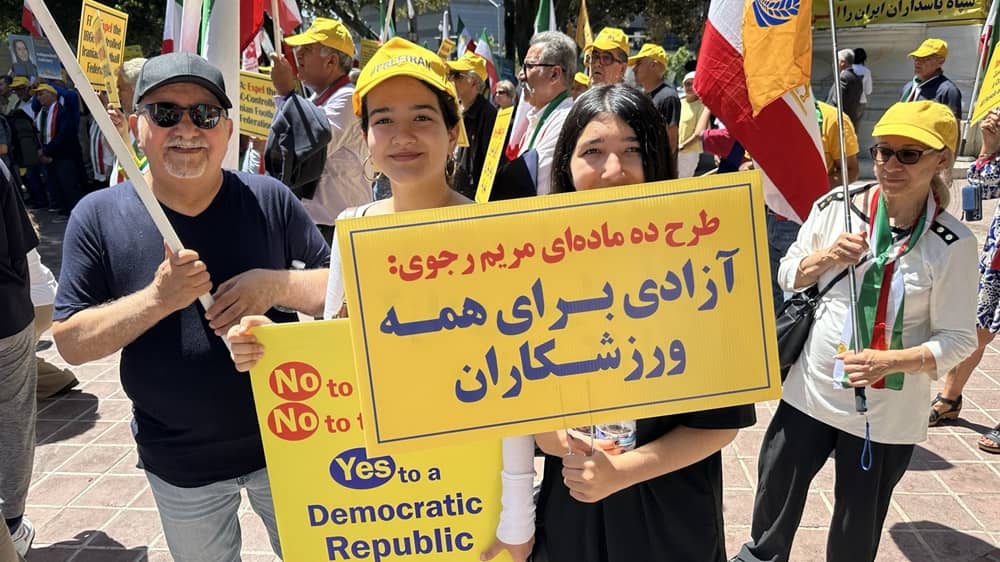
During the week of June 7–14, 2026, a synchronized global wave of political mobilization erupted across major Western capitals and European cities, signaling a deepened crisis for the Iranian clerical regime following its brutal crackdown on the January 2026 domestic uprising. Organized by supporters of the National Council of Resistance of Iran (NCRI) and the People’s Mojahedin Organization of Iran (PMOI/MEK), these multi-city demonstrations, bookstalls, and high-profile exhibitions represent a highly coordinated effort to challenge Tehran’s escalating campaign of executions. As the regime intensifies its internal repression through internet blackouts and the systematic persecution of dissidents and athletes, the underground resistance network has successfully projected its defiance onto the international stage. This global momentum is rapidly converging toward a massive upcoming rally in France, positioning a democratic alternative rooted in popular sovereignty against both the current theocracy and the remnants of monarchical autocracy.
June 13, 2026
In Malmö, Sweden, a rally organized by supporters of the NCRI and the PMOI drew public attention to the escalating human rights crisis inside Iran, specifically protesting the recent execution of political prisoners and protesters detained during the January 2026 uprising. Demonstrators explicitly voiced their backing for the NCRI’s provisional government framework and the Ten-Point Plan championed by NCRI President-elect Maryam Rajavi. The event in Malmö served as a mobilization hub, urging freedom-loving Iranians to join the upcoming June 20 Free Iran Rally in Paris to stand against both the ruling mullahs and past monarchical autocracies. Simultaneously, in Aarhus, Denmark, Iranian dissidents held an operational action to manifest solidarity with the ongoing nationwide uprising of the Iranian people.
Iranian opposition figures and diaspora members urged FIFA to expel Iran from the World Cup, alleging political interference and repression of athletes https://t.co/Wveu4o1TlP pic.twitter.com/ovso7VuR7n
— Reuters (@Reuters) June 11, 2026
June 12, 2026
Activists in Paris, France, advanced their operational preparations by hosting a public bookstall and exhibition designed to protest the wave of state-sanctioned executions targeting political prisoners and demonstrators from the January 2026 uprising. The organizers utilized the venue to advocate for human rights, justice, and the NCRI’s democratic alternative, while rallying participants for the June 20 Paris Free Iran Rally, an event projected to draw more than 100,000 people under the slogan of establishing a democratic republic. Meanwhile, in Copenhagen, Denmark, Iranians held an organized action to distribute calls and mobilize local communities to travel and participate in the central Paris rally.
June 11, 2026
The continuous presence of the resistance network was maintained in Paris, France, where freedom-loving Iranians organized a dedicated bookstall. This ongoing public action focused on cultivating international solidarity with the domestic Iranian uprising and keeping the focus on the regime’s systemic rights abuses.
NCRI member, Asghar Adibi, who played for Iran's national soccer team, called on FIFA to expel the regime for killing athletes, and urged all to join a major Paris rally on June 20th, to honor those fallen for a free democratic republic Iran, including athletes. #FIFAWorldCup pic.twitter.com/TuoLQKm8ro
— Alireza Jafarzadeh (@A_Jafarzadeh) June 11, 2026
June 10, 2026
On the eve of the 2026 FIFA World Cup, a major political action unfolded in Los Angeles, United States, where a photo exhibition, public rally, and press conference were staged directly in front of City Hall to expose the Iranian regime’s systematic repression of athletes and its political interference in sports institutions. The high-profile event featured prominent figures including NCRI member Hamid Azimi, former 1970 Asian Games national football player Asghar Adibi, and 1978 FIFA World Cup squad member Bahram Mavaddat, alongside footballers Yousef Mahdavi and Shahram Homayounfar, world karate champion Solmaz Abouali, and champion wrestler Milad Sharif. The Los Angeles exhibition detailed the tragic stories of athletes executed or imprisoned by the religious dictatorship for their pro-democracy views.
Across the Atlantic, supporters in Aachen, Germany, set up a prominent book table to reject the mullahs’ policies of war, executions, and Western appeasement, promoting Maryam Rajavi’s Ten-Point Plan. In Münster, Germany, activists initiated a widespread postering campaign throughout the city to build momentum for the June 20 gathering. Concurrently, parallel bookstall activities continued to operate in Paris, France, to maintain visibility for the democratic movement.
🚨 LIVE NOW: Alireza Jafarzadeh, the Deputy Director of the National Council of Resistance of Iran (NCRI-US), joins us as the Iranian regime continues to buy time, while executing political prisoners at a rapid pace.
America's Mayor Live 🇺🇸 https://t.co/JbMOQf6gHW pic.twitter.com/6mx9jd7bQ6
— Rudy W. Giuliani (@RudyGiuliani) June 10, 2026
June 9, 2026
In Gothenburg, Sweden, supporters marked the 124th consecutive week of the “No to Execution Tuesdays” campaign with a powerful rally condemning the regime’s escalating executions and its implementation of nationwide internet shutdowns. Protesters in Gothenburg chanted “Down with the executioner regime,” demanded the immediate release of political prisoners, and backed Maryam Rajavi’s call to expand the anti-execution movement globally.
In St. Gallen, Switzerland, a synchronized book stall and photo exhibition were organized to support the “No to Execution” campaign and demand international intervention against the regime’s abuses. In Wuppertal, Germany, activists hosted a photo exhibition calling on the German government to halt its policy of appeasement and take immediate steps to condemn the mullahs’ human rights violations. Additionally, organizers in Wuppertal, St. Gallen, and Paris, France, issued urgent calls for the international community to reject all forms of dictatorship and support the democratic alternative at the upcoming June 20 global rally.
🗣️ @AlemiAzadeh :"Depuis janvier, on compte plus de 700 exécutions en Iran. Ce régime tue, ce pays bas les records d'exécutions" #LaFranceDansTousSesÉtats
Suivez le direct sur Sud Radio et réagissez au 0 826 300 300 pic.twitter.com/jxdtfJIf3q
— Sud Radio (@SudRadio) June 11, 2026
June 8, 2026
In Paris, France, Iranians held another structured bookstall event. The operation successfully engaged the local public, highlighting the continuity of the democratic resistance and fostering solidarity with the ongoing uprising across Iran.
June 7, 2026
Dissidents in Aarhus, Denmark, carried out a targeted action to support the nationwide uprising, focusing heavily on distributing and publishing official invitations for the grand Paris rally. This deployment was strategically paired with outreach efforts targeting the city of Essen, Germany, expanding the geographic footprint of the coordination network.
Some Iranian-Americans are demanding that FIFA ban Iran's soccer team, saying the Islamic Regime tightly controls it and the players.
Read here: https://t.co/njHz7LeRL7 pic.twitter.com/72mLtxd7Vm
— KNX News 1070 AM (@knxnews) June 10, 2026
June 6, 2026
Due to delayed field reporting cycles and data verification lags from the prior week, this briefing incorporates critical, newly received information regarding operations conducted on June 6, 2026, which were omitted from the previous tracking period. June 6 operations saw significant activity in Lugano, Switzerland, where a solidarity bookstall was established to champion the cause of political prisoners and invite Swiss citizens and the Iranian diaspora to the Paris, France, demonstration.
In Aarhus, Denmark, supporters gathered for an intensive rally to condemn the execution of PMOI members and January 2026 uprising detainees, displaying photographs of the victims to honor their sacrifice. Simultaneously, in Essen, Germany, activists conducted an extensive outreach campaign, distributing informational brochures and plastering posters across the city to mobilize participants for the June 20 rally, specifically directing the public toward the localized gathering in Vauban, Paris.
Powerful and heartbreaking. Standing with the brave athletes and voices demanding freedom and justice. No one should have to risk their life for their dreams. The world is watching. FIFA must expel the IRGC-Controlled Football Federation of Iran. #StopExecutionsInIran… pic.twitter.com/Xa1BI7ZC6w
— Nasser Sharif (@NasserSharif1) June 13, 2026
Conclusion
The widespread and highly coordinated nature of these international operations underscores a critical vulnerability within the Iranian regime: its strategy of domestic terror and escalating executions has fundamentally backfired. Rather than extinguishing the flames of dissent after the January 2026 uprising, the mullahs’ brutality has only widened the chasm between the state and the public, hardening a distinct, multi-layered resistance movement that operates on two distinct fronts.
Domestically, tightly compartmentalized underground networks continue to operate under severe totalitarian duress, actively bypassing state censorship and nationwide internet shutdowns to sustain the uprising’s momentum on the ground. Meanwhile, the NCRI diaspora network is effectively leveraging its political and geographic liberty abroad to orchestrate sophisticated, high-visibility campaigns across major Western capitals, amplifying the internal struggle to the international community. Together, these dual dynamics—resilient internal defiance paired with seamless external mobilization—expose an absolute internal deadlock within the clerical establishment. Despite Tehran’s desperate attempts to project an image of invincibility through military posturing and public hangings, the defiance echoing from Western capitals to the streets of Iran demonstrates that the regime can no longer contain the push for a democratic republic, leaving its totalitarian system trapped in an irreversible crisis of legitimacy.
6 Days to go 100,000 Free Iran Rally
14:00 CEST – Place Vauban, Paris 7 – June 20, 2026 #100KFreeIranRally🛑Stop Executions In Iran
⛔️No to Shah No to Mullahs
✅Yes to a Democratic Republic pic.twitter.com/TNiONWh2no— Iran Freedom (@4FreedominIran) June 14, 2026