

THIS PAGE WILL BE UPDATED WITH THE LATEST NEWS
UPDATE: 08:30 PM CET
Satellite Images Show Iran Repairing and Fortifying Sites Amid US Tensions
Feb 18 (Reuters) – Satellite images show that Iran has recently built a concrete shield over a new facility at a sensitive military site and covered it in soil, experts say, advancing work at a location reportedly bombed by Israel in 2024 amid tensions with the U.S.
Images also show that Iran has buried tunnel entrances at a nuclear site bombed by the U.S. during Israel’s 12-day war with Iran last year, fortified tunnel entrances near another, and has repaired missile bases struck in the conflict.
They offer a glimpse of Iranian activities at some of the sites at the centre of tensions with Israel and the U.S., as Washington seeks to negotiate a deal with Tehran on its nuclear programme while threatening military action if talks fail.
UPDATE: 02:30 PM CET
‘Deliberate Targeting of Vital Body Parts’: X-Rays Taken after Iran Protests Expose Extent of Catastrophic Injuries

Across the planes of Anahita’s* face, white dots shine like a constellation. Some gleam from inside the sockets of her eyes, others are scattered over the young woman’s chin, forehead, cheekbones. A few float over the dark expanse of her brain. Each dot represents a metal sphere, about 2-5mm in size, fired from the barrel of a shotgun and revealed by the X-ray camera for a CT scan. Shot from a distance, the projectiles, known as “birdshot”, spray widely, losing some of their momentum. At close range, they can crack bone, blast through the soft tissue of the face, and easily pierce the eyeball’s delicate globe. Anahita, who is in her early 20s, has lost at least one eye, possibly both.
The image of Anahita’s head is one of more than 75 sets of medical images – primarily X-rays and CT scans – shared with the Guardian from one hospital in a major city in Iran, taken over the course of a single evening during the regime’s January crackdown on protesters. The plain, grayscale images tell their own story of the deadly violence inflicted on protesters and onlookers by Iran’s Islamic Revolutionary Guard Corps (IRGC).
India Seizes Sanctioned Shadow Fleet Tankers Amid Trade Thaw with U.S.

India’s Coast Guard has seized three tankers sanctioned by the U.S. that it says were involved in illicit ship-to-ship transfers off its western coast, a move that analysts said marks New Delhi’s first direct support of U.S. efforts to crack down on the so-called dark fleet .
The vessels were intercepted on Feb. 6 about 100 nautical miles northwest of Mumbai and were part of an “international oil-smuggling racket,” the Coast Guard said in an Instagram post. The tankers are now anchored off Mumbai and under investigation, a spokesman said on Tuesday.
Analysts said the seizures reflect a recent thaw in relations with Washington after a standoff over India’s large-scale purchases of Russian crude following Moscow’s invasion of Ukraine.
UPDATE: 09:00 PM CET
If Ayatollah Falls, Key to Iran’s Future Rests on Three Key Realities – Not Crowd Numbers

Periods of political strain invariably produce contending claimants to leadership. Iran today is living through such a moment. Economic hardship, continuing unrest and an embattled regime have made political change less conjectural than it once seemed. That, in turn, has encouraged a familiar phenomenon: aspiring leaders try to turn visibility into authority, hoping that attention abroad will be mistaken for legitimacy at home. In such circumstances, it is worth stating a simple rule. Credibility is cumulative. It is earned through evidence, organisation and discipline, not through slogans, staged moments or statistics that collapse under scrutiny. The standard is a demanding one, precisely because the stakes are so high.
A recent episode in Munich offered an instructive case study. On the margins of the city’s Security Conference, a rally was promoted by supporters of Reza Pahlavi, the son of the deposed Shah, as proof of a surging public mandate. Within hours, sympathetic networks were circulating an attendance figure attributed to the Munich Police: 250,000 people. The number travelled rapidly across social media and was presented as though it settled a political argument.
UPDATE: 08:00 PM CET
40 Days On: Tribute to the Heroes of the January 2026 Uprising
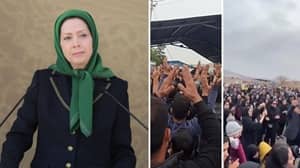
To the mothers, fathers, families, and compatriots across Iran who, on the fortieth day since the loss of your children, stand in mourning and in defiance. This fortieth day of that sea of blood, this fortieth day of that national sacrifice, this fortieth day of that immense price paid for freedom, is a day to renew our pledge to carry the fallen’s uprising through to victory. In these forty days, these forty days of tears, anger, and the searing grief of an entire people, Khamenei and his hated circle, with bloodstained hands, have waged an unrelenting campaign of arrests, interrogations, and torture against tens of thousands of young people, against those seized during the uprising. They have detained nurses and doctors whose only act was to heal the wounded.
40th-Day Memorials Become the New Frontline of Iran’s Uprising Against the Regime
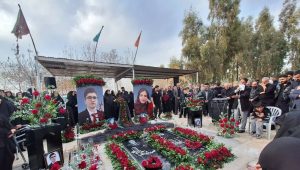
The uprising that erupted across Iran on December 28, 2025, has undergone a profound transformation. What began with shopkeepers shuttering their stores over the collapsing rial has evolved into a nationwide political movement challenging the very foundations of the clerical regime. Now, 40 days after the regime’s crackdown left thousnads dead, the traditional end of mourning has become the beginning of a new offensive. In Iranian culture, the 40th day after a death—known as Chehelom—traditionally marks the end of mourning. Families usually remove their black garments, and life returns to normal. However, for the martyrs of the January 2026 uprising, this tradition has been inverted.
Parisa Kamali: Political Prisoner Sends Message Honoring the Fallen in the January 2026 Uprising
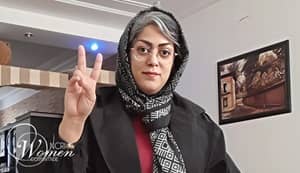
Parisa Kamali, a political prisoner currently held in Yazd Prison, has sent a message from behind bars marking the fortieth day of remembrance for those killed in the January 2026 uprising in Iran. In her statement, released despite ongoing restrictions on her communication, Parisa Kamali reaffirmed her commitment to continued resistance and the organized struggle for freedom. Kamali is serving a prison sentence in Yazd and, according to reports, faces multiple limitations while incarcerated. In her statement, Kamali honored those killed during the protests and stressed the determination of demonstrators to carry their cause forward.
Iran Students Protest; Retirees Rally as Bodies Remain Unidentified
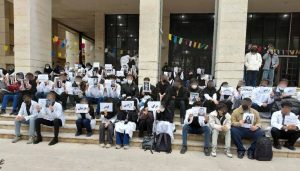
Fresh protests by medical students in Tehran draw support from retirees, while human rights sources say authorities still have not identified several women killed in Iran’s January 2026 crackdown. Despite official claims that stability has returned following the January 2026 crackdown, fresh signs of unrest are emerging across Iran. Medical students have taken to the streets in Tehran, retirees have voiced solidarity, and human rights sources say authorities still have not clarified the identities of several women killed during previous protests. Together, these developments suggest that the tensions underlying the winter unrest have not fully subsided.
The IRGC is Trying to Wipe Traces of its Crimes During Nationwide Protests
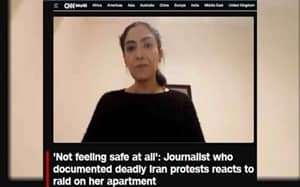
While the full dimensions of the repression of Iran’s nationwide uprising, a crime of the Islamic Revolutionary Guard Corps (IRGC), have yet to be fully clarified and the number of those killed in the January 2026 uprising continues to rise each day, CNN revealed a shocking account in a recent interview. The interview was broadcast on February 12. Its main focus was a raid by security forces on the home of an Iranian photojournalist. She has documented protests and scenes of repression for years. She now says that agents stormed her apartment and confiscated all her equipment. Many view this action as part of the IRGC’s effort to destroy evidence.
Gothenburg Rally Backs Iran Uprising, Democratic Republic, and Accountability for Regime Leaders

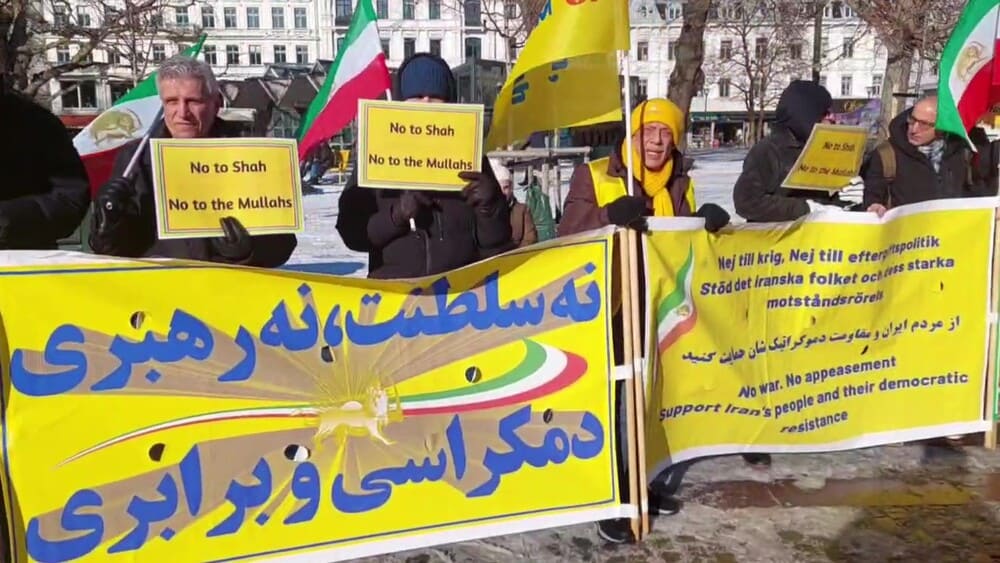
The rally also highlighted several key demands: the closure of the Iranian regime’s embassy in Sweden; the prosecution of Ali Khamenei and other senior officials in international courts for crimes against humanity; and international recognition of the Iranian people’s right to resist tyranny.
No to Another Manufactured “Savior” for Iran
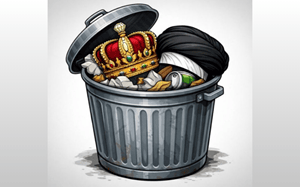
Iran today stands at a historic crossroads. The political atmosphere bears unsettling similarities to the months preceding the fall of the Shah’s dictatorship on February 11, 1979. Back then, a narrative was carefully shaped around a single figure — Ruhollah Khomeini — elevating him into an untouchable symbol before many fully understood the consequences. For the first time, many Iranians heard the title “Ayatollah” not from a cleric, but through international broadcasting. BBC Persian service became a primary source of updates about Khomeini during his exile. Night after night, people gathered to hear news of a man portrayed as the embodiment of salvation. What followed is now history.