

THIS PAGE WILL BE UPDATED WITH THE LATEST NEWS
UPDATE: 11:00 PM CEST
Mass Strikes Across Iran Kill Commanders, Cripple Weapons Industry as Tehran Retaliates Regionally
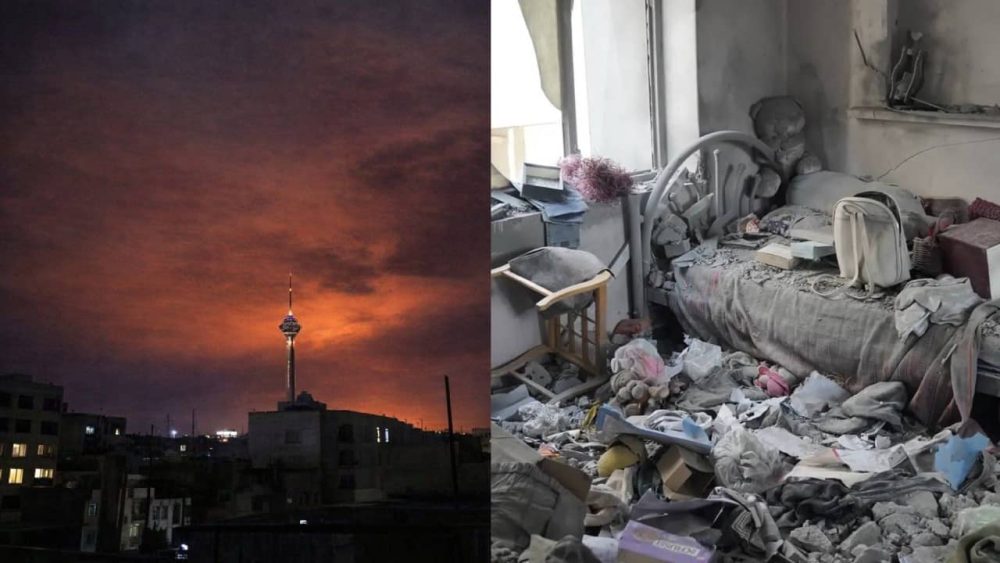
A sweeping new phase of the Iran war unfolded over the past 24 hours, marked by one of the most intense waves of coordinated U.S. and Israeli strikes since the conflict began. Dozens of sites across Tehran and other major cities were hit, including missile production facilities, air defenses, and a major ammunition depot in Isfahan, while Iranian retaliation extended across the Gulf and into Israel. The day reflected a widening conflict: deepening structural damage inside Iran, continued but uneven Iranian counterstrikes, and growing risks to regional energy infrastructure and shipping routes.
Regime Losses: Targets Hit, Infrastructure Damage, Personnel Killed
The most extensive damage was concentrated inside Iran, particularly in Tehran and central industrial zones, where sustained strikes targeted core elements of the country’s military infrastructure.
Israeli forces reported completing more than 230 strikes within 24 hours, focusing on:
- Ballistic missile launchers prepared for firing
- Weapons production and research facilities
- Air defense systems across Tehran
- Sites linked to anti-tank and surface-to-air missile production
Among the most significant targets hit in Tehran:
- A facility used for casting and filling ballistic missile warheads with explosives
- Research and development centers for advanced weapons components
- Production lines for ballistic missile parts and guided munitions
- Multiple air defense firing positions and launch sites
⚠️ Update: #Iran's internet blackout has entered day 32 with most users cut off from the outside world for over 744 hours.
Extended digital isolation is bringing new challenges for Iranians, from expired domains and accounts to unpatched servers on a degrading national intranet. pic.twitter.com/SpwVZ95EXP
— NetBlocks (@netblocks) March 31, 2026
Simultaneously, the United States carried out a heavy strike on a large ammunition depot in Isfahan, reportedly using 2,000-pound bunker-buster bombs, triggering powerful secondary explosions that suggested the destruction of large quantities of stored munitions.
Across the country, waves of explosions were reported from the early hours of the morning:
Tehran (multiple districts):
Explosions struck Narmak, Tehranpars, Ekbatan, Vanak, Jannatabad, Chitgar, Gisha, and Shahr-e Rey, among others. A three-story building in eastern Tehran was directly hit, while repeated blasts in western districts indicated sustained targeting of infrastructure corridors.
Isfahan region:
Multiple large explosions were recorded across central, northern, and industrial zones, including areas near military facilities, aviation units, and detention facilities. Residents reported ground-shaking blasts and repeated detonations consistent with ammunition storage strikes.
Shiraz:
At least five explosions were recorded near airbase-adjacent areas following reported aircraft activity.
Zanjan:
A major administrative and cultural complex sustained severe destruction, with imagery showing extensive structural damage.
Karaj and surrounding areas (Fardis, Kordan, Kamalshahr):
Multiple explosions indicated spillover strikes targeting infrastructure outside Tehran.
Additional areas hit:
Bandar Abbas, Tabriz, Abadan, Kashan, Najafabad, Mobarakeh, and Shahreza.
Pope Leo urged US President Trump to look for an 'off-ramp' to end the Iran war, in a rare direct appeal from the pontiff as the regional conflict expands https://t.co/Z9dpKp8mhN pic.twitter.com/3A3mFf78QB
— Reuters (@Reuters) March 31, 2026
Iranian Retaliation and Effectiveness
Iranian retaliation continued but showed mixed operational outcomes.
Against Israel:
- Missile strikes targeted southern areas including Be’er Sheva, hitting multiple locations and causing localized damage
- Previous strikes on energy infrastructure in Haifa continued to shape the operational picture, though no major casualties were reported in the latest cycle
Across the Gulf:
- A Kuwaiti oil tanker in Dubai port was struck, causing fire damage and a possible oil leak, though no casualties were reported
- The United Arab Emirates activated air defenses against incoming drones and missiles, with intercept operations continuing overnight
These actions demonstrate continued Iranian regime’s capacity to strike regionally, particularly against energy and maritime assets, but also highlight limitations in causing large-scale or sustained damage.
BREAKING: President Trump says nations upset by high fuel prices should "go get your own oil" as Iran maintains its chokehold on the Strait of Hormuz. Follow AP's live updates. https://t.co/3U8nNTyxUh
— The Associated Press (@AP) March 31, 2026
Israeli and U.S. Casualties and Damage
Last 24 hours:
- No confirmed U.S. fatalities reported
- Israeli casualties appear limited, with no confirmed deaths despite missile impacts
- Infrastructure damage includes:
- Localized damage in southern Israel from missile strikes
- Continued vulnerability of energy facilities, though major disruption was avoided
Regional Spillover: Expanding Threat to Gulf and Shipping
The conflict’s regional dimension intensified further:
- United Arab Emirates: Active interception of drones and missiles over multiple areas
- Kuwait:
- Oil tanker strike in Dubai
- Earlier fatality reported at an energy facility
- Qatar:
- Warned that attacks on energy infrastructure cross “dangerous red lines”
- Highlighted risks to global energy security
The Strait of Hormuz remains under severe pressure, with ongoing threats to shipping and energy flows. Regional states are increasingly coordinating both defensive responses and diplomatic efforts, including support for mediation initiatives.
🔴 Iran has vowed to start striking what it called US “spy companies” such as Google and Microsoft across the Middle East
Follow the latest updates 🔗https://t.co/qiwffxjb7k pic.twitter.com/96N5ccbxyu
— The Telegraph (@Telegraph) March 31, 2026
Internal Conditions Inside Iran
Inside Iran, the war’s impact on civilian life deepened significantly:
- The country entered its 32nd consecutive day of near-total internet blackout, cutting millions off from global communications
- Authorities continue to enforce use of a restricted national network, which remains unstable and limited
Daily life disruptions include:
- Severe constraints on communication with the outside world
- Loss of access to education, medical resources, and digital services
- Significant damage to small and medium-sized businesses dependent on online platforms
Residents describe growing isolation and difficulty maintaining basic communication. Attempts to bypass restrictions have become increasingly difficult due to heightened surveillance and enforcement.
At the same time:
- Airstrike warnings in residential areas of Tehran forced evacuations or confinement
- Civilian areas have been repeatedly affected by nearby military targeting
The combined effect is a society under simultaneous physical and informational pressure, with both infrastructure and daily life severely disrupted.
Hegseth Defends Sending Ground Troops To Iran: ‘I Don’t Understand Why The Base’ Would Opposehttps://t.co/t2EnsZQIYx pic.twitter.com/8n2UDP4oO1
— Forbes (@Forbes) March 31, 2026
UPDATE: 09:00 PM CEST
Seven Protesters and Dissidents at Risk of Imminent Execution After Four Men Arbitrarily Executed in Secret Within 24 Hours

Responding to the arbitrary and secret executions of four dissidents in Iran since yesterday as at least seven other protesters and dissidents face the imminent risk of execution, Amnesty International’s Deputy Regional Director for the Middle East and North Africa Diana Eltahawy said: “Iranian authorities must immediately halt any plans to execute dissidents Vahid Bani Amerian and Abolhassan Montazer and protesters Mohammad Amin Biglari, Ali Fahim, Abolfazl Salehi Siavashani, Amirhossein Hatami, and Shahin Vahedparast Kolo, held in Ghezel Hesar prison, Alborz province.
“It is unconscionable that even as the population is reeling from conflict and mass bereavement amid the ongoing aerial bombardment by Israel and the USA, the authorities of the Islamic Republic of Iran continue to weaponize the death penalty to eradicate dissenting voices and further terrify people.
UPDATE: 08:00 PM CEST
Brave Iran Critic Bound for Gallows Calls for Overthrow of War-Ravaged Regime Moments Before He’s Hanged In Haunting Vid

A BRAVE Iranian prisoner has called for the war-ravaged regime to be overthrown in a defiant video message from the notorious Evin prison taken before he was hanged.
Mohammad Taghavi, 58, called for supporters to bring “the campaign for overthrow [of the regime] to fruition,” shortly before his execution. He added: “You, dear friends, stand at the threshold of history – the door of this land’s history opening toward a bright and luminous future.”
The brave critic was executed alongside Akbar “Shahrokh” Daneshvarkar, 60, a fellow member of the banned opposition party, the People’s Mojahedin Organization of Iran (PMOI/MEK) on Monday morning.
The two political prisoners were arrested in Iran in 2024 accused of taking part “in riots, urban actions, and confrontation with security forces”.
Following their arrests, they suffered months of extreme physical and psychological torture in Evin Prison’s notorious Ward 209 – including beatings, floggings, death threats at gunpoint and prolonged solitary confinement.
UPDATE: 11:30 AM CEST
Iran: A Growing Campaign Around Iran’s Future Supporting the Third Option

On Monday, 30 March 2026, Iran’s authorities carried out the execution of two political prisoners identified as supporters of the People’s Mojahedin Organisation of Iran (PMOI/MEK). The executions of Mohammad Taghavi and Ali Akbar (Shahrokh) Daneshvarkar, both aged 59, were reported by Tasnim News Agency, a media outlet closely linked to Iran’s security establishment. Mrs. Maryam Rajavi, president-elect of the National Council of Resistance of Iran (NCRI) paid tribute to the men as martyrs.
Both men had a history of political imprisonment. Taghavi had previously been jailed in the 1980s and again in 2020 on charges related to alleged ties with the MEK, while Daneshvarkar, a civil engineer, was arrested in January 2024. Their death sentences were issued in November 2024 by Revolutionary Court judge Iman Afshari and later upheld in December 2025 following brief and separate retrial hearings. Their executions have intensified concerns among activists that other political prisoners may face a similar fate.
UPDATE: 07:30 AM CEST
The Hero Who Conquered Death: Mohammad Taghavi’s Unbreakable Defiance In Iran’s Prisons
On March 25, 2026, the Iranian regime executed PMOI members Mohammad Taghavi and Ali Akbar (Shahrokh) Daneshvarkar. In a desperate attempt to justify their state-sanctioned murder, the clerical regime framed them with fabricated charges.

Mohammad Taghavi was a lifelong champion of freedom whose spirit remained unbroken until his final breath. Born in 1966 in Tehran, Taghavi spent the 1980s and 1990s as a political prisoner. He was imprisoned again in 2020 for approximately three years for his ties to the PMOI, before being released on February 25, 2023, and exiled to Kahnuj in Kerman province. He was arrested for the final time on February 23, 2024, while attempting to leave the country.
Iran Executes Two PMOI Members Mohammad Taghavi, Akbar Daneshvarkar – Report
At dawn on March 30, 2026, the Iranian regime executed two members of the People’s Mojahedin Organization of Iran (PMOI), Mohammad Taghavi and Akbar Daneshvarkar, according to statements issued by the regime’s judiciary.

The authorities claimed the two had been convicted of “membership in the PMOI” and “armed operations in Tehran,” along with charges of “assembly and collusion against national security” and “armed uprising against the state.”
Arrest of Saba Ahmadi, Parastoo Chamanara, and Batoul Gerami

Amid the continuing wave of systematic repression following the nationwide protests of January 2026, three women identified as Saba Ahmadi, Parastoo Chamanara, and Batoul Gerami have been arrested in different cities across Iran. Saba Ahmadi was arrested by security forces on February 14, 2026. Since her detention, there has been no information regarding her condition or whereabouts. This prolonged lack of communication has intensified concerns about her fate.
Saba Ahmadi, who managed a clothing boutique, was detained in the early hours of the morning during a security raid. More than a month after her arrest, no official updates have been provided, nor have she been allowed to contact her family. Her case is widely considered an example of arbitrary detention and enforced disappearance under international law.
Reza Pahlavi’s CPAC Lovefest: Foreign Fanboy Dreams of Iranian Crown While Empty-Handed at Home
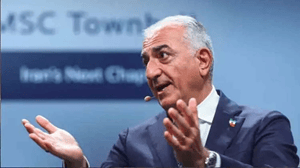
Reza Pahlavi, the self-crowned prince, takes the CPAC stage, breathlessly thanking foreign leaders for strikes like “Operation Midnight Hammer” and “Epic Fury” that hammered Iran regime’s missile stockpiles and nuclear sites—claiming this gives Iranians their “fighting chance.” Meanwhile, what has he contributed? Zilch. Just nonstop pandering to outsiders waging war on his homeland, exposing zero real leverage or domestic pull.
Imagine crediting foreign resolve and troops’ “sacrifice” (supposedly on behalf of his phantom “millions”) as the path to Iranian freedom, while grouping himself with them to urge uprisings amid falling bombs. Laughable. Officials hoped for instant protests in the chaos—crickets. His recent calls for action? Utterly ignored inside Iran. If he commanded real loyalty, why the dead air when it counted?
Iran’s Crossroads: Between Engineered Change and Organized Resistance
In recent years, Iran’s political landscape has become increasingly defined by a deepening divide between two fundamentally different approaches to change. On one side are currents rooted in political illusion-making—reliant on foreign intervention, media projection, or the recycling of historically failed models, such a the reign of Pahlavi. On the other stands a trajectory grounded in organized resistance, domestic social capital, and the principles of national sovereignty and popular legitimacy.
This divide is no longer theoretical. It is now reflected in both political discourse and developments on the ground, shaping a broader contest between what can be described as “real change” and “engineered rearrangement of power.” The distinction carries significant legal and political implications, particularly concerning sovereignty, territorial integrity, and the right of nations to determine their own future.
Malmö, Sweden — Iranian Resistance Supporters Rally to Back NCRI Provisional Government

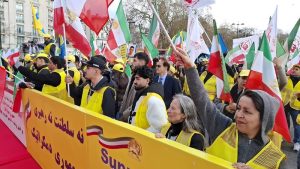
Malmö, Sweden – March 28, 2026 — Supporters of the Iranian Resistance held a rally in Malmö, calling for the overthrow of the clerical establishment and endorsing the National Council of Resistance of Iran’s (NCRI) announcement of a provisional government.
Participants chanted slogans calling for the overthrow of the ruling clerical regime and the establishment of a free, democratic republic. Demonstrators further urged the closure of the Iranian regime’s embassy in Sweden, condemning it as a hub of terrorism and espionage.